Monstera indoor plants, with their dramatic fenestrated leaves, have become incredibly popular houseplants. This guide dives deep into everything you need to know about these striking plants, from choosing the right variety and mastering propagation techniques to understanding their care requirements and incorporating them seamlessly into your home decor.
We’ll explore the nuances of different Monstera species, troubleshoot common problems, and offer expert tips to help your Monstera thrive.
Whether you’re a seasoned plant parent or a curious beginner, this comprehensive guide will equip you with the knowledge and confidence to successfully cultivate these captivating indoor companions. Get ready to unlock the secrets to a flourishing Monstera and transform your living space into a lush, verdant oasis.
Monstera Plant Varieties
Monsteras, with their iconic fenestrated leaves, are a popular choice for indoor plant enthusiasts. However, the genus Monsteraencompasses a surprising diversity of species, each with its unique charm and care requirements. Understanding these differences is crucial for successful cultivation.
Popular Monstera Varieties
Several Monstera varieties stand out due to their striking appearance and relative ease of care. The table below highlights key characteristics of some of the most sought-after types.
| Variety Name | Leaf Shape | Size | Care Requirements |
|---|---|---|---|
| Monstera deliciosa | Large, deeply lobed and fenestrated | Can reach several feet in height and width | Bright indirect light, well-draining soil, moderate watering |
| Monstera adansonii | Smaller, more numerous holes, heart-shaped | Vining plant, can climb or trail | Bright indirect light, well-draining soil, moderate watering |
| Monstera obliqua (or Monstera epipremnoides) | Extremely fenestrated leaves, almost lace-like | Vining, moderate size | Bright indirect light, high humidity, well-draining soil |
| Monstera siltepecana | Smaller, elongated leaves with velvety texture, initially solid, develops fenestrations slowly | Vining, moderate size | Bright indirect light, well-draining soil, moderate watering |
Growth Habit Differences: Monstera deliciosa vs. Monstera adansonii
Monstera deliciosais known for its large, dramatic leaves and upright, somewhat bushy growth habit. It can become quite substantial with age. In contrast, Monstera adansoniiis a vining plant, displaying a more scrambling or trailing growth pattern. Its leaves, while fenestrated, are significantly smaller than those of Monstera deliciosa.
This difference in growth habit influences how each plant is displayed; Monstera deliciosaoften requires more space and may benefit from staking, while Monstera adansoniiis well-suited to hanging baskets or climbing structures.
Rare Monstera Varieties
Several rare Monstera varieties command high prices due to their limited availability and unique characteristics. These include varieties with exceptionally large or unusually shaped leaves, or those exhibiting unique coloration. The price can vary greatly depending on the plant’s size, maturity, and the specific cultivar.
Availability is often limited to specialized nurseries or online marketplaces, and finding these plants can require significant effort and expense.
Monstera Care Guide
Providing the right care ensures your Monstera thrives and displays its best features. Consistent attention to watering, light, and other factors is key to success.
Propagating Monstera from Cuttings
Propagating Monstera from stem cuttings is a relatively straightforward method for expanding your collection or sharing plants with others. Here’s a step-by-step guide:
- Take a cutting with at least one node (where leaves emerge).
- Remove the lower leaves to avoid rot.
- Place the cutting in water or directly into well-draining potting mix.
- Maintain consistent moisture and warmth.
- Roots should develop within a few weeks.
- Once rooted, transplant into a suitable pot.
Maintaining Optimal Soil Moisture
Monsteras prefer consistently moist but not soggy soil. Allow the top inch or two of soil to dry out between waterings to prevent root rot. Use well-draining potting mix to facilitate proper drainage.
Overwatering and Underwater
Overwatering leads to yellowing leaves, wilting, and root rot. Underwatering results in dry, crispy leaves and stunted growth. Adjust your watering schedule accordingly, checking the soil moisture before each watering.
Seasonal Watering Schedule
A general guideline is to water more frequently during the warmer months (spring and summer) and less frequently during the cooler months (autumn and winter). Always check the soil moisture level before watering, regardless of the season.
Lighting Conditions
Monsteras thrive in bright, indirect light. Direct sunlight can scorch their leaves. Insufficient light leads to leggy growth and fewer fenestrations. Observe your plant’s response to its current lighting conditions; adjust placement as needed.
Monstera Pests and Diseases
Like any plant, Monsteras are susceptible to pests and diseases. Early detection and appropriate treatment are crucial to prevent significant damage.
Common Pests and Control Methods
- Mealybugs:These tiny insects cluster on stems and leaves, sucking plant sap. Control using insecticidal soap or neem oil.
- Spider mites:These microscopic pests cause stippling and webbing on leaves. Increase humidity and use insecticidal soap or miticides.
- Scale insects:These immobile insects attach to stems and leaves. Scrape them off manually or use horticultural oil.
Common Diseases and Prevention
Common diseases include root rot (caused by overwatering) and fungal leaf spots. Maintaining proper soil moisture and good air circulation helps prevent these issues. Remove affected leaves promptly and treat with appropriate fungicides if necessary.
Preventing and Treating Fungal Infections
Fungal infections often manifest as brown or black spots on leaves. Ensure good air circulation around the plant, avoid overwatering, and promptly remove any affected leaves. In severe cases, use a fungicide specifically designed for plant use.
Monstera in Interior Design: Monstera Indoor Plant
Monsteras’ striking foliage adds a touch of the tropics to any interior space. Their versatility allows them to complement a wide range of design styles.
Monstera in Different Design Styles
| Design Style | Suitable Monstera Variety | Placement Ideas | Complementary Decor |
|---|---|---|---|
| Modern | Monstera deliciosa, Monstera adansonii | Sleek planters, minimalist shelves | Neutral colors, geometric patterns |
| Bohemian | Monstera deliciosa, Monstera siltepecana | Macrame hangers, textured baskets | Earthy tones, natural materials |
| Minimalist | Monstera adansonii | Simple pots, clean lines | Neutral colors, clean lines |
Displaying Monsteras in Various Spaces
- Living Room:A large Monstera deliciosacan serve as a statement piece, while smaller varieties can add greenery to shelves or side tables.
- Bedroom:A trailing Monstera adansoniiin a hanging basket can create a calming atmosphere.
- Bathroom:The humidity of a bathroom suits Monsteras well; consider placing them near a window.
Choosing the Right Pot and Planter
Select a pot with adequate drainage holes. The pot size should be appropriate for the plant’s size and growth stage. Consider the overall design scheme when choosing a planter; ensure it complements the plant and the room’s aesthetic.
Monstera Plant Growth and Development

Understanding the growth stages and factors influencing fenestration helps in providing optimal care for your Monstera.
Factors Influencing Fenestration
Fenestration (the development of holes in the leaves) is influenced by several factors, including light intensity, age, and genetics. Plants grown in brighter light conditions tend to develop more fenestrations than those grown in low light. The size and frequency of fenestrations also vary among different Monstera varieties.
Growth Rate Comparison
Different Monstera varieties exhibit varying growth rates. Monstera deliciosais generally a faster grower compared to Monstera adansoniior Monstera siltepecana. Growth rate is also affected by environmental conditions such as light, temperature, and watering.
Stages of Monstera Growth, Monstera indoor plant
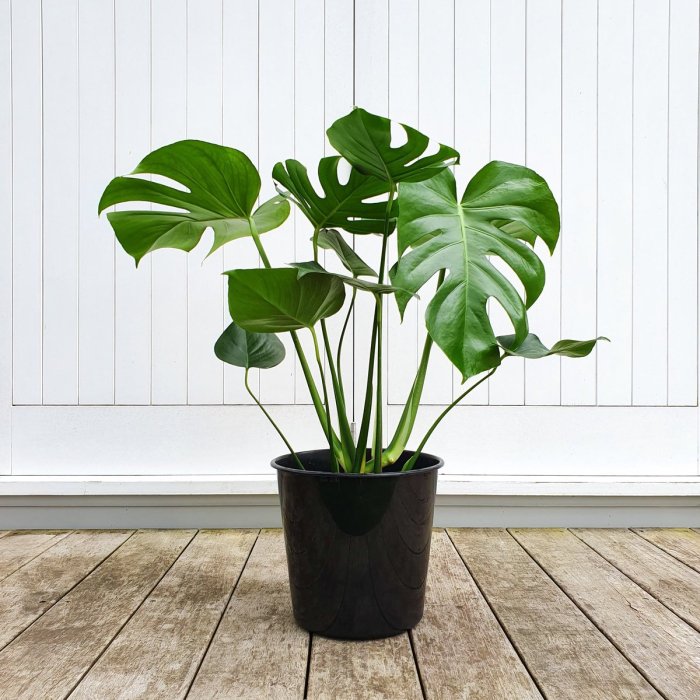
Monsteras go through distinct growth stages, each characterized by changes in leaf shape and size. Juvenile plants have smaller, heart-shaped leaves without fenestrations. As the plant matures, the leaves become larger, develop fenestrations, and eventually become deeply lobed.
The transition from juvenile to mature leaves can take several years, depending on the variety and growing conditions.
Summary
From the diverse varieties and propagation methods to the intricacies of care and the stylish integration into your home, mastering the art of Monstera cultivation is a rewarding journey. By understanding the unique needs of your Monstera and employing the tips and tricks Artikeld in this guide, you can ensure its vibrant health and longevity, transforming your indoor space into a breathtaking sanctuary.
So, embrace the challenge, nurture your plant, and enjoy the beauty and tranquility that a thriving Monstera brings to your home.
Clarifying Questions
How often should I fertilize my Monstera?
Feed your Monstera every 2-4 weeks during the growing season (spring and summer) with a balanced liquid fertilizer diluted to half strength.
Why are the leaves of my Monstera turning yellow?
Yellowing leaves can indicate overwatering, underwatering, nutrient deficiencies, or pests. Check your watering routine, soil moisture, and inspect for pests. A soil test can also help determine nutrient levels.
How do I repot my Monstera?
Repot your Monstera when its roots become root-bound, typically every 1-2 years, using a well-draining potting mix. Choose a pot only slightly larger than the previous one.
Can I grow a Monstera from a leaf cutting?
While possible, it’s more challenging to propagate Monsteras from leaf cuttings alone. Node cuttings (cuttings with a node, where roots form) are far more successful.