Rubber plant indoor cultivation is surprisingly rewarding! These striking plants, with their lush foliage and relatively low-maintenance needs, can transform any indoor space. This guide delves into everything you need to know, from selecting the perfect variety to troubleshooting common issues, ensuring your rubber plant thrives for years to come.
We’ll cover optimal growing conditions, watering and fertilizing techniques, and even explore the aesthetic benefits of incorporating these beauties into your home décor.
Rubber Plant Varieties for Indoor Thriving
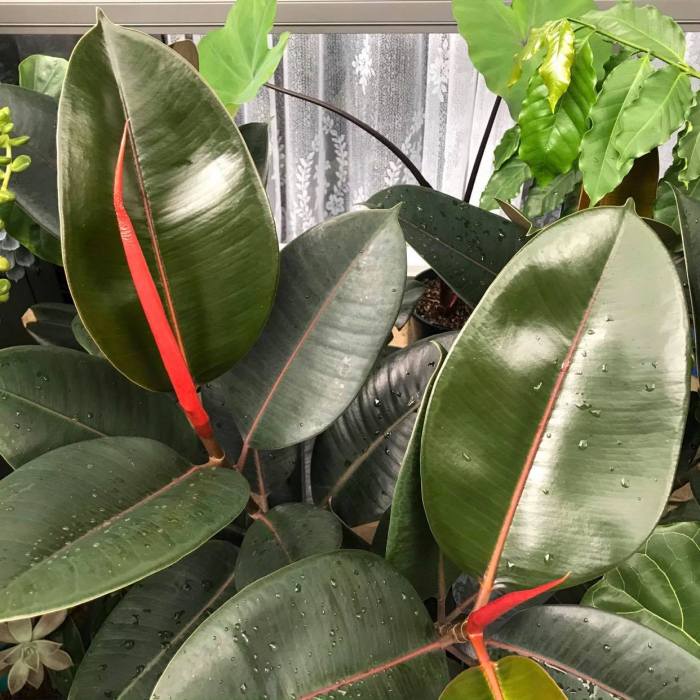
Rubber plants, with their striking foliage and relatively low-maintenance nature, are popular choices for indoor gardening. However, not all rubber plants are created equal. Understanding the diverse varieties available helps ensure you choose a plant that suits your space and care capabilities.
Popular Rubber Plant Varieties for Indoor Spaces
Several rubber plant varieties thrive indoors, each offering unique characteristics in terms of leaf size, shape, and color. The following table summarizes key features to aid in selection.
| Variety | Leaf Characteristics | Light Needs | Care Tips |
|---|---|---|---|
| Ficus elastica ‘Robusta’ | Large, oval, dark green leaves; glossy surface | Bright, indirect light; tolerates lower light | Regular watering; avoid overwatering; fertilize during growing season |
| Ficus elastica ‘Burgundy’ | Large, oval leaves; deep burgundy to dark red coloration | Bright, indirect light; more light tolerant than other varieties | Similar care to ‘Robusta’; may require more light to maintain color |
| Ficus elastica ‘Tineke’ | Variegated leaves with creamy-white and green markings; smaller than ‘Robusta’ | Bright, indirect light; more susceptible to leaf burn in direct sun | Regular watering; maintain consistent humidity; protect from extreme temperatures |
| Ficus elastica ‘Black Prince’ | Very dark, almost black leaves; glossy surface | Bright, indirect light; can tolerate lower light but color may fade | Similar care to ‘Robusta’; may benefit from occasional misting |
| Ficus elastica ‘Decora’ | Large, oval leaves; dark green with reddish-brown new growth | Bright, indirect light; tolerates lower light conditions | Regular watering; well-draining soil; avoid overwatering |
While all these varieties appreciate bright, indirect light, ‘Burgundy’ tends to require more light to retain its deep color. Variegated varieties like ‘Tineke’ are slightly more sensitive to direct sunlight and require more consistent humidity.
Optimal Indoor Growing Conditions, Rubber plant indoor
Providing the right environment is crucial for a thriving rubber plant indoors. This includes careful consideration of temperature, humidity, and light.
The ideal temperature range for rubber plants is between 65-80°F (18-27°C). Higher temperatures can lead to leaf drop, while lower temperatures can stunt growth. Maintaining humidity levels around 50% is beneficial, especially during drier months. Regular misting or placing the plant on a humidity tray can help.
Bright, indirect light is preferred; avoid placing them in direct sunlight, which can scorch the leaves. Both natural sunlight and artificial grow lights can be effective, but artificial light should mimic the spectrum of natural sunlight.
The best potting mix for rubber plants is well-draining and slightly acidic. Here’s a suggested mix:
- 2 parts potting soil
- 1 part perlite
- 1 part peat moss
This combination ensures proper drainage, preventing root rot, a common problem for overwatered rubber plants.
Watering and Fertilizing Rubber Plants
Proper watering and fertilization are key to maintaining healthy rubber plants. Overwatering is a common mistake, leading to root rot. Underwatering, on the other hand, results in wilting and leaf drop.
Water thoroughly when the top inch of soil is dry. Reduce watering frequency during winter months. The frequency depends on factors such as pot size, environmental conditions, and the season. A larger pot retains moisture longer than a smaller one.
During the active growing season (spring and summer), fertilize every 2-4 weeks with a balanced liquid fertilizer diluted to half strength. Reduce or stop fertilizing during the dormant period (fall and winter).
Signs of underwatering include dry, brittle leaves and wilting. Overwatering manifests as yellowing leaves, soggy soil, and a foul odor. Adjust watering accordingly to address these issues.
Common Problems and Their Solutions
Like all plants, rubber plants can be susceptible to certain pests, diseases, and environmental issues. Understanding these problems and their solutions is key to maintaining a healthy plant.
| Problem | Cause | Solution | Prevention |
|---|---|---|---|
| Leaf Drop | Overwatering, underwatering, temperature fluctuations, pests | Adjust watering; improve temperature stability; treat pests | Consistent watering, stable temperatures, regular pest checks |
| Yellowing Leaves | Overwatering, nutrient deficiency, root rot | Adjust watering; fertilize; repot if necessary | Proper watering, balanced fertilization |
| Stunted Growth | Lack of light, nutrient deficiency, root-bound | Increase light exposure; fertilize; repot | Sufficient light, regular fertilization, timely repotting |
| Pest Infestation (e.g., mealybugs, spider mites) | Infestation from other plants or environment | Treat with insecticidal soap or neem oil | Regular inspection, quarantine new plants |
Repotting is generally recommended every 2-3 years, or when the plant becomes root-bound. Choose a pot slightly larger than the previous one, and use fresh, well-draining potting mix.
Propagation and Maintenance
Rubber plants can be propagated easily from stem cuttings. Pruning helps maintain shape and size. Regular leaf cleaning enhances the plant’s appearance and health.
Propagation from Cuttings:Take a 4-6 inch stem cutting with several leaves. Remove the lower leaves and dip the cut end in rooting hormone. Plant in moist potting mix and cover with a plastic bag to maintain humidity. Once roots develop (usually within a few weeks), transplant into a separate pot.
Pruning:Prune in spring or early summer to maintain shape and size. Use sharp, clean pruning shears to make clean cuts just above a node. Remove any dead or damaged branches.
Leaf Cleaning:Gently wipe the leaves with a damp cloth to remove dust and debris. Avoid harsh chemicals.
Rubber Plant Aesthetics and Interior Design
Rubber plants, with their varied leaf colors and sizes, can complement many interior design styles. Their vertical growth habit makes them suitable for corners or shelves, adding a touch of greenery to any room.
- A large ‘Robusta’ rubber plant in a minimalist living room adds a bold, textural element.
- A smaller ‘Tineke’ in a bright kitchen brings a touch of variegation and life.
- A ‘Burgundy’ rubber plant placed near a south-facing window in a modern office adds a striking pop of color.
Imagine a ‘Black Prince’ rubber plant situated in a mid-century modern living room, positioned on a sleek, white side table near a large window. The deep, almost black leaves contrast beautifully with the clean lines of the furniture and the natural light filtering through the window, creating a sophisticated and calming atmosphere.
Final Review: Rubber Plant Indoor
Bringing a rubber plant indoors isn’t just about adding greenery; it’s about enriching your living space with a touch of nature’s elegance. With the right care and attention, your rubber plant will reward you with years of lush foliage, improving air quality and boosting your mood.
Remember to pay attention to the basics – light, water, and soil – and don’t hesitate to experiment to find what works best for your plant and your home. Happy growing!
FAQ
How often should I mist my rubber plant?
Misting isn’t strictly necessary, but it can help increase humidity, especially in dry environments. Mist once or twice a week, or as needed.
Can I use tap water to water my rubber plant?
It’s best to use filtered or distilled water, as tap water can contain minerals that can build up in the soil and harm the plant. Let tap water sit out overnight to allow chlorine to evaporate.
My rubber plant’s leaves are drooping. What should I do?
Drooping leaves often indicate underwatering or root rot. Check the soil moisture; if it’s dry, water thoroughly. If it’s soggy, repot with fresh, well-draining soil.
How do I know when to repot my rubber plant?
Repot when roots start growing out of the drainage holes or when the plant becomes root-bound (roots circling the pot). Spring is the best time to repot.