Amaryllis plant care isn’t as daunting as it might seem. These stunning blooms, known for their vibrant colors and impressive size, reward diligent care with months of breathtaking beauty. From selecting the perfect bulb to coaxing it through dormancy, understanding the nuances of amaryllis cultivation unlocks the secret to a thriving plant and spectacular flowers year after year.
This guide provides a practical, step-by-step approach to ensuring your amaryllis flourishes.
We’ll cover everything from choosing a healthy bulb and preparing the soil to mastering watering, fertilizing, and dealing with common pests and diseases. We’ll also delve into the specifics of light and temperature requirements, ensuring your amaryllis thrives in its environment, whether indoors or out.
By the end, you’ll be confident in your ability to nurture your amaryllis from bulb to bloom and beyond.
Amaryllis Bulb Selection and Preparation: Amaryllis Plant Care
Choosing the right amaryllis bulb is crucial for a successful bloom. Consider size, firmness, and overall appearance for optimal results. Larger bulbs generally produce more flowers, while smaller ones may take longer to bloom or produce fewer flowers. Preparing the bulb properly before planting ensures healthy growth.
Amaryllis Bulb Size Comparison
The size of the amaryllis bulb directly impacts the number of blooms you can expect. Larger bulbs usually produce more impressive displays.
| Bulb Size (Circumference) | Expected Blooms | Bloom Size | Time to Bloom |
|---|---|---|---|
| 12-14 cm | 1-2 | Medium | 6-8 weeks |
| 14-16 cm | 2-3 | Large | 6-8 weeks |
| 16-18 cm | 3-4+ | Large | 5-7 weeks |
| 18+ cm | 4+ | Very Large | 5-7 weeks |
Amaryllis Bulb Preparation
Before planting, inspect the bulb for any signs of damage, rot, or disease. Remove any damaged or discolored sections with a sharp, clean knife. Soaking the bulb in lukewarm water for a few hours before planting can help it rehydrate and encourage faster growth, though it’s not strictly necessary.
Amaryllis Bulb Varieties
Several amaryllis varieties offer diverse colors and bloom characteristics. Here are three popular choices:
- Apple Blossom:Known for its delicate pink and white blooms with a subtle fragrance.
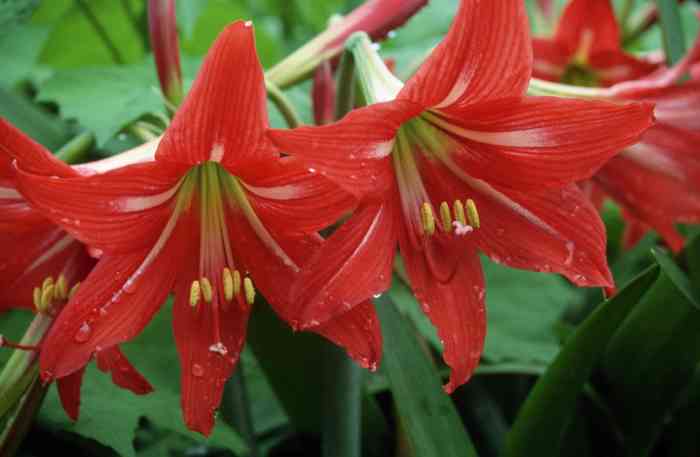
- Red Lion:A classic choice boasting vibrant, deep red flowers.
- White Christmas:Produces elegant pure white blooms, perfect for a winter display.
Planting and Potting Amaryllis
Selecting the right pot and potting mix is vital for successful amaryllis cultivation. The pot should be appropriately sized to accommodate the bulb and allow for proper drainage. The potting mix should be well-draining to prevent root rot.
Ideal Pot Size and Type
The pot should be just slightly larger than the bulb’s diameter. Avoid overly large pots, as this can lead to excessive watering and root rot.
- Terracotta pots offer excellent drainage.
- Plastic pots retain moisture longer.
- Choose a pot with drainage holes.
Potting Mix Composition
A well-draining potting mix is essential for preventing root rot. Avoid using garden soil directly, as it may be too dense and retain too much moisture.
| Potting Mix Recipe | Pros | Cons | Suitability |
|---|---|---|---|
| Potting soil + perlite (1:1 ratio) | Good drainage, aeration | May dry out quickly | Most amaryllis |
| Potting soil + peat moss + perlite (1:1:1 ratio) | Excellent drainage, moisture retention | Can become compacted | All amaryllis types |
| Coco coir + perlite (2:1 ratio) | Excellent drainage, moisture retention | Requires more frequent watering | All amaryllis types |
| Commercial amaryllis mix | Balanced nutrients, good drainage | Can be expensive | All amaryllis types |
Planting Technique
Planting depth is crucial. The top third of the bulb should remain above the soil surface. Plant the bulb with the pointed end facing upwards.
- Place a layer of potting mix in the bottom of the pot.
- Position the bulb on top of the mix, pointed end up.
- Gently fill the pot with more potting mix, leaving the top third of the bulb exposed.
- Water thoroughly after planting.
Amaryllis Watering and Fertilizing
Maintaining the right watering and fertilizing schedule is vital for healthy amaryllis growth and abundant blooms. Overwatering or underwatering can negatively impact the plant’s health.
Watering Schedule
Water thoroughly when the top inch of soil feels dry. Reduce watering during dormancy.
- Planting:Water moderately after planting.
- Blooming:Water more frequently, keeping the soil consistently moist but not soggy.
- Dormancy:Water sparingly, just enough to prevent the bulb from shriveling.
Importance of Drainage
Excellent drainage prevents root rot, a common problem in amaryllis. Ensure the pot has drainage holes and use a well-draining potting mix.
Fertilizer Schedule
Feed your amaryllis regularly during the growing season (spring and summer) with a balanced liquid fertilizer.
- Apply a balanced liquid fertilizer every 2-3 weeks during active growth.
- Reduce or stop fertilizing during dormancy.
- Use a fertilizer specifically formulated for flowering bulbs.
Light and Temperature Requirements for Amaryllis
Amaryllis thrives in bright, indirect sunlight. Temperature plays a significant role in its growth and flowering.
Ideal Light Conditions
Amaryllis needs at least six hours of bright, indirect sunlight daily. Direct sunlight can scorch the leaves.
Optimal Temperature Range
The ideal temperature range for amaryllis is between 65-75°F (18-24°C). Temperature fluctuations can affect blooming and overall plant health. Avoid exposing the plant to temperatures below 50°F (10°C) or above 85°F (29°C).
Providing Adequate Light and Temperature
Indoors, place the amaryllis near a south-facing window, but protect it from direct sunlight. Outdoors, choose a location with bright, indirect light and shelter from strong winds and extreme temperatures. During particularly hot periods, providing some shade during the hottest part of the day may be necessary.
Amaryllis Pest and Disease Management
Several pests and diseases can affect amaryllis. Early detection and treatment are crucial.
Common Pests and Diseases
- Red spider mites:Tiny mites that suck sap from leaves, causing yellowing and webbing.
- Aphids:Small insects that cluster on stems and leaves, sucking sap.
- Mealybugs:Small, white, cottony insects that infest stems and leaves.
- Root rot:A fungal disease caused by overwatering, leading to root decay.
- Gray mold (Botrytis):A fungal disease causing gray mold on leaves and flowers.
Pest and Disease Control
Prevention is key. Maintain good hygiene, ensure proper watering, and provide adequate air circulation. For pest control, consider using insecticidal soap or neem oil. For fungal diseases, ensure good air circulation and consider using a fungicide if necessary.
Recognizing Symptoms and Treatments
Regularly inspect your amaryllis for signs of pests or diseases. Address any problems promptly to prevent further damage. Early detection is key to effective treatment.
Amaryllis After Blooming Care and Dormancy
Post-bloom care is essential for the plant’s long-term health and future flowering. Properly inducing dormancy ensures the bulb’s survival and prepares it for the next growing season.
Post-Bloom Care
Continue watering and fertilizing as usual until the foliage begins to yellow and die back naturally. Gradually reduce watering as the leaves wither.
Inducing Dormancy
Once the foliage has completely died back, cut the stems down to the base. Allow the pot to dry out completely. This signals the bulb to enter its dormant phase.
Storing Amaryllis Bulbs During Dormancy, Amaryllis plant care
- Remove the bulb from the pot.
- Gently remove any loose soil from the bulb.
- Allow the bulb to dry completely in a cool, dark, and dry place for several weeks.
- Store the bulb in a cool, dry, and dark place (around 50-55°F or 10-13°C) for 8-10 weeks.
- Repot the bulb in fresh potting mix and resume watering once new growth appears.
Propagating Amaryllis
Amaryllis can be propagated through offsets or seeds. Offsets are small bulbs that grow around the mother bulb, while seeds are produced after flowering.
Propagation Methods
Propagation via offsets is generally easier and faster than from seed. Seed propagation takes significantly longer to produce flowering plants.
Advantages and Disadvantages
| Method | Advantages | Disadvantages |
|---|---|---|
| Offsets | Faster flowering, genetically identical to parent plant | Limited number of offsets per bulb |
| Seeds | Produces many plants, genetic diversity | Slower flowering, potential for variation |
Propagating Amaryllis Using Offsets
- Gently remove the offsets from the mother bulb during dormancy.
- Ensure each offset has healthy roots.
- Plant the offsets in small pots with a well-draining potting mix.
- Water sparingly until new growth appears.
Common Amaryllis Problems and Solutions
Several problems can affect amaryllis. Early identification and appropriate solutions are crucial.
Common Problems and Solutions
| Problem | Cause | Solution | Prevention |
|---|---|---|---|
| Yellowing leaves | Overwatering, underwatering, nutrient deficiency | Adjust watering, fertilize appropriately | Proper watering, regular fertilization |
| Drooping flowers | Lack of water, insufficient light | Water thoroughly, adjust light levels | Adequate watering, sufficient light |
| No blooms | Insufficient light, improper dormancy | Provide more light, ensure proper dormancy | Sufficient light, proper dormancy |
| Root rot | Overwatering, poor drainage | Repot in well-draining mix, adjust watering | Well-draining mix, proper watering |
Characteristics of a Healthy Amaryllis Plant
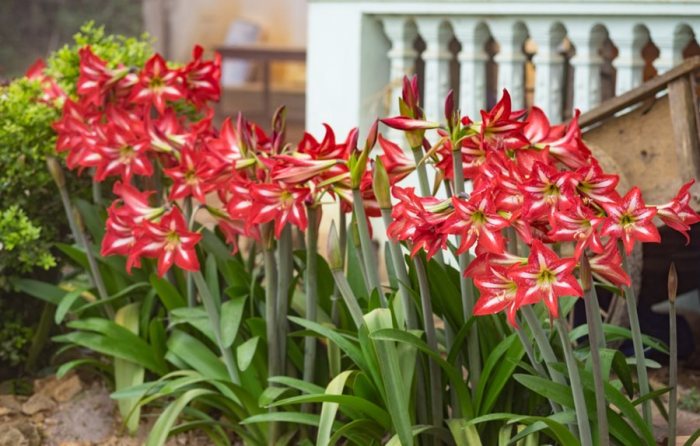
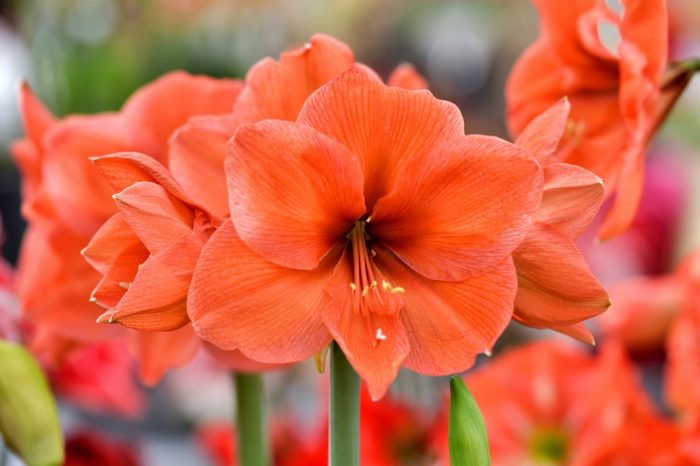
A healthy amaryllis displays vibrant green, firm leaves. The stems are strong and upright, supporting the large, showy flowers. The flowers are fully open, with rich colors and no signs of wilting or disease.
Concluding Remarks
Mastering amaryllis plant care unlocks a world of vibrant color and lasting beauty. By following the steps Artikeld in this guide, you can ensure your amaryllis thrives, rewarding you with spectacular blooms season after season. Remember that attentive observation and timely adjustments are key to success.
Don’t be afraid to experiment and learn from your experiences – each season brings new opportunities to perfect your amaryllis growing techniques.
Question Bank
How long does it take for an amaryllis to bloom?
Generally, 6-10 weeks from planting to bloom, depending on bulb size and growing conditions.
Can I plant my amaryllis bulb outside?
In warmer climates, yes, but they’ll need protection from frost. In colder climates, they’re best grown indoors.
What should I do if my amaryllis leaves are yellowing?
Yellowing leaves can indicate overwatering, underwatering, or nutrient deficiency. Check the soil moisture and adjust watering accordingly. Consider fertilizing with a balanced plant food.
My amaryllis isn’t blooming. What’s wrong?
Insufficient light, incorrect temperature, or improper watering can prevent blooming. Ensure it receives ample light and is in a suitable temperature range.