Calathea plant care might seem daunting, but mastering these vibrant beauties is more achievable than you think. These plants, known for their stunning leaf patterns and dramatic foliage, reward attentive care with a captivating display of nature’s artistry. This guide delves into every aspect of Calathea cultivation, from selecting the perfect variety to troubleshooting common problems, ensuring your Calatheas thrive.
We’ll cover everything from understanding their specific light, water, and humidity needs to mastering the art of propagation. Whether you’re a seasoned plant parent or a curious beginner, this comprehensive resource will equip you with the knowledge to nurture these exquisite plants and enjoy their beauty for years to come.
Get ready to unlock the secrets to happy, healthy Calatheas!
Calathea Plant Varieties
Calatheas are prized for their stunning leaf patterns and textures, making them a popular choice for indoor plant enthusiasts. Their diversity offers a wide range of options to suit different tastes and home environments. Let’s explore some of the most beloved varieties.
Popular Calathea Varieties
| Variety Name | Leaf Pattern Description | Size (height/width) | Special Care Needs |
|---|---|---|---|
| Calathea Orbifolia | Large, round leaves with prominent, light green veins radiating from the center against a dark green background. | 2-3 ft (H) / 1-2 ft (W) | High humidity, consistent moisture, indirect bright light. |
| Calathea Medallion (Calathea roseopicta ‘Medallion’) | Oval leaves with a striking pattern of dark green ovals and creamy white markings along the veins. | 1-2 ft (H) / 1-2 ft (W) | High humidity, well-draining soil, protection from drafts. |
| Calathea Zebrina | Long, lance-shaped leaves with dark green stripes resembling zebra stripes on a lighter green background. | 1.5-2 ft (H) / 1-2 ft (W) | Bright, indirect light, consistently moist soil, average humidity. |
| Calathea Makoyana (Peacock Plant) | Oval leaves with a vibrant pattern of light green, dark green, and reddish-purple markings, resembling a peacock’s feathers. | 1-1.5 ft (H) / 1-1.5 ft (W) | High humidity, shade from direct sunlight, well-draining soil. |
| Calathea Lancifolia (Rattlesnake Plant) | Long, narrow leaves with a wavy edge and dark green oblong markings on a lighter green background, resembling a rattlesnake’s pattern. | 1-2 ft (H) / 1-1.5 ft (W) | Bright, indirect light, evenly moist soil, good air circulation. |
Calathea Light Requirements: Varietal Differences, Calathea plant care
Light requirements can vary slightly among Calathea types. For instance, Calathea Orbifolia prefers bright, indirect light, while Calathea Lancifolia tolerates slightly lower light conditions. Calathea Medallion thrives in medium to bright indirect light, avoiding harsh direct sun.
Calathea Leaf Variations: A Visual Guide
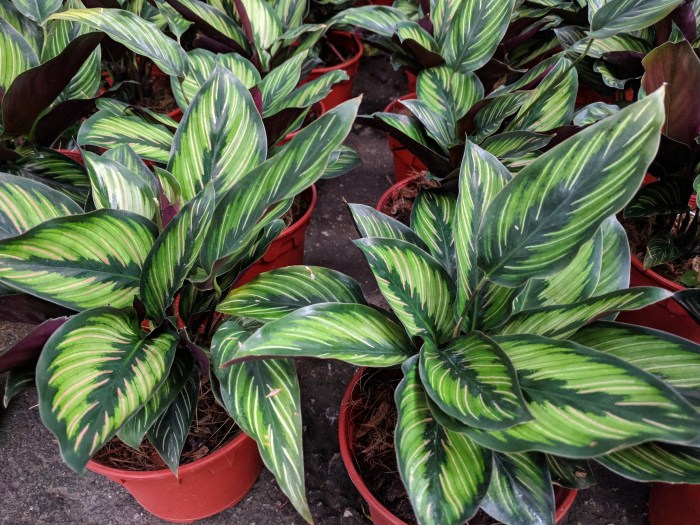
Imagine a gallery of leaves. The Calathea Orbifolia displays large, nearly perfectly round leaves with striking veination. The Calathea Zebrina showcases long, elegant leaves adorned with parallel, dark green stripes. The Calathea Makoyana boasts oval leaves, richly patterned with shades of green and purple, reminiscent of a peacock’s plumage.
Finally, the Calathea Lancifolia presents uniquely long, narrow leaves, with dark markings that mimic a rattlesnake’s pattern.
Calathea Lighting Requirements
Providing the right amount of light is crucial for a thriving Calathea. Too much or too little light can lead to various problems.
Ideal Lighting Conditions
Calatheas thrive in bright, indirect light. Direct sunlight should be avoided as it can scorch their delicate leaves. A north- or east-facing window is usually ideal, or a spot several feet away from a south- or west-facing window.
Signs of Light Issues
Insufficient light often leads to leggy growth, where the plant stretches towards the light source, and pale, washed-out leaf color. Excessive light, on the other hand, results in leaf burn, characterized by brown, crispy patches on the foliage.
Preventing Light-Related Problems
Regularly monitor your plant’s position and adjust accordingly. Rotate the pot periodically to ensure even light distribution. Use sheer curtains or blinds to filter direct sunlight.
Watering Calatheas
Consistent moisture is key, but overwatering is a common mistake. Let’s explore the best watering practices.
Calathea Watering Schedule
Water thoroughly when the top inch or two of soil feels dry. During warmer months, this might be every few days; in winter, it could be once a week or even less. Pot size influences watering frequency; larger pots retain moisture longer.
Signs of Watering Issues
Underwatering causes dry, brittle leaves and wilting. Overwatering leads to yellowing leaves, root rot (a foul odor from the soil is a tell-tale sign), and eventual plant death.
Checking Soil Moisture
Before watering, insert your finger about an inch into the soil. If it feels dry, it’s time to water. If it’s still moist, wait a day or two before checking again.
Calathea Soil and Potting
The right soil and pot are essential for healthy root development and drainage.
Well-Draining Potting Mix Recipe
- 2 parts peat moss
- 1 part perlite
- 1 part orchid bark (optional, for extra drainage)
Importance of Drainage and Aeration
Good drainage prevents waterlogging, which can lead to root rot. Aeration ensures proper oxygen flow to the roots, promoting healthy growth.
Ideal Pot Size and Material
Choose a pot that’s slightly larger than the root ball, allowing for growth. Terracotta pots offer better drainage than plastic pots, but they also dry out faster.
Calathea Humidity and Temperature
Calatheas are tropical plants, so maintaining the right humidity and temperature is crucial for their well-being.
Ideal Humidity and Temperature
Aim for humidity levels between 50-70% and temperatures between 65-80°F (18-27°C). Avoid placing them near heating vents or air conditioners.
Increasing Humidity
To increase humidity, place the pot on a humidity tray (a tray filled with pebbles and water, ensuring the pot’s base doesn’t sit directly in the water), group plants together, or use a humidifier.
Effects of Temperature Fluctuations
Sudden temperature changes can stress Calatheas, leading to leaf drop and wilting. Maintain a consistent environment as much as possible.
Calathea Fertilization and Nutrition
Regular fertilization provides essential nutrients for healthy growth.
Fertilization Schedule
Feed your Calathea with a balanced liquid fertilizer diluted to half strength every 2-4 weeks during the growing season (spring and summer). Reduce or stop fertilizing during the dormant season (fall and winter).
Suitable Fertilizers
Use a balanced liquid fertilizer specifically formulated for indoor plants. Avoid over-fertilizing, as this can damage the roots.
Signs of Nutrient Deficiencies and Excesses
Nutrient deficiencies can manifest as yellowing leaves or stunted growth. Over-fertilization can lead to leaf burn and root damage.
Common Calathea Pests and Diseases
Like all plants, Calatheas are susceptible to certain pests and diseases.
Common Pests and Diseases
| Pest/Disease | Symptoms | Prevention | Treatment |
|---|---|---|---|
| Spider mites | Fine webbing on leaves, stippling (tiny yellow dots) | Regularly inspect plants, maintain high humidity | Use insecticidal soap or neem oil |
| Mealybugs | White, cottony masses on leaves and stems | Regularly inspect plants, quarantine new plants | Manually remove mealybugs or use insecticidal soap |
| Root rot | Yellowing leaves, wilting, foul odor from soil | Well-draining soil, avoid overwatering | Repot in fresh, dry soil, may need fungicide |
Pest Control Methods
Organic methods like insecticidal soap and neem oil are generally preferred for Calatheas. Chemical pesticides should be used as a last resort and with caution.
Preventative Measures
Regularly inspect your plants for pests and diseases. Quarantine new plants before introducing them to your existing collection. Maintain good air circulation to prevent fungal growth.
Calathea Propagation
Propagating Calatheas allows you to expand your collection or share these beautiful plants with others.
Propagation Methods
Calatheas can be propagated through division (separating the plant during repotting) and stem cuttings (taking cuttings from healthy stems).
Steps Involved
Division involves carefully separating the root ball into smaller sections, each with its own roots and leaves. Stem cuttings require taking a 4-6 inch cutting, removing lower leaves, and rooting it in moist soil or water.
Comparison of Methods
Division is generally easier and has a higher success rate, while stem cuttings can take longer and require more care. Both methods can successfully propagate Calatheas.
Troubleshooting Calathea Problems: Calathea Plant Care
Let’s address some common Calathea issues and their solutions.
Troubleshooting Guide
Drooping Leaves:Could indicate underwatering, overwatering, or low humidity. Check soil moisture and adjust watering accordingly. Increase humidity if needed.
Leaf Browning:Could be due to direct sunlight, low humidity, or over-fertilization. Move the plant away from direct sun, increase humidity, and avoid over-fertilizing.
Yellowing Leaves:Could signify overwatering, nutrient deficiencies, or root rot. Check soil moisture, adjust watering, and fertilize if needed. If root rot is suspected, repot in fresh soil.
Leggy Growth:Indicates insufficient light. Move the plant to a brighter location, but avoid direct sunlight.
Healthy vs. Unhealthy Leaves
Healthy Calathea leaves are firm, vibrant in color, and display their characteristic patterns clearly. Unhealthy leaves may be limp, wilted, discolored (yellow, brown, or pale), or show signs of damage (holes, spots, or webbing).
Last Word
Caring for Calatheas is a rewarding journey, leading to a vibrant and visually stunning addition to your home. By understanding their unique needs – from light and water preferences to humidity and soil requirements – you can ensure your Calatheas flourish.
Remember, consistent attention and a little patience will be handsomely repaid by these captivating plants. So, embrace the challenge, and watch your Calatheas thrive!
Common Queries
How often should I mist my Calathea?
Mists are helpful, but not essential. Aim for 2-3 times a week, especially in dry environments. Focus on increasing humidity through other methods (humidity tray, grouping plants) rather than relying solely on misting.
My Calathea leaves are curling. What’s wrong?
Curling leaves usually indicate underwatering or low humidity. Check the soil moisture; if dry, water thoroughly. Increase humidity around the plant using a humidity tray or pebble tray.
Can I use tap water for my Calathea?
It’s best to use filtered or distilled water, as tap water can contain minerals that may harm your Calathea. Let tap water sit out overnight to allow chlorine to dissipate before using it.
What should I do if I see brown leaf tips on my Calathea?
Brown tips often point to low humidity, infrequent watering, or mineral buildup in the soil. Increase humidity, adjust watering, and consider repotting with fresh soil.