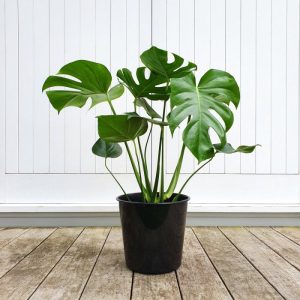
Calathea indoor plants, with their strikingly patterned leaves, are more than just houseplants; they’re living art. These captivating foliage stars bring a touch of the tropics to any home, but their beauty comes with a bit of a challenge.
Understanding their specific needs—from light and humidity to soil and propagation—is key to keeping them thriving. This guide delves into everything you need to know to successfully cultivate these stunning plants, transforming your home into a vibrant indoor jungle.
From choosing the perfect variety to mastering propagation techniques and troubleshooting common issues, we’ll cover it all. We’ll explore the unique characteristics of popular Calathea varieties, offering practical tips for maintaining optimal health and addressing potential problems. Get ready to unlock the secrets to successfully growing these beautiful and often temperamental plants.
Calathea Varieties, Propagation, Care, and Styling
Calatheas, with their striking leaf patterns and vibrant colors, are prized houseplants. Their dramatic foliage brings a touch of the tropics indoors, but successfully cultivating them requires understanding their specific needs. This guide delves into popular varieties, propagation techniques, pest and disease management, and styling ideas to help you enjoy these beautiful plants to the fullest.
Popular Calathea Varieties and Their Care
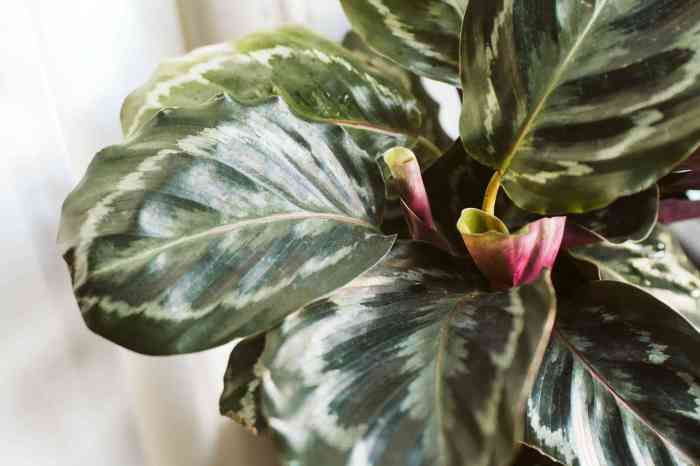
Several Calathea varieties stand out for their unique beauty and relative ease of care (though all Calatheas need a bit of pampering!). Here’s a look at five popular choices and their care requirements:
| Variety Name | Leaf Pattern Description | Color Description | Care Level Difficulty |
|---|---|---|---|
| Calathea Medallion | Intricate, feathered pattern with dark green and lighter green markings | Deep green, lime green, and sometimes hints of burgundy | Medium |
| Calathea Orbifolia | Large, round leaves with prominent, parallel veins | Bright, silvery-green with darker green veins | Medium |
| Calathea Lancifolia (Rattlesnake Plant) | Long, lance-shaped leaves with a distinctive wavy pattern | Dark green with lighter green markings, often a reddish underside | Medium |
| Calathea Zebrina | Long, oval leaves with striking, dark green stripes on a lighter green background | Dark and light green stripes, often with a reddish underside | Medium |
| Calathea Makoyana (Peacock Plant) | Oval leaves with a striking pattern resembling a peacock’s feather | Deep green, light green, and pinkish-red markings | Medium |
Light Requirements: Calathea Medallion vs. Orbifolia
Both Calathea Medallion and Calathea Orbifolia thrive in bright, indirect light. However, Orbifolia, with its larger leaves, can tolerate slightly less light than the Medallion. Direct sunlight will scorch the leaves of both varieties.
Watering Calathea Lancifolia
Calathea lancifolia prefers consistently moist but not soggy soil. Water thoroughly when the top inch of soil feels dry, allowing excess water to drain completely. Bottom watering is a good method to prevent overwatering and leaf damage.
Ideal Humidity for Calatheas
Calatheas are tropical plants and need high humidity (around 50-70%). To maintain this, group plants together, place the pot on a pebble tray with water, or use a humidifier. Regularly misting the leaves can also help, but ensure the water droplets are fine to avoid fungal growth.
Calathea Propagation Methods
Propagating Calatheas allows you to expand your collection and share these beautiful plants. Three common methods are division, stem cuttings, and leaf cuttings.
- Division:This is the easiest method for established plants. Carefully separate the root ball into sections, ensuring each section has healthy roots and leaves. Replant each section in its own pot.
- Stem Cuttings:Take a cutting from a healthy stem with a few leaves. Remove lower leaves and dip the cut end in rooting hormone before planting in moist potting mix. Keep the soil moist and provide high humidity.
- Leaf Cuttings:This method is more challenging and success is less guaranteed. Take a healthy leaf cutting and plant it in moist sphagnum moss or a well-draining mix. Maintain high humidity and warmth. Root formation is slow and may not always be successful.
Propagating Calatheas Through Leaf Cuttings: A Step-by-Step Guide
- Select a healthy, mature leaf.
- Using a sharp, clean knife or scissors, cut the leaf into sections, each with a portion of the stem.
- Dip the cut ends in rooting hormone (optional).
- Plant the leaf cuttings in a well-draining mix of sphagnum moss and perlite, ensuring good contact with the medium.
- Cover the pot with a clear plastic bag or humidity dome to maintain high humidity.
- Place the pot in a warm, bright location, out of direct sunlight.
- Regularly mist the cuttings to keep them moist.
- After several weeks, check for root formation. This is a slow process and may take several months.
Challenges with Leaf Cuttings: Leaf cuttings often fail to produce a whole new plant, frequently only producing new leaves from the original leaf base without developing roots or a complete plantlet. Patience and high humidity are key.
Dividing a Mature Calathea Plant
The best time to divide a Calathea is during spring or early summer when new growth is starting. Use a clean, sharp knife or trowel to carefully separate the root ball into sections, each with its own set of roots and leaves.
Replant each section in fresh, well-draining potting mix.
Visual Representation of Calathea Propagation via Division
Imagine a mature Calathea plant with a dense, intertwined root system. The root ball is carefully separated into two or more sections. Each section contains a portion of the original root system and several healthy stems with leaves.
These separated sections are then replanted individually, each developing into a new, independent plant.
Calathea Pests and Diseases
While relatively hardy, Calatheas can be susceptible to certain pests and diseases. Early detection and treatment are crucial.
| Pest Name | Description | Damage | Treatment Method |
|---|---|---|---|
| Spider Mites | Tiny arachnids that spin webs on the undersides of leaves | Stippling, yellowing, and leaf drop | Neem oil spray or insecticidal soap |
| Mealybugs | Small, white, cottony insects | Leaf discoloration, stunted growth, and honeydew secretion | Isopropyl alcohol swabbing or insecticidal soap |
| Aphids | Small, soft-bodied insects that cluster on leaves and stems | Leaf curling, yellowing, and sticky honeydew secretion | Insecticidal soap or neem oil spray |
| Scale Insects | Small, armored insects that attach themselves to leaves and stems | Leaf discoloration, stunted growth, and honeydew secretion | Scraping off insects or using insecticidal soap |
Signs and Symptoms of Calathea Diseases
Root rot, a common fungal disease, manifests as wilting, yellowing leaves, and a foul odor emanating from the soil. Fungal leaf spots appear as brown or black spots on the leaves. Overwatering is a major contributing factor to both.
Preventative Measures for Pests and Diseases
Maintaining good air circulation, avoiding overwatering, and regularly inspecting plants for pests are key preventative measures. Quarantine new plants before introducing them to your existing collection.
Treatment Methods for Calathea Diseases
For root rot, repotting in fresh, well-draining soil is crucial. Affected roots should be trimmed away. For fungal leaf spots, removing affected leaves and applying a fungicide may be necessary. Organic options like neem oil and copper fungicide are available.
Calathea Styling and Placement in Home Decor, Calathea indoor plant
Calatheas’ striking foliage makes them versatile additions to various home décor styles.
- Minimalist:A single Calathea in a simple, modern pot can be a stunning focal point.
- Bohemian:Pair Calatheas with other textured plants and macrame hangers for a relaxed, eclectic vibe.
- Modern:Use Calatheas as a pop of color in a sleek, contemporary setting, perhaps in a geometric pot.
Suitable Containers and Planters
Choose pots with drainage holes to prevent root rot. Terracotta pots offer good aeration, while ceramic or plastic pots provide more consistent moisture. Consider the pot’s aesthetic appeal and size in relation to the plant.
Best Locations Within a Home
Locate Calatheas in bright, indirect light, away from drafts and direct sunlight. Bathrooms and kitchens, with their higher humidity, are often ideal locations. East- or west-facing windows usually offer the best light conditions.
Calathea Placement Scenario: Living Room
A Calathea Orbifolia sits on a side table in a living room with a minimalist design. The table is made of light wood, and the pot is a simple, sleek ceramic planter in a neutral color. The plant receives bright, indirect light from a nearby window, and the room’s humidity is maintained with a humidifier.
The Calathea’s silvery-green leaves complement the room’s calm, sophisticated atmosphere.
Calathea Soil and Fertilizer Needs
The right soil and fertilization are key to a healthy Calathea.
Ideal Soil Composition
Calatheas need well-draining soil that retains some moisture. A mix of peat moss, perlite, and orchid bark provides excellent drainage and aeration, preventing root rot. The soil should be slightly acidic (pH 5.5-6.5).
Homemade Potting Mix Recipe
Combine equal parts peat moss, perlite, and orchid bark. You can also add a small amount of coco coir for improved moisture retention.
Importance of Fertilizing
Fertilizing provides essential nutrients for healthy growth. Use a balanced, water-soluble fertilizer diluted to half strength during the growing season (spring and summer). Reduce or stop fertilizing during the dormant period (fall and winter).
Fertilization Schedule
Fertilize every 2-4 weeks during spring and summer. Reduce fertilization to once a month in the fall and stop completely in winter. Always follow the instructions on the fertilizer package.
Final Conclusion: Calathea Indoor Plant
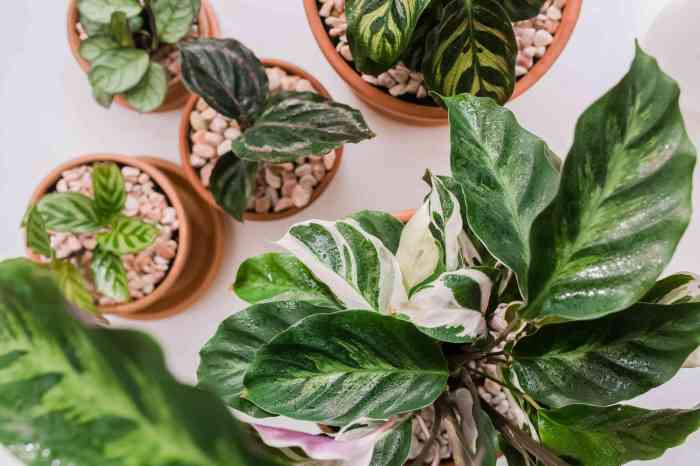
Mastering the art of Calathea care is a rewarding journey. While these plants demand attention, their vibrant beauty and the satisfaction of nurturing them to their full potential make it all worthwhile. By understanding their needs and following the tips Artikeld in this guide, you can enjoy the stunning visual impact of Calatheas in your home for years to come.
Remember, patience and observation are your best allies in this endeavor; with a little care, your Calatheas will flourish, adding a unique and elegant touch to your living space.
Questions and Answers
Are Calatheas toxic to pets?
While not highly toxic, ingestion of Calathea leaves can cause mild gastrointestinal upset in pets. Keep them out of reach of curious animals.
Why are my Calathea leaves curling?
Curling leaves often indicate underwatering, low humidity, or temperature fluctuations. Check your watering routine, humidity levels, and ensure the plant isn’t near drafts or heating/cooling vents.
How often should I repot my Calathea?
Repotting is usually needed every 1-2 years, or when the plant becomes root-bound. Choose a pot slightly larger than the previous one.
What should I do if my Calathea develops brown leaf tips?
Brown tips often signify low humidity, fluoride in your water, or improper watering. Try increasing humidity, using filtered water, and adjusting your watering schedule.