Calathea Ornata plant care isn’t rocket science, but these striking plants do demand a bit more attention than your average houseplant. Their vibrant, patterned leaves are a reward for understanding their specific needs. This guide dives into the essentials – light, water, soil, humidity, and more – to help you nurture a thriving Calathea Ornata.
We’ll cover everything from choosing the right pot to dealing with common pests, ensuring your plant flourishes for years to come.
Calathea Ornata Light Requirements
Calathea Ornata, with their stunning, vividly striped leaves, are prized houseplants. However, their beauty comes with specific light needs. Understanding these needs is crucial for keeping your plant healthy and vibrant.
Ideal Light Conditions
Calathea Ornata thrive in bright, indirect light. Direct sunlight can scorch their delicate leaves, causing unsightly brown patches and wilting. Indirect light, however, allows them to photosynthesize effectively without the harshness of direct rays. Think of the dappled light filtering through a sheer curtain or the soft light from a north-facing window.
Signs of Light Issues
Insufficient light leads to leggy growth, where the plant stretches towards the light source, resulting in weak stems and sparse foliage. The leaves may also lose their vibrant color, becoming paler and less striking. Conversely, excessive light manifests as scorched, crispy leaf edges and brown or bleached patches on the leaf surfaces.
The plant might also exhibit wilting, even with adequate watering.
Suitable Indoor Locations
East- or west-facing windows, offering morning or afternoon indirect light, are usually ideal. A north-facing window provides consistently soft light, while a south-facing window might require more filtering (sheer curtains or a few feet of distance) to prevent direct sun exposure.
Avoid placing them in dimly lit corners or areas with minimal natural light.
Light Levels and Their Effects
| Light Level | Effect on Calathea Ornata |
|---|---|
| Low | Leggy growth, pale leaves, slow growth |
| Medium (Bright Indirect) | Optimal growth, vibrant leaf color, healthy foliage |
| Bright Direct | Leaf scorch, brown patches, wilting |
Calathea Ornata Watering Techniques: Calathea Ornata Plant Care
Proper watering is paramount to the health of your Calathea Ornata. Overwatering or underwatering can both lead to significant problems, so finding the right balance is key.
Optimal Watering Schedule
Water your Calathea Ornata when the top inch or two of soil feels dry to the touch. This frequency varies depending on the season and humidity levels. During warmer months, you might need to water more often, perhaps every 2-3 days.
In winter, when growth slows, watering might be needed only every week or even less frequently. Always check the soil moisture before watering.
Signs of Watering Issues
Underwatering causes the leaves to curl, droop, and become brittle. The soil will be completely dry. Overwatering, on the other hand, leads to yellowing leaves, root rot (indicated by a foul odor from the soil), and mushy stems. The soil will remain consistently soggy.
Watering Methods
Thoroughly water the plant until water drains from the drainage holes. Avoid letting the plant sit in standing water, as this can lead to root rot. Bottom watering, where you place the pot in a tray of water for a short period, allows the soil to absorb water gradually, reducing the risk of overwatering.
Step-by-Step Watering Guide
- Check the soil moisture. If the top inch or two is dry, proceed to watering.
- Water thoroughly until water drains from the drainage holes.
- Allow excess water to drain completely. Do not let the plant sit in standing water.
- Monitor the plant for signs of underwatering or overwatering.
Calathea Ornata Soil and Potting
The right soil and pot are crucial for providing your Calathea Ornata with the ideal growing environment. This ensures proper drainage, aeration, and moisture retention.
Ideal Soil Composition
Calathea Ornata prefer a well-draining, slightly acidic soil that retains some moisture. The soil should be airy and loose to prevent waterlogging, which can lead to root rot. A good mix should contain peat moss, perlite, or orchid bark to improve drainage and aeration.
Suitable Potting Mixes
A commercially available potting mix specifically formulated for African violets or orchids often works well. You can also create your own mix by combining equal parts peat moss, perlite, and coco coir.
Pot Types
Terracotta pots offer better aeration but dry out more quickly than plastic pots. Plastic pots retain moisture longer, which can be beneficial in drier environments, but they may increase the risk of overwatering if not monitored carefully. Choose a pot with drainage holes to prevent waterlogging.
Soil Types: Pros and Cons
| Soil Type | Pros | Cons |
|---|---|---|
| Peat-based mix | Good moisture retention, acidic pH | Can become compacted, requires frequent watering |
| Coco coir-based mix | Excellent drainage, good aeration | May dry out quickly, needs more frequent watering |
| Orchid bark mix | Exceptional drainage, airy | May dry out very quickly, requires frequent watering and fertilization |
Calathea Ornata Humidity and Temperature
Calathea Ornata are tropical plants, so maintaining appropriate humidity and temperature levels is essential for their well-being. Fluctuations in these factors can significantly impact their health and appearance.
Ideal Humidity Range
These plants thrive in high humidity environments, ideally above 50%. Low humidity can lead to dry leaf edges, crispy tips, and overall wilting.
Increasing Humidity
Several methods can increase humidity. Using a humidifier is the most effective. Alternatively, placing the pot on a pebble tray filled with water (ensuring the pot’s base doesn’t touch the water) or grouping plants together to create a microclimate can also help.
Temperature Impact
Temperature fluctuations can stress the plant. Sudden temperature drops or exposure to cold drafts can cause leaf damage and wilting. Consistent temperatures are best.
Suitable Temperature Ranges
The ideal temperature range for Calathea Ornata is between 65-80°F (18-27°C). Avoid placing them near heating or air conditioning vents.
Calathea Ornata Propagation and Repotting
Propagating and repotting your Calathea Ornata allows you to expand your collection and ensure the plant continues to thrive. Proper techniques minimize stress on the plant.
Propagation through Division
The easiest way to propagate Calathea Ornata is through division during repotting. Carefully separate the rhizomes, ensuring each section has healthy roots and leaves. Plant each section in its own pot with fresh potting mix.
Repotting Guide
- Choose a slightly larger pot.
- Gently remove the plant from its current pot.
- Inspect the roots and remove any damaged or rotted ones.
- Place the plant in the new pot with fresh potting mix, ensuring the crown is at the same level as before.
- Water gently.
Ideal Timing
Spring is the best time for both repotting and propagation, as this is when the plant is actively growing.
Tips for Success, Calathea ornata plant care
Handle the plant gently to avoid damaging the roots or leaves. Use a well-draining potting mix to prevent root rot. Water carefully after repotting and propagation to avoid overwatering.
Calathea Ornata Pests and Diseases
Regular inspection is key to early detection and prevention of pests and diseases. Early intervention is crucial for successful treatment.
Common Pests and Diseases
Common pests include spider mites, mealybugs, and aphids. Diseases are less common but can include root rot (caused by overwatering) and fungal leaf spots.
Prevention and Treatment
Prevention involves maintaining good plant hygiene, ensuring proper watering, and providing optimal growing conditions. Treatment may involve using insecticidal soap or neem oil for pests, and fungicides for fungal diseases. In severe cases, pruning affected parts may be necessary.
Importance of Regular Inspection
Regularly check the leaves, stems, and soil for any signs of pests or diseases. Early detection allows for prompt treatment, minimizing damage to the plant.
Pest/Disease Summary
| Pest/Disease | Symptoms | Treatment |
|---|---|---|
| Spider mites | Fine webbing on leaves, stippling | Insecticidal soap, neem oil |
| Mealybugs | White, cottony masses on leaves and stems | Isopropyl alcohol, neem oil |
| Root rot | Yellowing leaves, mushy stems, foul odor from soil | Repotting with fresh soil, reducing watering |
Calathea Ornata Visual Guide
A healthy Calathea Ornata is a sight to behold. Understanding the visual cues of a healthy plant versus one struggling with care issues is essential for providing the best possible care.
Appearance of a Healthy Plant
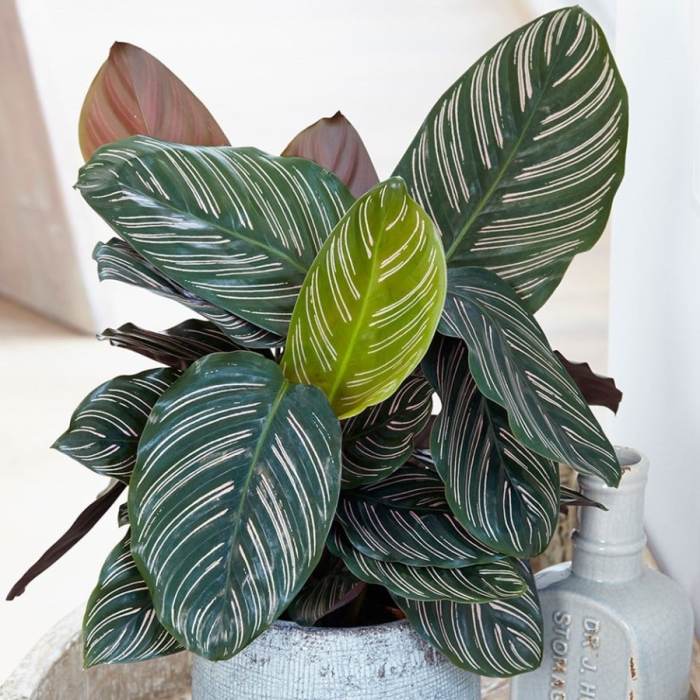
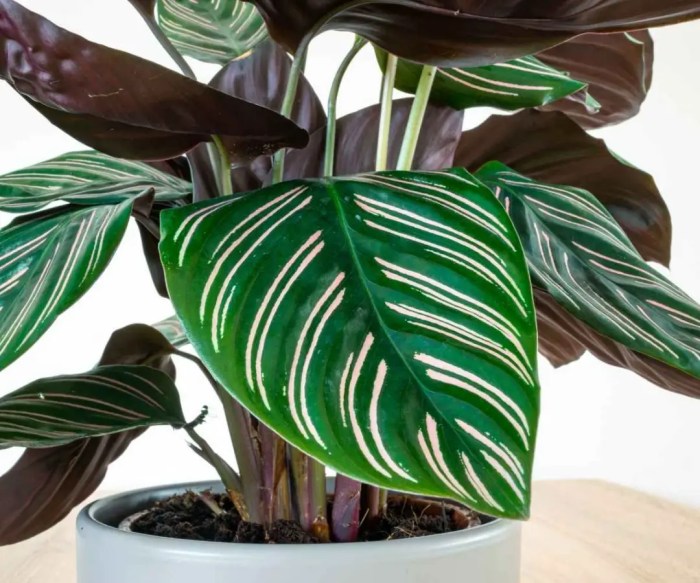
A healthy Calathea Ornata exhibits vibrant, deep green leaves with striking pink or red stripes. The leaves are firm, smooth, and unfurl fully. The overall plant is upright and robust.
Visual Signs of Care Issues
Drooping leaves often indicate underwatering or insufficient humidity. Brown leaf tips are a common sign of low humidity or fluoride in the water. Yellowing leaves can signal overwatering or nutrient deficiencies. Pale leaves may indicate insufficient light.
Calathea Ornata Cultivars
Various Calathea Ornata cultivars exist, each with slight variations in leaf color and pattern intensity. Some cultivars might have more pronounced pink stripes, while others might have more subtle variations.
Visual Comparison
A healthy Calathea Ornata displays vibrant, fully unfurled leaves with distinct color patterns. An unhealthy plant may show drooping, yellowing, or brown leaves, often with curled edges or visible pest damage. The leaves may be dull and lack the characteristic vibrancy.
Summary
Mastering Calathea Ornata care unlocks the beauty of these captivating plants. By understanding their light, water, and humidity preferences, and by proactively addressing potential pests and diseases, you can enjoy their stunning foliage for years. Remember, consistent attention and a bit of patience are key to success.
Happy growing!
Essential Questionnaire
How often should I fertilize my Calathea Ornata?
Feed your Calathea Ornata with a balanced liquid fertilizer diluted to half strength every 2-4 weeks during the growing season (spring and summer).
Why are my Calathea Ornata leaves curling?
Curling leaves often indicate underwatering, low humidity, or temperature fluctuations. Check your watering routine, increase humidity, and ensure consistent temperatures.
What should I do if I see brown leaf tips on my Calathea Ornata?
Brown tips usually point to low humidity, overwatering, or fluoride in your water. Try increasing humidity, adjusting watering, and using filtered water.
Can I use tap water for my Calathea Ornata?
It’s best to use filtered or distilled water for your Calathea Ornata, as tap water can contain minerals that can harm the plant.
How do I clean the dust from my Calathea Ornata’s leaves?
Gently wipe the leaves with a damp cloth to remove dust. Avoid harsh chemicals or abrasive cleaners.