Types of Calathea plants with pictures: Dive into the captivating world of Calathea, renowned for their striking leaf patterns and vibrant colors. These stunning houseplants, originating from the tropical Americas, bring a touch of the rainforest to any home.
Their unique ability to “pray” – raising and lowering their leaves throughout the day – adds to their allure, making them a fascinating addition to any plant collection. But with so many varieties available, choosing the right Calathea can be tricky.
This guide will explore the diverse world of Calathea, showcasing popular varieties and offering essential care tips to ensure your Calathea thrives.
From the velvety textures of -Calathea lancifolia* to the striking zebra-like stripes of -Calathea ornata*, each variety boasts its own distinct charm. We’ll delve into the specific needs of different Calatheas, covering everything from light and humidity requirements to troubleshooting common problems.
Whether you’re a seasoned plant enthusiast or a beginner, this comprehensive guide will equip you with the knowledge to cultivate these beautiful and captivating plants.
Calathea Plants: A Comprehensive Guide
Calathea plants, with their strikingly patterned leaves, have become incredibly popular houseplants. Native to the tropical Americas, these beauties are prized for their vibrant foliage and relatively low-maintenance nature (with the right care!). Their captivating leaf movements, often called “prayer plants” due to their leaves folding up at night, add a unique dynamic to any indoor space.
However, understanding their specific needs is crucial for keeping them thriving.
Introduction to Calathea Plants
Calathea plants belong to the Marantaceae family, known for their distinctive leaf patterns and the nyctinastic movement—the daily folding and unfolding of their leaves. Originating from the rainforests of South and Central America, they thrive in humid, shaded environments.
Their popularity stems from their diverse leaf designs, offering a wide range of colors and patterns to suit various interior styles. Optimal growth requires a balance of indirect light, consistent moisture, and high humidity.
Popular Calathea Varieties
Numerous Calathea varieties boast unique leaf characteristics. The following table highlights some popular choices, along with their specific care needs.
| Name | Description of Leaf Pattern | Optimal Growing Conditions | Care Tips |
|---|---|---|---|
| Calathea Ornata | Long, oval leaves with striking pink stripes on a dark green background. | Bright, indirect light; consistently moist soil; high humidity. | Regular misting and avoid temperature fluctuations. |
| Calathea Medallion | Large, oval leaves with a distinctive pattern of dark green ovals and lighter green feathering. | Bright, indirect light; well-draining soil; high humidity. | Water when the top inch of soil is dry. |
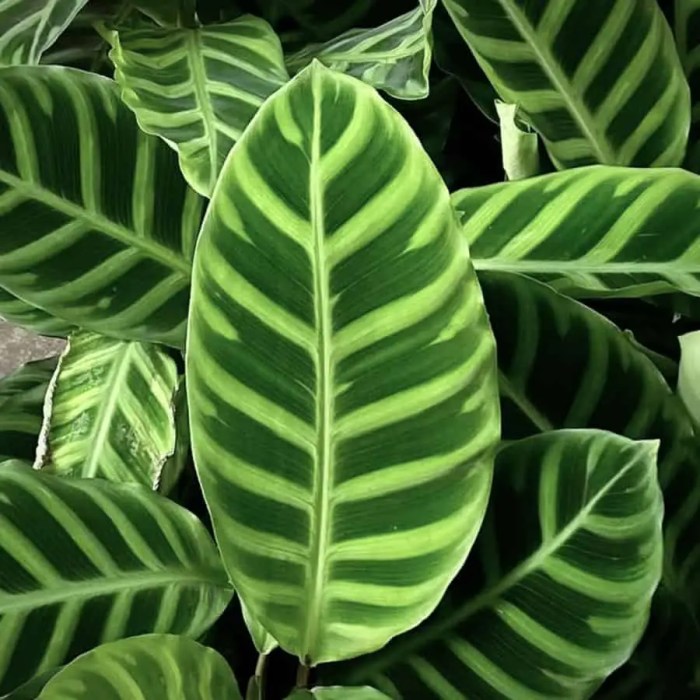
| Calathea Zebrina | Long, lance-shaped leaves with prominent dark green stripes on a lighter green background, resembling zebra stripes. | Medium indirect light; consistently moist soil; high humidity. | Protect from drafts and cold temperatures. |
| Calathea Makoyana (Peacock Plant) | Oval leaves with a striking pattern of light green and dark green markings, resembling a peacock’s feather. | Bright, indirect light; well-draining soil; high humidity. | Regular misting to maintain humidity. |
| Calathea Lancifolia (Rattlesnake Plant) | Long, narrow leaves with wavy edges and dark green markings resembling a rattlesnake’s pattern. | Bright, indirect light; well-draining soil; high humidity. | Allow soil to dry slightly between waterings. |
| Calathea Roseopicta | Oval leaves with a stunning pattern of dark green and pink markings. | Bright, indirect light; well-draining soil; high humidity. | Use filtered water to avoid mineral buildup. |
| Calathea Rufibarba (Velvet Calathea) | Long, narrow leaves with a velvety texture and a deep green color. | Bright, indirect light; well-draining soil; high humidity. | Avoid overwatering; allow soil to dry between waterings. |
| Calathea Orbifolia | Large, round leaves with prominent light and dark green stripes. | Bright, indirect light; well-draining soil; high humidity. | Regular misting is essential. |
| Calathea Musaica | Unique leaf pattern with intricate light green lines forming a mosaic-like design on a dark green background. | Bright, indirect light; well-draining soil; high humidity. | Protect from direct sunlight. |
| Calathea Warscewiczii | Large, oval leaves with a deep green topside and a deep reddish-purple underside. | Bright, indirect light; well-draining soil; high humidity. | Monitor for pests regularly. |
Calathea Medallion Leaf Pattern:Imagine a dark green oval in the center of the leaf, surrounded by lighter green feather-like markings radiating outwards.
Calathea Zebrina Leaf Pattern:Picture long, slender leaves with bold, dark green stripes running parallel to each other against a lighter green background, creating a striking zebra-like effect.
Calathea Makoyana (Peacock Plant) Leaf Pattern:Envision an oval leaf with a central dark green area, radiating outwards with lighter green markings and a delicate pattern resembling a peacock’s feather.
Calathea Plant Care
Proper watering, lighting, and humidity are key to a healthy Calathea. Overwatering leads to root rot, while underwatering results in wilting and leaf browning. Different varieties have slightly different light preferences, but generally, bright, indirect light is best. High humidity is crucial; low humidity causes leaf edges to dry and crisp.
Troubleshooting Common Calathea Problems
Several issues can affect Calathea plants. Addressing these promptly is vital for their health.
- Leaf Curling:Often indicates underwatering or low humidity. Increase watering frequency and humidity levels.
- Browning Tips:Typically caused by low humidity, infrequent watering, or exposure to fluoride in tap water. Increase humidity, adjust watering, and use filtered water.
- Pest Infestations:Mealybugs and spider mites are common. Treat with insecticidal soap or neem oil.
- Yellowing Leaves:Can signal overwatering, poor drainage, or nutrient deficiencies. Adjust watering, ensure good drainage, and consider fertilizing.
Propagating Calathea Plants
Calathea propagation can be achieved through division or stem cuttings. Division is generally easier for established plants. Stem cuttings require more attention to humidity and root development.
- Division:Gently remove the plant from its pot. Carefully separate the root ball into smaller sections, ensuring each section has healthy roots and leaves. Repot each section in fresh, well-draining potting mix.
Calathea Plants in Interior Design, Types of calathea plants with pictures
Calathea plants add a touch of tropical elegance to any interior. Their striking foliage complements various decor styles, from bohemian to modern minimalist.
In a modern minimalist living room, a Calathea Orbifolia, with its large, striking leaves, placed on a simple, sleek stand, would create a focal point, adding a touch of natural texture and visual interest without overwhelming the clean lines of the space.
Ending Remarks: Types Of Calathea Plants With Pictures
Mastering the art of Calathea care unlocks a world of vibrant beauty. By understanding their unique needs – from the right amount of light and humidity to addressing common issues – you can enjoy the breathtaking foliage and fascinating movements of these remarkable plants for years to come.
Remember, each Calathea variety has its own personality, so observe your plant closely and adapt your care routine accordingly. With a little attention and care, your Calathea will reward you with its stunning beauty and captivating presence, transforming your space into a vibrant, tropical haven.
Q&A
Are Calatheas toxic to pets?
While not highly toxic, ingesting Calathea leaves can cause mild gastrointestinal upset in pets. Keep them out of reach of curious animals.
How often should I fertilize my Calathea?
Fertilize your Calathea sparingly, about once a month during the growing season (spring and summer) with a balanced, diluted liquid fertilizer.
Why are the leaves of my Calathea curling?
Curling leaves often indicate underwatering, low humidity, or temperature fluctuations. Check your watering routine, increase humidity, and ensure consistent temperatures.
How do I repot a Calathea?
Repot your Calathea when it becomes root-bound, typically every 1-2 years, using a well-draining potting mix. Choose a pot only slightly larger than the previous one.