How to care for a calathea plant? These vibrant, prayer-plant relatives are stunning additions to any home, but their beauty comes with a bit of a challenge. Their dramatic foliage and unique leaf movements demand specific care to thrive.
This guide will walk you through everything you need to know, from understanding their environmental needs to troubleshooting common problems, ensuring your calathea flourishes.
We’ll cover ideal light, temperature, and humidity levels, exploring the nuances of watering, soil selection, fertilization, and even propagation techniques. We’ll also delve into pest and disease management, offering practical solutions for common issues. By the end, you’ll be equipped to nurture your calathea into a healthy, show-stopping centerpiece.
Understanding Calathea Needs
Calathea plants, known for their striking leaf patterns and vibrant colors, thrive in specific environmental conditions. Understanding these needs is crucial for their successful cultivation. This section details the ideal environment, explores different Calathea types and their unique requirements, and provides a handy reference table for common varieties.
Ideal Environment for Calathea
Calathea plants prefer indirect, bright light. Direct sunlight can scorch their delicate leaves. Ideal temperatures range from 65°F to 80°F (18°C to 27°C). Consistent humidity is paramount; aim for at least 50% humidity, ideally higher. Low humidity can lead to dry leaf edges and overall wilting.
Calathea Varieties and Their Specific Needs, How to care for a calathea plant
Numerous Calathea varieties exist, each with slightly different preferences. While they share some common needs, variations in light and humidity tolerance exist. For instance, some varieties, like Calathea lancifolia(Rattlesnake Plant), tolerate slightly lower humidity than others, like Calathea roseopicta(Rose Painted Calathea), which prefers higher humidity levels.
Understanding these nuances is key to successful cultivation.
Common Calathea Varieties and Their Needs
| Variety | Light Preference | Humidity Preference | Special Notes |
|---|---|---|---|
| Calathea orbifolia | Bright, indirect light | High humidity (70%+) | Sensitive to drafts and temperature fluctuations. |
| Calathea lancifolia | Bright, indirect light | Moderate to high humidity (50-70%) | More tolerant of lower humidity than other varieties. |
| Calathea roseopicta | Bright, indirect light | High humidity (70%+) | Requires consistent moisture; avoid letting the soil dry out completely. |
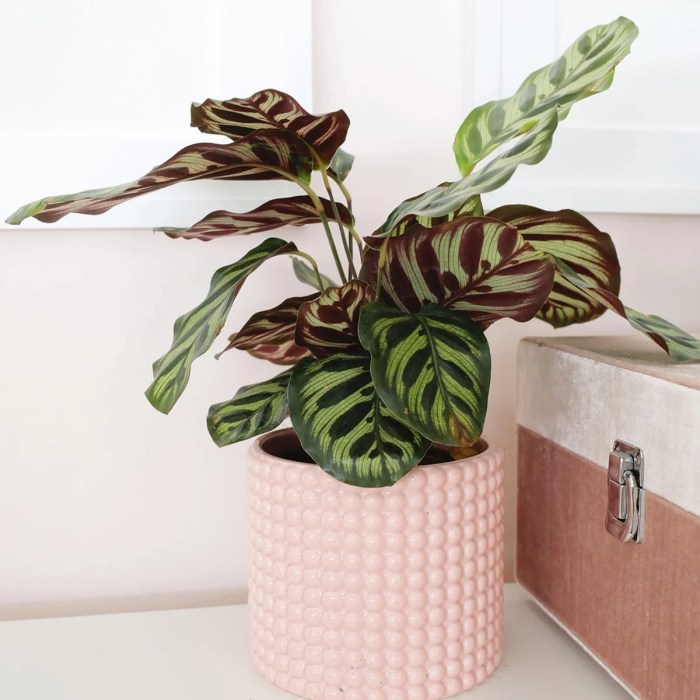
| Calathea makoyana | Bright, indirect light | High humidity (60%+) | Known for its distinctive peacock-like leaf pattern. |
Watering Techniques
Proper watering is critical for Calathea health. Overwatering or underwatering can lead to serious problems. This section details appropriate watering techniques, signs of watering issues, and a step-by-step guide to prevent root rot.
Proper Watering Techniques for Calathea
Water Calathea thoroughly when the top inch of soil feels dry to the touch. Avoid letting the soil completely dry out, as this can stress the plant. However, equally important is avoiding soggy soil, which can lead to root rot.
Use lukewarm water and allow excess water to drain completely from the pot. The frequency of watering depends on factors like pot size, soil type, and environmental conditions; it may range from once every few days to once a week.
Signs of Overwatering and Underwatering
Overwatering manifests as yellowing leaves, drooping stems, and a musty odor from the soil. The soil will remain consistently wet. Underwatering, on the other hand, results in dry, crispy leaf edges, wilting leaves, and dry soil.
Step-by-Step Guide to Watering a Calathea
- Check the soil moisture: Insert your finger about an inch into the soil. If it feels dry, it’s time to water.
- Use lukewarm water: Avoid using cold water, as this can shock the plant.
- Water thoroughly: Water until water drains from the drainage holes.
- Empty excess water: Discard any excess water that collects in the saucer to prevent root rot.
- Monitor for signs of overwatering or underwatering: Observe the plant’s appearance and adjust your watering schedule accordingly.
Soil and Potting
The right soil mix is essential for Calathea’s well-being. This section discusses ideal soil composition, compares different potting mixes, and provides a recipe for a homemade mix.
Ideal Soil Composition for Calathea
Calathea thrives in well-draining, slightly acidic soil that retains some moisture. The soil should be airy to allow for good aeration around the roots. Poor drainage leads to root rot, while overly dry soil causes stress.
Potting Mixes for Calathea
Several commercially available potting mixes are suitable for Calathea. Peat-based mixes are popular but can become compacted over time. Coco coir-based mixes offer excellent drainage and aeration. A well-balanced mix combines peat moss, perlite, and orchid bark for optimal results.
Homemade Calathea Potting Mix Recipe
Mix equal parts of peat moss, perlite, and coco coir. This blend provides excellent drainage, aeration, and moisture retention. You can adjust the proportions slightly depending on your climate and specific needs. For example, in humid environments, you might reduce the peat moss slightly.
Fertilizing and Nutrition
Regular fertilization provides essential nutrients for healthy growth. This section Artikels a fertilization schedule, discusses signs of nutrient deficiency, and compares organic and synthetic fertilizers.
Fertilizing Schedule for Calathea
Feed your Calathea with a balanced liquid fertilizer diluted to half strength every two to four weeks during the growing season (spring and summer). Reduce fertilization frequency during the dormant season (fall and winter).
Signs of Nutrient Deficiency
Nutrient deficiencies manifest in various ways, including yellowing leaves, stunted growth, and discoloration. Chlorosis (yellowing) often indicates a lack of iron or magnesium.
Organic vs. Synthetic Fertilizers
Both organic and synthetic fertilizers can be used for Calathea. Organic fertilizers release nutrients slowly, while synthetic fertilizers provide a quick boost. Choose the option that best suits your preferences and gardening style. Always follow the manufacturer’s instructions carefully.
Propagation Methods
Propagating Calathea allows you to expand your collection. This section details different propagation methods, including division and stem cuttings, and compares their success rates.
Calathea Propagation Methods
Two common methods for propagating Calathea are division and stem cuttings. Division is generally more successful than stem cuttings.
Step-by-Step Guide to Propagating Calathea by Division
- Gently remove the plant from its pot.
- Carefully separate the rhizomes, ensuring each division has healthy roots and leaves.
- Plant each division in a well-draining potting mix.
- Water thoroughly and keep the soil consistently moist but not soggy.
- Provide bright, indirect light and maintain high humidity.
Comparing Propagation Methods
Division offers a higher success rate and quicker establishment compared to stem cuttings. Stem cuttings can be more challenging, with a lower success rate, often requiring more specialized techniques and conditions for rooting.
Pest and Disease Management
Calathea can be susceptible to pests and diseases. This section identifies common issues, shares prevention methods, and provides treatment options.
Common Calathea Pests and Diseases
Common pests include spider mites, mealybugs, and aphids. Common diseases include root rot and leaf spot.
Pest and Disease Prevention and Control
Regularly inspect your plant for signs of pests or diseases. Maintain good hygiene, ensuring proper watering and ventilation. Use insecticidal soap or neem oil to control pests. For fungal diseases, consider a fungicide.
Common Calathea Pests, Diseases, Prevention, and Treatment
| Pest/Disease | Symptoms | Prevention | Treatment |
|---|---|---|---|
| Spider mites | Fine webbing on leaves, yellow stippling | Maintain high humidity | Insecticidal soap |
| Mealybugs | White, cottony masses on leaves and stems | Regular inspection | Isopropyl alcohol |
| Root rot | Yellowing leaves, mushy stems | Well-draining soil | Repotting in fresh soil |
Troubleshooting Common Problems: How To Care For A Calathea Plant
This section addresses common Calathea problems, offering solutions and remedies.
Common Calathea Problems and Solutions
Leaf curling often indicates low humidity or underwatering. Browning tips usually result from low humidity or fluoride in the water. Drooping leaves can signify overwatering or underwatering.
Troubleshooting Guide for Common Calathea Issues
- Leaf Curling:Increase humidity, check soil moisture, ensure adequate watering.
- Browning Tips:Increase humidity, use filtered water, avoid using tap water with high fluoride content.
- Drooping Leaves:Check soil moisture, adjust watering frequency, ensure proper drainage.
Visual Guide to Healthy Calathea
A healthy Calathea boasts vibrant, richly colored leaves with distinct patterns. Leaves are firm and upright, showing no signs of wilting, yellowing, or browning. The overall plant is robust and full, displaying a healthy growth habit. Variations in leaf color and pattern are normal depending on the specific variety, but the overall health indicators should remain consistent.
For example, a Calathea orbifoliawill have large, round leaves with striking light and dark green stripes, while a Calathea lancifoliawill display long, lance-shaped leaves with a wavy edge and dark green markings. Both, however, should exhibit a similar level of firmness, upright growth, and vibrant color indicative of a healthy plant.
Closing Notes
Mastering the art of calathea care is a rewarding journey. By understanding their specific needs – from the right light and humidity to proper watering and fertilization – you’ll unlock the full potential of these captivating plants. Remember, consistent attention and a watchful eye are key to preventing problems and ensuring your calathea remains a vibrant and healthy part of your home.
With a little care, you’ll be rewarded with their stunning beauty and mesmerizing leaf movements for years to come.
User Queries
Why are my calathea leaves curling?
Curling leaves often indicate low humidity or underwatering. Increase humidity with a humidifier or pebble tray, and check the soil moisture.
My calathea leaves have brown tips. What’s wrong?
Brown tips usually result from low humidity, fluoride in your water, or infrequent watering. Use filtered water and address humidity issues.
How often should I fertilize my calathea?
Fertilize your calathea every 2-4 weeks during the growing season (spring and summer) with a balanced, diluted liquid fertilizer. Reduce or stop fertilizing during winter.
Can I repot my calathea?
Repotting is generally done in spring when the plant outgrows its pot. Choose a pot only slightly larger and use a well-draining potting mix.