Calathea plant benefits extend far beyond their stunning visual appeal. These striking plants, known for their vibrant leaf patterns and colors, also contribute significantly to indoor air quality, humidity regulation, and even stress reduction. Their ability to purify the air, add a touch of elegance to any space, and promote a sense of calm makes them a highly desirable addition to any home or office.
From filtering out common air pollutants like formaldehyde and benzene to subtly increasing humidity levels, Calatheas offer a multitude of practical and aesthetic advantages. This guide delves into the various benefits, providing practical tips on care and maintenance to help you maximize the positive impact of these remarkable plants in your life.
Calathea Plants: More Than Just Pretty Leaves
Calathea plants, with their striking leaf patterns and vibrant colors, are increasingly popular houseplants. But their appeal extends far beyond aesthetics. These remarkable plants offer a surprising array of benefits, contributing to a healthier and more relaxing home environment. Let’s delve into the multifaceted advantages of incorporating Calathea plants into your living space.
Air Purification Capabilities of Calathea Plants
Calathea plants, like many other houseplants, contribute to improved indoor air quality by absorbing certain pollutants. While they aren’t miracle workers capable of completely purifying a large space, their contribution is nonetheless valuable. Research suggests that they are effective at removing common indoor pollutants, though specific data on the quantity removed is often limited and varies based on plant size and environmental factors.
Compared to other popular houseplants like Snake Plants or Spider Plants, Calathea’s air purification capabilities might be considered moderate. While they don’t boast the same high removal rates of some other species, their contribution to overall air quality is still significant, especially when combined with other air-purifying plants.
| Calathea Variety | Air Purifying Properties (Relative) | Notable Features | Ease of Care |
|---|---|---|---|
| Calathea Orbifolia | Moderate | Large, striking leaves | Moderate |
| Calathea Medallion | Moderate | Unique leaf patterns | Moderate |
| Calathea Zebrina | Moderate | Striped leaves | Moderate |
| Calathea Makoyana | Moderate | Pinstripe patterns | Moderate |
Aesthetic Enhancement with Calathea Plants, Calathea plant benefits
Calathea plants are undeniably visually appealing, adding a touch of natural beauty to any interior. Their leaves showcase an extraordinary range of colors and patterns, from deep greens and purples to vibrant reds and yellows, often exhibiting intricate designs. This makes them a versatile addition to a variety of interior design styles.
In a minimalist setting, a single Calathea plant can serve as a striking focal point. In a more eclectic space, multiple Calathea varieties with contrasting patterns can create a vibrant and lively atmosphere. They can be placed on shelves, side tables, or even hung from the ceiling in hanging planters, depending on the space and the desired aesthetic effect.
Imagine a living room with a neutral color palette. A large Calathea Orbifolia sits on a sleek, modern side table, its large, round leaves catching the light. A smaller Calathea Zebrina is placed on a nearby bookshelf, its striped leaves providing a contrasting texture and pattern.
The overall effect is one of sophisticated elegance and natural serenity.
Humidity Regulation and Calathea Plants
Calathea plants contribute to increased humidity levels through transpiration – the process of releasing water vapor into the air through their leaves. This process is particularly noticeable in humid environments, where they naturally release more moisture. While not a substitute for a humidifier, the effect of several Calathea plants in a room can be noticeable, particularly in dry climates or during winter months.
- Increased humidity levels can improve respiratory health.
- They can help to alleviate dry skin and nasal passages.
- They contribute to a more comfortable and pleasant indoor environment.
- Compared to electronic humidifiers, Calathea plants offer a natural and aesthetically pleasing solution.
Stress Reduction and Improved Well-being
The calming presence of plants, including Calatheas, has been linked to reduced stress and improved mental well-being. The act of caring for a plant, observing its growth, and appreciating its beauty can be a therapeutic experience. The gentle movement of the leaves as they follow the sun can be soothing and meditative.
To incorporate Calathea plants into a relaxation space, consider placing them near a meditation area or in a quiet corner of a bedroom. Soft, indirect lighting and a peaceful atmosphere will enhance the calming effect. The rhythmic unfolding and folding of their leaves can provide a subtle yet captivating visual focus during meditation or relaxation exercises.
Calathea Plant Care and Maintenance
Calathea plants thrive in bright, indirect light and well-draining soil. Overwatering is a common problem, leading to root rot. Allow the top inch of soil to dry out before watering thoroughly. They prefer consistently moist soil but not soggy conditions.
Regular misting can help maintain humidity levels, especially in dry environments.
| Problem | Cause | Solution |
|---|---|---|
| Brown leaf tips | Low humidity, infrequent watering | Increase humidity with misting or a humidifier; adjust watering schedule. |
| Yellowing leaves | Overwatering, root rot | Allow soil to dry out; repot in fresh, well-draining soil if necessary. |
| Curled leaves | Underwatering, low humidity, cold drafts | Water thoroughly; increase humidity; protect from cold drafts. |
| Leaf drop | Stress from changes in environment, temperature fluctuations | Provide consistent conditions; avoid drastic changes in temperature or light. |
Concluding Remarks
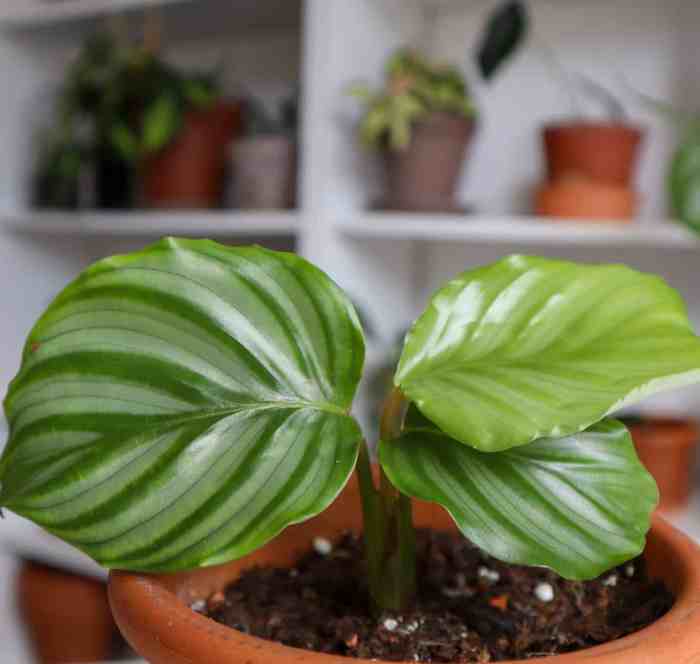
Incorporating Calathea plants into your living space offers a holistic approach to well-being, combining aesthetic enhancement with tangible improvements to air quality and mood. Their relatively low-maintenance nature makes them accessible to both seasoned plant enthusiasts and beginners alike.
By understanding their needs and appreciating their unique contributions, you can unlock the full potential of these beautiful and beneficial plants, transforming your environment into a healthier, more vibrant, and peaceful sanctuary.
FAQ Insights: Calathea Plant Benefits
Are Calathea plants toxic to pets?
While not highly toxic, ingestion of Calathea leaves can cause mild gastrointestinal upset in pets. It’s best to keep them out of reach of curious animals.
How often should I water my Calathea?
Water when the top inch of soil is dry, avoiding overwatering which can lead to root rot. The frequency will depend on factors like temperature and humidity.
Why are my Calathea leaves curling?
Curling leaves often indicate underwatering, low humidity, or temperature fluctuations. Check your watering schedule and consider increasing humidity.
How much light do Calatheas need?
Bright, indirect light is ideal. Avoid direct sunlight, which can scorch the leaves.