Calathea plant types offer a stunning array of foliage, captivating homeowners and plant enthusiasts alike. These striking plants, known for their vibrant leaf patterns and often dramatic leaf movements, hail from the tropical forests of the Americas. This guide delves into the diverse world of Calatheas, exploring popular varieties, their unique characteristics, and the essential care needed to thrive.
We’ll cover everything from choosing the right Calathea for your home to mastering propagation techniques, ensuring your leafy companions flourish.
From the striking zebra-like stripes of the Calathea Zebrina to the mesmerizing orb-like patterns of the Calathea Orbifolia, the variety within the Calathea family is truly remarkable. We’ll explore these differences, detailing the specific needs of various species to help you select the perfect Calathea to complement your interior design and lifestyle.
Calathea Plant Types: A Comprehensive Guide
Calathea plants, renowned for their strikingly patterned leaves, are a popular choice for indoor plant enthusiasts. Their vibrant foliage and relatively low-maintenance nature make them a desirable addition to any home. This guide delves into the diverse world of Calathea, covering their origins, popular varieties, care requirements, and creative display options.
Calathea Plant Overview
Native to the tropical rainforests of the Americas, Calathea plants belong to the Marantaceae family, known for their distinctive leaf movements. These plants are prized for their large, often vividly colored leaves, which exhibit a wide array of patterns and textures.
Their growth habit is typically clumping, with new leaves emerging from the center of the plant. Calathea plants are perennial, meaning they live for more than two years, and under optimal conditions can thrive for many years indoors.
Historically, Calathea leaves have been used in various ways by indigenous communities, from crafting baskets and mats to medicinal purposes. The vibrant colors and patterns also hold cultural significance, often representing elements of nature or spirituality in different cultures.
Today, their primary use is primarily ornamental, adding beauty and vibrancy to homes and gardens.
Popular Calathea Plant Types
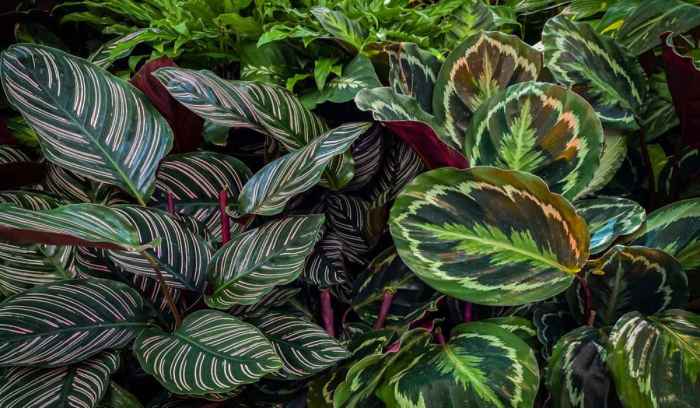
Many Calathea varieties offer unique leaf patterns and sizes. The following table highlights some popular choices.
| Common Name | Scientific Name | Leaf Pattern Description | Typical Size |
|---|---|---|---|
| Orbifolia | Calathea orbifolia | Large, round leaves with prominent, light green veins radiating from the center against a dark green background. | Up to 24 inches tall and wide |
| Medallion | Calathea roseopicta ‘Medallion’ | Oval leaves with a dark green center and lighter green, almost creamy, markings resembling medallions. | Up to 18 inches tall and wide |
| Zebrina | Calathea zebrina | Long, elliptical leaves with dark green stripes resembling zebra stripes on a lighter green background. | Up to 24 inches tall and 12 inches wide |
| Lancifolia (Rattlesnake Plant) | Calathea lancifolia | Long, lance-shaped leaves with dark green oblong markings along the leaf’s length, creating a rattlesnake-like appearance. | Up to 18 inches tall and 12 inches wide |
Comparing the leaf patterns of the Calathea Orbifolia, Calathea Medallion, and Calathea Zebrina reveals distinct differences. The Orbifolia showcases a radial pattern of light green veins on a deep green background, creating a striking contrast. The Medallion boasts a more intricate pattern of lighter green oval shapes on a dark green base, resembling medallions.
In contrast, the Zebrina features parallel, dark green stripes on a lighter green background, reminiscent of a zebra’s stripes. The textures vary subtly; the Orbifolia has a smoother texture, while the Medallion and Zebrina have slightly more pronounced veining, giving a slightly rougher feel.
Let’s delve into five distinct Calathea varieties:
- Calathea Orbifolia:Known for its large, round leaves with striking veins. Requires bright, indirect light and consistently moist soil.
- Calathea Medallion:Its oval leaves with unique medallion-like patterns thrive in medium to bright indirect light and appreciate high humidity.
- Calathea Zebrina:The zebra-striped leaves prefer bright, indirect light and consistently moist but well-draining soil. It’s sensitive to temperature fluctuations.
- Calathea Lancifolia (Rattlesnake Plant):The distinctive rattlesnake pattern thrives in medium indirect light and prefers consistently moist soil. It’s tolerant of slightly lower humidity compared to other Calathea.
- Calathea Makoyana (Peacock Plant):This variety’s oval leaves, adorned with light green and dark green markings, require bright, indirect light and high humidity to flourish.
Calathea Plant Care
Providing optimal growing conditions is crucial for healthy Calathea plants. These plants thrive in specific environments, and understanding their needs ensures their longevity and beauty.
Light:Bright, indirect light is ideal. Avoid direct sunlight, which can scorch the leaves.
Temperature:Warm temperatures between 65-80°F (18-27°C) are preferred. Avoid drafts and temperature fluctuations.
Humidity:High humidity is essential. Consider using a humidifier, pebble tray, or grouping plants together to increase humidity levels.
Watering:Water thoroughly when the top inch of soil feels dry. Avoid overwatering, which can lead to root rot. Use lukewarm water.
Common Problems and Solutions:Leaf browning often indicates underwatering or low humidity. Drooping leaves usually signify overwatering or underwatering. Adjust watering accordingly and increase humidity.
Propagation:Calathea can be propagated through division during repotting or by stem cuttings. Ensure the cuttings have nodes and plant them in moist, well-draining soil.
Calathea Plant Varieties and Their Differences
While all Calathea share similar care needs, subtle differences exist among varieties. For example, Calathea Orbifolia prefers brighter light than Calathea Lancifolia, while Calathea Makoyana requires higher humidity than others. Understanding these nuances ensures each variety thrives.
Distinguishing Calathea from similar-looking plants, like Maranta, often involves examining leaf patterns and growth habits. Calathea leaves generally have more intricate patterns and tend to be larger. Maranta leaves often display more subtle patterns and have a more pronounced prayer plant movement.
Selecting the right Calathea for a specific indoor environment depends on the available light and humidity. For low-light conditions, Calathea Lancifolia or Calathea Medallion are suitable choices. High-humidity environments benefit from Calathea Makoyana or Calathea Zebrina.
Calathea Plant Display and Design, Calathea plant types
Calathea plants add a touch of tropical elegance to various interior design styles. Their vibrant foliage complements minimalist, bohemian, and even modern decor. Practical considerations include placing them in locations with appropriate light and humidity levels, away from direct heat sources or air conditioning vents.
Arranging multiple Calathea plants of varying sizes and types can create a visually stunning display. For example, a grouping of a taller Calathea Orbifolia as a centerpiece, surrounded by smaller Calathea Medallion and Calathea Zebrina, creates a balanced and eye-catching arrangement.
The height variation provides visual interest, while the different leaf patterns complement each other.
Creative display options abound. Consider using decorative pots, hanging planters, or even incorporating them into terrariums to enhance their visual appeal. The choice of container and setting should complement the plant’s unique features and the overall interior design.
Closing Notes: Calathea Plant Types
Ultimately, cultivating Calathea plants is a rewarding experience that blends the joy of nurturing living things with the aesthetic pleasure of their beauty. By understanding their unique needs and appreciating their inherent elegance, you can transform your living space into a vibrant, tropical oasis.
Whether you’re a seasoned plant parent or a budding enthusiast, the world of Calatheas awaits exploration – a world brimming with vibrant colors, intricate patterns, and the quiet satisfaction of nurturing these captivating plants.
FAQ Explained
Are Calatheas toxic to pets?
While not highly toxic, ingestion of Calathea leaves can cause mild gastrointestinal upset in pets. Keep them out of reach.
Why are my Calathea leaves curling?
Curling leaves often indicate underwatering, low humidity, or pest infestation. Check soil moisture, increase humidity, and inspect for pests.
How often should I fertilize my Calathea?
Fertilize sparingly, once a month during the growing season (spring and summer) with a balanced liquid fertilizer diluted to half strength.
How do I repot a Calathea?
Repot when roots become root-bound, usually every 1-2 years, using well-draining potting mix in a pot only slightly larger than the previous one.