Dahlia plant care isn’t as daunting as it might seem. These vibrant blooms, with their incredible variety of shapes and colors, reward diligent gardeners with a spectacular display. This guide dives into everything you need to know, from preparing the soil to overwintering your tubers, ensuring a thriving dahlia patch year after year.
We’ll cover the essentials, offering practical advice and troubleshooting tips to help you cultivate these stunning flowers successfully.
From selecting the right soil and understanding watering needs to mastering pruning techniques and protecting against pests, we’ll explore each crucial aspect of dahlia cultivation. We’ll also delve into propagation methods, allowing you to expand your collection and share the beauty of dahlias with others.
Get ready to transform your garden into a dahlia paradise!
Dahlia Planting and Soil Preparation
Getting your dahlias off to a strong start involves careful consideration of soil conditions and planting techniques. Dahlias thrive in well-drained soil rich in organic matter. Proper soil preparation is crucial for healthy growth and abundant blooms.
Ideal Soil Conditions for Dahlias
Dahlias prefer a slightly acidic to neutral soil pH, ideally between 6.0 and 7.0. Well-drained soil is paramount; soggy conditions lead to root rot. The soil should be loose and fertile, allowing for good aeration and water penetration.
Soil Preparation
Before planting, amend heavy clay soils with organic matter like compost or well-rotted manure to improve drainage and aeration. Sandy soils benefit from the addition of peat moss or other organic materials to increase water retention. Incorporate a balanced slow-release fertilizer to provide nutrients throughout the growing season.
Planting Dahlia Tubers or Seeds
Planting dahlias is straightforward, whether you’re using tubers or seeds. Follow these steps for best results:
- Tubers:Plant tubers 4-6 inches deep and 12-18 inches apart, with the “eyes” (growing points) facing upwards.
- Seeds:Sow seeds indoors 6-8 weeks before the last expected frost. Gently press seeds into the soil and keep them moist until germination.
- After Planting:Water gently after planting to settle the soil around the tubers or seedlings.
Soil Type Suitability for Dahlias
| Soil Type | Drainage | Fertility | Amendments |
|---|---|---|---|
| Sandy | Excellent | Low | Compost, peat moss |
| Clay | Poor | Moderate | Compost, perlite |
| Loam | Good | High | Minimal amendments needed |
| Silty | Moderate | High | Organic matter for improved drainage |
Dahlia Watering and Fertilizing
Consistent watering and fertilization are key to achieving lush growth and vibrant blooms in your dahlias. Understanding the needs of your plants at different growth stages is crucial.
Optimal Watering Schedule
Water deeply and regularly, especially during dry periods. Young plants require more frequent watering than established ones. Avoid overhead watering to prevent fungal diseases. Allow the top inch of soil to dry slightly between waterings.
Signs of Underwatering and Overwatering
Underwatered dahlias wilt and their leaves may droop. Overwatered dahlias show yellowing leaves and may develop root rot. Proper watering is a balance to prevent both extremes.
Fertilization Methods and Suitable Fertilizers
Dahlias benefit from regular feeding. Use a balanced, slow-release fertilizer or a liquid feed every 2-3 weeks during the growing season. Avoid high-nitrogen fertilizers, as they promote leafy growth at the expense of blooms. Organic options like compost tea are also effective.
Fertilization Schedule
| Growth Stage | Fertilizer Type | Frequency |
|---|---|---|
| Planting | Slow-release granular fertilizer | Once at planting |
| Early Growth | Balanced liquid fertilizer | Every 2 weeks |
| Budding | Balanced liquid fertilizer | Every week |
| Flowering | Balanced liquid fertilizer | Every week |
Dahlia Light and Temperature Requirements
Dahlias are sun-loving plants, but their specific light and temperature needs vary depending on the cultivar and growth stage. Understanding these requirements is crucial for successful dahlia cultivation.
Ideal Light Conditions
Dahlias thrive in full sun, meaning at least 6-8 hours of direct sunlight per day. Insufficient sunlight can lead to weak stems, fewer blooms, and leggy growth. Partial shade may be tolerated in extremely hot climates.
Effects of Temperature
Dahlias prefer warm temperatures, ideally between 60-75°F (15-24°C). Extreme heat can stress the plants, leading to wilting and reduced flowering. Frost can damage or kill dahlias, so protection is needed in colder climates.
Protecting Dahlias from Extreme Weather
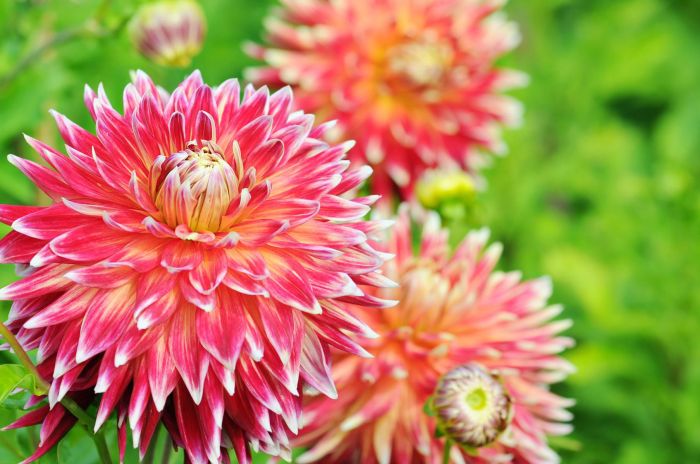
During heat waves, provide afternoon shade or water deeply in the morning. In colder climates, protect dahlias from frost by covering them with frost cloth or bringing potted plants indoors.
Light and Temperature Needs at Various Growth Stages
| Growth Stage | Ideal Light | Ideal Temperature (°F) |
|---|---|---|
| Seedling | Partial shade | 65-75 |
| Vegetative Growth | Full sun | 65-75 |
| Budding | Full sun | 65-75 |
| Flowering | Full sun | 65-75 |
Dahlia Pest and Disease Control
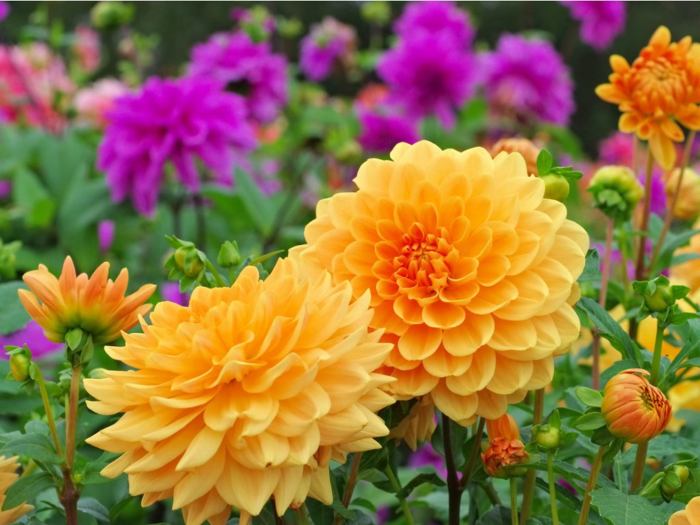
While relatively hardy, dahlias can be susceptible to various pests and diseases. Implementing preventative measures and prompt treatment are essential for maintaining healthy plants.
Common Dahlia Pests and Diseases
- Aphids:Small, soft-bodied insects that suck sap from plants. Control with insecticidal soap or neem oil.
- Slugs and Snails:These mollusks can devour dahlia leaves and stems. Use slug bait or handpick them.
- Spider Mites:Tiny arachnids that cause stippling and webbing on leaves. Control with insecticidal soap or neem oil.
- Powdery Mildew:A fungal disease that causes white powdery coating on leaves. Improve air circulation and use fungicide.
- Root Rot:A fungal disease caused by overwatering. Ensure good drainage and avoid overhead watering.
Dahlia Pruning and Support
Pruning and providing support are crucial for maintaining healthy, well-shaped dahlia plants with abundant blooms. These practices enhance airflow, prevent damage, and encourage robust growth.
Importance of Pruning
Pruning dahlias encourages bushier growth and more flowers. Deadheading (removing spent blooms) prevents the plant from diverting energy to seed production, thus promoting more blooms.
Pruning Techniques, Dahlia plant care
- Deadheading:Regularly remove spent flowers by cutting the stem back to a leaf node or a set of leaves.
- Shaping:Pinch back growing tips to encourage bushier growth and prevent legginess.
Using Stakes or Other Support Structures
- Staking:Insert sturdy stakes into the ground near the dahlia plants early in their growth. Tie the stems gently to the stakes as they grow taller, using soft garden twine or clips to avoid damaging the stems.
- Caging:Use a wire cage around the plant to support the stems. This method is particularly useful for tall dahlia varieties.
Dahlia Propagation: Dahlia Plant Care
Propagating dahlias allows you to increase your collection and share these beautiful flowers with others. Several methods exist, each with its own advantages and disadvantages.
Propagation Methods
Dahlias can be propagated through division, cuttings, and seeds. Division is the easiest and most common method for established plants. Cuttings are suitable for propagating specific varieties, while seeds offer a way to grow new hybrids.
Division
Carefully divide the tubers in the spring, ensuring each section has at least one or two “eyes” (growing points). Replant the divisions as you would with whole tubers.
Cuttings
Take stem cuttings in spring or summer, about 4-6 inches long, from healthy stems. Remove lower leaves and dip the cut end in rooting hormone before planting in moist potting mix.
Seeds
Sow seeds indoors 6-8 weeks before the last expected frost. Germination can be slow and unpredictable, and offspring may not be true to the parent plant’s characteristics.
Visual Representation of Propagation Methods
Imagine a diagram showing the division method: a large tuber split into several smaller pieces, each with at least one eye. A second diagram would illustrate a stem cutting, showing the cut stem placed in moist soil. Finally, a third diagram would show tiny dahlia seeds sown in a seed tray, illustrating the propagation from seed.
Dahlia Overwintering
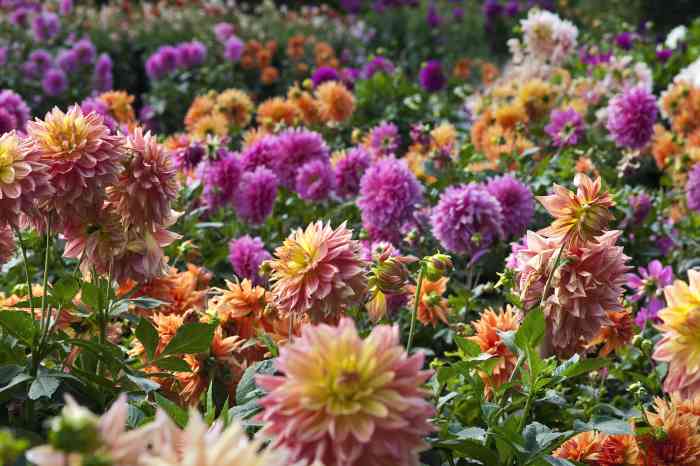
In areas with freezing winters, dahlias need to be dug up and stored indoors to protect the tubers from frost damage. Proper overwintering ensures the survival of your dahlia plants for the following growing season.
Digging Up and Storing Dahlia Tubers
- Timing:Dig up the tubers after the first frost, when the foliage has died back.
- Preparation:Gently brush off excess soil and allow the tubers to dry for a few days in a cool, dry, and well-ventilated area.
- Storage:Store the tubers in a cool, dark, and dry place (around 40-50°F or 4-10°C), such as a basement or garage, in peat moss, vermiculite, or dry sawdust.
- Checking:Periodically check the tubers for signs of rot or damage. Remove any affected parts.
Closure
Mastering dahlia plant care unlocks a world of vibrant color and stunning floral displays. By following the advice Artikeld in this guide, you’ll be well-equipped to cultivate healthy, flourishing dahlias. Remember, attentive observation and proactive care are key to success.
So, get your hands dirty, and enjoy the rewarding experience of growing these magnificent blooms. Happy gardening!
Common Queries
How often should I deadhead my dahlias?
Regularly deadheading (removing spent blooms) encourages more flowering. Aim to do this every few days, or as soon as flowers start to fade.
What should I do if my dahlias are wilting?
Wilting can indicate underwatering, overwatering, or pest problems. Check the soil moisture, look for pests, and adjust watering accordingly. If the problem persists, investigate further.
Can I grow dahlias in containers?
Yes! Choose large containers with ample drainage to accommodate the dahlia’s root system. Ensure the container is large enough for the mature plant.
When is the best time to plant dahlia tubers?
After the last frost and when the soil has warmed up sufficiently. This is typically in spring or early summer.