Planting dahlias in pots opens up a world of vibrant color and captivating blooms, even for those with limited garden space. This guide dives into the essential steps, from selecting the right dahlia variety and pot to mastering the art of overwintering your precious tubers.
Whether you’re a seasoned gardener or a curious beginner, get ready to transform your patio or balcony into a dahlia paradise.
We’ll cover everything from choosing the perfect dahlia varieties for container gardening, considering their size and bloom times, to preparing the ideal potting mix and ensuring proper drainage. We’ll also delve into the specifics of planting, watering, fertilizing, and protecting your dahlias from pests and diseases.
Finally, we’ll equip you with the knowledge to successfully overwinter your dahlia tubers, ensuring a bountiful bloom the following year.
Growing Dahlias in Pots: A Comprehensive Guide
Dahlias, with their vibrant blooms and diverse forms, are a rewarding addition to any garden, even if space is limited. Container gardening offers a fantastic opportunity to enjoy these stunning flowers, regardless of garden size or soil type. This guide will walk you through every step, from selecting the right dahlia varieties and pots to overwintering your tubers.
Choosing Dahlia Varieties for Potted Cultivation
Selecting the right dahlia variety is crucial for success in container gardening. Dwarf varieties are generally better suited for pots due to their more compact growth habit. Consider the size of your pot and the mature size of the dahlia when making your selection.
| Variety | Size | Bloom Time | Color |
|---|---|---|---|
| Bishop of Llandaff | Medium (2-3 feet) | Summer to Fall | Deep Red |
| Gallery Art Deco | Dwarf (1-2 feet) | Summer to Fall | Various (mix of colors) |
| Mystic Illusion | Dwarf (1-1.5 feet) | Summer to Fall | Lavender and White |
| Karma Bonfire | Medium (2-3 feet) | Summer to Fall | Orange |
| Pooh | Dwarf (1-1.5 feet) | Summer to Fall | Yellow |
Dwarf dahlias, typically reaching heights of 1-2 feet, are ideal for smaller containers. They are naturally more compact and less prone to flopping over. Tall dahlias, on the other hand, can grow significantly taller (3-5 feet or more) and may require more substantial support in pots.
When choosing dahlias based on pot size, remember to allow ample space for root development. A larger pot will generally support a taller dahlia variety, while smaller pots are best suited for dwarf varieties. A 12-inch pot, for example, could comfortably accommodate a medium-sized dahlia, while a 6-inch pot is perfect for a dwarf variety.
Selecting and Preparing Pots and Soil
The right pot and soil are essential for healthy dahlia growth. Consider pot size, material, and drainage capabilities. The potting mix needs to be well-draining to prevent root rot, a common problem for dahlias.
Ideal pot size depends on the dahlia variety, with larger pots accommodating taller varieties. Terracotta pots offer excellent drainage but can dry out quickly, while plastic pots retain moisture longer. Ensure your chosen pot has adequate drainage holes.
- Gather your materials:Potting soil, perlite or vermiculite (for drainage), compost, and a container for mixing.
- Mix the ingredients:Combine equal parts potting soil, perlite or vermiculite, and compost. This blend provides excellent drainage and nutrient retention.
- Check for drainage:Ensure the pot has drainage holes. If not, drill some at the bottom.
- Fill the pot:Fill the pot with the prepared potting mix, leaving about an inch of space from the rim.
Improving drainage in containers can involve adding a layer of gravel or broken pottery shards at the bottom of the pot before adding the potting mix. This creates a drainage layer that prevents waterlogging.
Planting Dahlias in Pots: A Step-by-Step Guide
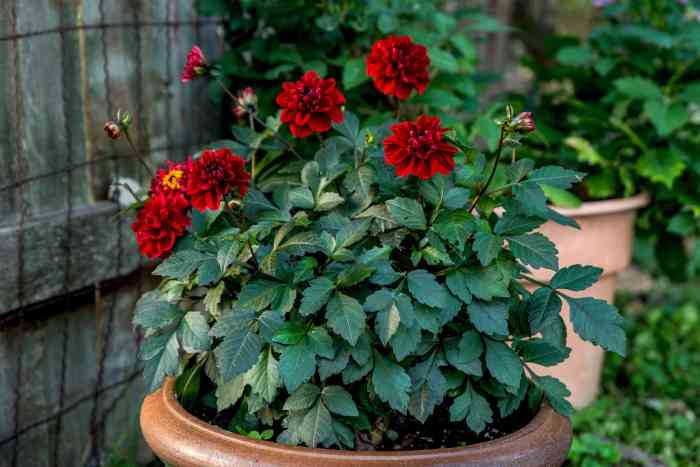
Planting dahlia tubers or cuttings requires careful attention to depth and support. Proper planting depth ensures successful root development, while support is crucial for tall varieties to prevent damage from wind or heavy blooms.
- Prepare the tuber/cutting:Inspect the tuber for any damage and remove any rotten parts. For cuttings, ensure the stem is firm and healthy.
- Dig a hole:Create a hole deep enough to accommodate the tuber or cutting. The “eyes” (growing points) of the tuber should face upwards.
- Plant the tuber/cutting:Place the tuber or cutting in the hole, ensuring the eyes are just below the soil surface. Gently firm the soil around the base.
- Water gently:Water the newly planted dahlia gently, avoiding overwatering.
- Provide support (if necessary):For tall varieties, insert a sturdy stake next to the plant and gently tie the stem to the stake using soft garden twine to avoid damaging the stem.
Planting depth is crucial: tubers should be planted with their “eyes” facing upwards and just below the soil surface. Cuttings should be planted deep enough to support the stem and encourage root development.
Dahlia Care and Maintenance in Pots
Regular watering, feeding, and pest control are essential for healthy potted dahlias. Consistent care will result in abundant blooms throughout the growing season.
Water regularly, ensuring the soil remains consistently moist but not waterlogged. The frequency of watering will depend on weather conditions and pot size. Smaller pots dry out faster than larger ones.
Feed your dahlias every 2-3 weeks with a balanced liquid fertilizer, following the manufacturer’s instructions. This provides the necessary nutrients for vigorous growth and abundant blooms.
| Pest/Disease | Symptoms | Prevention | Control |
|---|---|---|---|
| Aphids | Small insects clustering on stems and leaves, causing stunted growth | Regular inspection, good air circulation | Insecticidal soap, strong water spray |
| Slugs and Snails | Holes in leaves and stems, slimy trails | Remove debris, use slug barriers | Slug bait, handpicking |
| Powdery Mildew | White powdery coating on leaves | Good air circulation, avoid overhead watering | Fungicide |
Overwintering Potted Dahlias
Overwintering dahlia tubers is crucial to preserve them for the following growing season, especially in areas with freezing temperatures. Proper lifting, cleaning, and storage are essential steps.
- Lift the tubers:Once the first frost has killed the foliage, carefully dig up the dahlia tubers. Gently remove the soil, taking care not to damage the tubers.
- Clean the tubers:Remove any excess soil and dead foliage. Allow the tubers to dry in a cool, airy place for a few days.
- Store the tubers:Store the tubers in a cool, dark, and dry place (around 40-50°F) such as a basement, garage or even a refrigerator. They can be stored in boxes filled with peat moss or vermiculite to prevent them from drying out.
Avoid freezing temperatures.
Storing tubers in a cool, dark place is generally preferred, as refrigerators can sometimes introduce unwanted moisture. However, if space is limited, a refrigerator can be a viable option provided it is not too cold.
Epilogue: Planting Dahlias In Pots
Growing dahlias in pots offers a rewarding experience, bringing the beauty of these magnificent flowers to even the smallest of spaces. By following the steps Artikeld in this guide, you can enjoy a vibrant display of color throughout the growing season and successfully overwinter your plants for years to come.
Remember, careful planning and consistent care are key to success. So, choose your favorite dahlia varieties, get potting, and prepare to be amazed by the stunning results!
Frequently Asked Questions
Can I grow any dahlia variety in a pot?
While many varieties thrive in pots, dwarf and semi-dwarf varieties are generally best suited for container gardening due to their smaller size and root systems.
How often should I water my potted dahlias?
Water regularly, keeping the soil consistently moist but not soggy. Check the soil moisture daily, especially during hot and dry weather. The frequency will depend on the pot size, weather, and soil type.
What kind of fertilizer should I use?
Use a balanced, water-soluble fertilizer formulated for flowering plants, following the package directions. Feed every 2-3 weeks during the growing season.
What are the signs of dahlia pests or diseases?
Look out for signs like wilting, leaf discoloration, holes in leaves (pests), or powdery mildew (disease). Regular inspection is key for early detection.
How do I prevent dahlia tubers from rotting over winter?
Ensure tubers are completely dry before storing. Store them in a cool, dark, and dry place with good air circulation to prevent rot. Avoid storing in damp or freezing conditions.