How to plant a dahlia tuber? It’s more straightforward than you might think! These vibrant blooms reward gardeners with stunning displays, but getting them started right is key. From selecting healthy tubers and preparing the soil to understanding watering and overwintering techniques, we’ll cover everything you need for a successful dahlia harvest.
This guide will equip you with the knowledge to cultivate these beauties, ensuring a vibrant garden bursting with color.
We’ll explore the ideal conditions for dahlia growth, including sunlight needs, soil preferences, and the best planting methods. We’ll also delve into practical steps for planting, providing detailed instructions and illustrations to ensure you plant your tubers correctly. Proper aftercare, including watering, fertilizing, and pest control, will also be discussed, ensuring your dahlias thrive throughout the growing season.
Finally, we’ll address the crucial process of overwintering your tubers, ensuring their survival and a bountiful bloom the following year.
Planting Dahlia Tubers: A Comprehensive Guide: How To Plant A Dahlia Tuber
Dahlias, with their vibrant blooms and diverse varieties, are a rewarding addition to any garden. This guide provides a detailed, step-by-step approach to successfully planting and caring for dahlia tubers, ensuring a bountiful display of color throughout the growing season.
Selecting and Preparing Dahlia Tubers
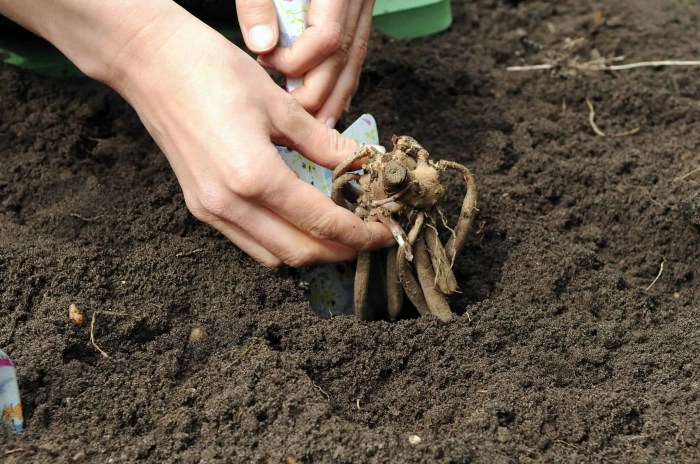
Choosing healthy tubers is crucial for successful dahlia cultivation. Inspecting and preparing them properly minimizes the risk of disease and ensures vigorous growth.
- Ideal Tuber Characteristics:Look for firm, plump tubers with multiple “eyes” (growth buds). Avoid tubers that are shriveled, soft, or show signs of rot or discoloration.
- Inspecting for Damage:Carefully examine each tuber for any signs of damage, such as cuts, bruises, or insect infestation. Discard any tubers with significant damage.
- Cleaning and Preparation:Gently brush off any excess soil from the tubers. Use a sharp knife to carefully remove any damaged or diseased sections, ensuring a clean cut. Allow the tubers to air dry for a few hours before planting.
- Fungal Disease Prevention:Treat tubers with a fungicide before planting to help prevent fungal diseases. Follow the fungicide manufacturer’s instructions carefully.
Choosing the Right Planting Location and Soil
The success of your dahlia planting depends heavily on selecting the appropriate location and preparing the soil correctly. Dahlias need specific conditions to thrive.
Dahlias require at least six hours of direct sunlight daily for optimal growth and flowering. Well-drained soil is essential to prevent root rot, a common problem for dahlias. Heavy clay soils should be amended with organic matter to improve drainage.
Sandy soils may need the addition of compost to retain moisture.
| Soil Type | Suitability for Dahlias | Drainage | Amendments |
|---|---|---|---|
| Sandy | Moderate (needs moisture retention) | Excellent | Compost, peat moss |
| Silty | Good (generally well-draining) | Good | Minimal amendments often needed |
| Clay | Poor (needs significant improvement) | Poor | Large amounts of organic matter (compost, peat moss, etc.) |
| Loamy | Excellent (ideal balance of drainage and moisture retention) | Good | Minimal amendments often needed |
| Soil pH | Effect on Dahlia Growth |
|---|---|
6.0
|
Optimal range for most dahlia varieties. |
| Below 6.0 | May lead to nutrient deficiencies and poor growth. Consider soil testing and amendment with lime. |
| Above 7.0 | May cause nutrient lockout and reduced flowering. Consider soil testing and amendment with sulfur. |
Planting Dahlia Tubers: A Step-by-Step Guide, How to plant a dahlia tuber
Planting dahlia tubers correctly is key to healthy growth and abundant blooms. Follow these steps for optimal results, whether planting directly in the ground or in containers.
- Prepare the Planting Hole:Dig a hole approximately 6-8 inches deep and wide enough to comfortably accommodate the tuber.
- Tuber Orientation:Place the tuber in the hole with the “eyes” (growth buds) facing upwards. Imagine a small, slightly pointed end which should be positioned upwards; this is usually the area where the shoots will emerge. A visual representation would show a tuber with several “eyes” clustered at one end, pointing upwards toward the surface of the soil.
- Backfill and Water:Gently backfill the hole with soil, ensuring the tuber is completely covered. Water thoroughly after planting.
- Spacing:Space tubers 18-24 inches apart to allow for adequate growth and air circulation.
- Container Planting:Use large containers with drainage holes. Follow the same planting instructions as for in-ground planting, ensuring adequate soil volume for root development.
Dahlia Tuber Aftercare and Maintenance
Providing proper aftercare ensures healthy growth and abundant blooms. Regular watering, fertilization, and pest control are crucial for successful dahlia cultivation.
Dahlias require consistent watering, especially during dry periods. Aim for deep, infrequent watering rather than shallow, frequent watering. Fertilize regularly with a balanced, slow-release fertilizer to promote healthy growth and abundant blooms. Common dahlia pests include aphids, slugs, and snails.
Regular inspection and appropriate pest control measures are necessary. Deadheading (removing spent blooms) encourages continuous flowering. Staking taller varieties prevents them from flopping over.
A typical maintenance schedule might include watering every 2-3 days during dry spells, fertilizing every 2-3 weeks, inspecting for pests weekly, and deadheading regularly.
Overwintering Dahlia Tubers
In colder climates, dahlia tubers need to be lifted and stored over winter to protect them from frost damage. Proper storage techniques are crucial for the tubers’ survival.
Lift tubers after the first frost, allowing the foliage to dry slightly before carefully digging them up. Clean the tubers, allow them to cure for a few days in a dry, well-ventilated area, and then store them in a cool, dry place (ideally 40-50°F).
Methods include storing in peat moss, vermiculite, or dry sawdust. In warmer climates, tubers can often remain in the ground, but protection from excessive moisture is crucial. Peat moss offers excellent protection against drying and rot. Dry sawdust is a good alternative for good aeration.
Storing in a cool, dark basement is ideal in many climates, but a garage or shed that is frost-free and well-ventilated can also work.
Epilogue
Planting dahlia tubers successfully is a rewarding experience, leading to a stunning floral display. By following the steps Artikeld – from selecting healthy tubers and preparing the soil to providing proper aftercare and overwintering – you can ensure your dahlias flourish.
Remember, patience and attention to detail are key to achieving vibrant blooms. So get your hands dirty, and enjoy the beauty that these magnificent flowers bring to your garden!
FAQ Explained
What if my dahlia tuber has some minor nicks or cuts?
Minor damage is usually fine. Just make sure to treat the area with a fungicide before planting to prevent rot.
How deep should I plant my dahlia tubers?
Plant the tubers about 4-6 inches deep, with the “eyes” (growing points) facing upwards.
When is the best time to plant dahlia tubers?
After the last frost, when the soil has warmed up. This is usually sometime in spring or early summer depending on your climate.
What should I do if I see pests on my dahlia plants?
Identify the pest and use an appropriate insecticide or organic control method. Regular inspection is key to early detection.
Can I grow dahlias in pots?
Absolutely! Choose a large pot with drainage holes and use a good quality potting mix.