How to plant dahlias in pots? It’s easier than you think! This guide walks you through selecting the perfect dahlia varieties and containers, preparing the soil and tubers, and finally, planting and caring for your vibrant blooms. We’ll cover everything from choosing the right pot size to overwintering your dahlia tubers, ensuring a successful and rewarding growing experience, even for beginners.
We’ll delve into the specifics of preparing your dahlia tubers, selecting the ideal potting mix, and mastering the art of planting for maximum growth. Proper watering, sunlight, and fertilization techniques will also be explored, alongside pest and disease prevention.
Get ready to transform your patio or balcony into a stunning dahlia display!
Choosing the Right Dahlias and Pots
Successfully growing dahlias in pots hinges on selecting the right dahlia variety and providing a suitable container. Consider the dahlia’s mature size and growth habit to choose a pot that provides adequate space for root development and overall plant health.
The pot material also plays a crucial role in moisture retention and aeration.
Dahlia Varieties and Pot Size Recommendations
Different dahlia varieties exhibit varying mature sizes and growth habits. Choosing a pot that’s appropriately sized for the chosen variety is essential for optimal growth. Overly small pots can restrict root growth, leading to stunted plants, while excessively large pots may retain too much moisture, increasing the risk of root rot.
| Dahlia Variety | Mature Size | Pot Size Recommendation | Special Considerations |
|---|---|---|---|
| Gallery Art Deco Mix | 18-24 inches | 12-15 inch diameter pot | Needs staking due to its height. |
| Bishop of Llandaff | 3-4 feet | 18-24 inch diameter pot | Requires sturdy staking; known for its vigorous growth. |
| Karma Bonfire | 2-3 feet | 15-18 inch diameter pot | Relatively compact, but still benefits from staking for support. |
| Mystic Merlin | 1-2 feet | 10-12 inch diameter pot | More compact variety; staking may not be strictly necessary. |
Pot Material and Characteristics
The material of your pot significantly influences drainage and temperature regulation. Clay pots, for example, offer excellent drainage but can dry out quickly, while plastic pots retain moisture longer but may overheat in direct sunlight. Choosing the right material depends on your climate and watering habits.
Comparison of Pot Materials
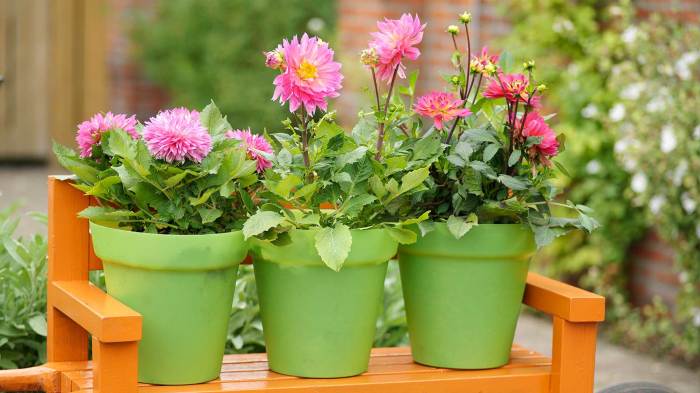
The following image depicts a comparison of three common pot materials: clay, plastic, and terracotta. The clay pot (shown on the left) is porous, providing excellent drainage but requiring more frequent watering. The plastic pot (in the middle) is non-porous, retaining moisture effectively but potentially leading to overwatering if not carefully monitored.
The terracotta pot (on the right) offers a balance between drainage and moisture retention, being less porous than clay but more than plastic. The image also visually represents the typical color and texture differences between these materials. The visual also highlights how root growth might differ in each pot type: more restricted in a smaller clay pot, less restricted in a larger plastic pot.
Preparing for Planting
Before planting your dahlia tubers, it’s crucial to prepare a well-draining potting mix and harden off the tubers to ensure healthy growth. Inspecting the tubers for any signs of disease or damage is also a vital step.
Preparing the Potting Mix
A well-draining potting mix is essential for dahlias grown in pots. A good mix typically consists of a blend of high-quality potting soil, perlite, and compost. A suggested ratio is 2 parts potting soil, 1 part perlite, and 1 part compost.
Perlite enhances drainage, while compost adds nutrients and improves soil structure. Avoid using garden soil directly, as it can be too heavy and retain too much moisture, leading to root rot.
Hardening Off Dahlia Tubers
Hardening off gradually acclimates the tubers to outdoor conditions before planting. This reduces transplant shock and promotes healthier growth. Begin by placing the tubers in a cool, shaded area for a few days, gradually increasing their exposure to sunlight and warmer temperatures over a week or two.
This gradual transition allows the tubers to adjust to the changes in light and temperature.
Preparing Dahlia Tubers for Planting
Before planting, inspect each tuber carefully for signs of disease or damage. Remove any damaged or diseased parts using a sharp, clean knife. Discard any tubers showing significant rot or discoloration. Gently dust the cut areas with a fungicide to prevent infection.
This preparation helps ensure that only healthy tubers are planted, reducing the risk of disease transmission and promoting vigorous growth.
Planting the Dahlias
Planting dahlias correctly ensures optimal growth and abundant blooms. The depth and spacing of the tubers are crucial factors to consider. The following steps provide a clear guide for planting dahlia tubers in pots.
Planting Dahlia Tubers: A Step-by-Step Guide
The image depicts a step-by-step process. First, fill the pot about halfway with the prepared potting mix. Next, place the tuber with the “eyes” (growing points) facing upwards, burying it to a depth of about 2-4 inches. Then, add more potting mix, leaving about an inch of space at the top for watering.
Finally, gently water the pot, ensuring the soil is moist but not waterlogged. The image clearly shows the proper depth and orientation of the tuber.
Visual Guide to Planting Dahlia Tubers
The visual guide shows a cross-section of a pot with a dahlia tuber planted at the correct depth. The tuber’s “eyes” are clearly visible facing upwards. The image illustrates the ideal spacing between tubers (if planting multiple in one pot) and the appropriate amount of potting mix surrounding the tuber.
Arrows indicate the direction of water flow to prevent waterlogging.
Common Mistakes to Avoid, How to plant dahlias in pots
Planting dahlias too deep can hinder growth, while planting them too shallow can expose them to environmental stress. Overwatering can lead to root rot, while underwatering can stunt growth. Failing to provide adequate support for tall varieties can result in broken stems.
Planting diseased tubers can introduce pathogens into the soil. The image depicts these mistakes visually, showing the contrast between correct and incorrect planting techniques.
Dahlia Care and Maintenance
Providing proper care and maintenance ensures healthy growth and abundant blooms. This includes consistent watering, sufficient sunlight, and regular fertilization. Supporting tall varieties is also crucial for preventing stem breakage.
Watering, Sunlight, and Fertilization
Dahlias require consistent watering, especially during dry periods. Aim for evenly moist soil, avoiding both waterlogging and dryness. Dahlias thrive in full sun (at least 6 hours per day). Regular fertilization with a balanced liquid fertilizer every 2-3 weeks promotes vigorous growth and abundant blooms.
Avoid over-fertilizing, as this can lead to excessive foliage growth at the expense of flowers.
Supporting Tall Dahlia Varieties
The image depicts various support methods for tall dahlias, including sturdy stakes driven into the soil next to the plant and a circular cage surrounding the plant to provide overall support. The stakes are positioned to avoid damaging the stems.
The image clearly shows how to securely tie the stems to the stakes or cage using soft ties to prevent damage. This ensures the plant remains upright, even in windy conditions, and prevents stem breakage.
Pests and Diseases
Common dahlia pests include slugs, snails, aphids, and spider mites. Preventative measures include regular inspection, handpicking pests, and using appropriate pest control products. Common diseases include powdery mildew and various fungal rots. Preventative measures include ensuring good air circulation, avoiding overhead watering, and using fungicides as needed.
The image illustrates common pests and diseases, highlighting their symptoms and suggesting appropriate treatment methods.
Overwintering Dahlias: How To Plant Dahlias In Pots
Overwintering dahlia tubers ensures their survival and allows for planting the following year. This involves carefully lifting, cleaning, and storing the tubers in a cool, dry environment.
Lifting and Storing Dahlia Tubers
After the first frost, carefully dig up the dahlia tubers, ensuring you don’t damage them. Gently brush off excess soil and allow the tubers to dry for a few days in a cool, airy place. Remove any remaining foliage and stems, leaving about 2-3 inches of stem attached to each tuber.
This prevents accidental damage to the tuber during storage.
Cleaning and Preparing Tubers for Storage
Inspect each tuber for any signs of disease or damage. Remove any diseased or damaged parts using a sharp, clean knife. Dust the cut areas with a fungicide to prevent infection. Gently brush off any remaining soil particles.
Storing Dahlias in a Cool, Dry Environment
Store the tubers in a cool, dry, and dark place, such as a basement or garage, with temperatures between 40-50°F (4-10°C). Place them in boxes filled with peat moss, vermiculite, or perlite to prevent drying out and protect them from frost.
Regularly check the tubers for any signs of rot or mold and remove any affected tubers immediately. This careful storage ensures the tubers remain viable until the next planting season.
Final Conclusion
Planting dahlias in pots offers a fantastic opportunity to enjoy these stunning flowers even if you have limited garden space. By following the steps Artikeld in this guide, from selecting the right dahlia and pot to overwintering the tubers, you can cultivate a vibrant and thriving display.
Remember, attention to detail in each stage – from soil preparation to ongoing care – is key to success. So get planting, and enjoy the beauty of your blooming dahlias!
Question Bank
Can I use any type of soil for planting dahlias in pots?
No, a well-draining potting mix is crucial. Avoid heavy clay soils that retain too much water.
How often should I water my potted dahlias?
Water deeply when the top inch of soil feels dry, ensuring good drainage to prevent root rot.
What should I do if I see pests on my dahlias?
Inspect regularly. Use insecticidal soap or neem oil for common pests. For serious infestations, consult a gardening expert.
When is the best time to plant dahlias in pots?
After the last frost, when the soil has warmed up. This usually falls in late spring or early summer.