Agave plant species, a diverse genus of succulent plants, boast a rich history interwoven with human cultures across the Americas. From the production of tequila and mezcal to the creation of strong fibers and traditional medicines, agaves have played a vital role for centuries.
This exploration delves into their fascinating biology, diverse habitats, and multifaceted uses, revealing the remarkable adaptations and cultural significance of these remarkable plants.
We’ll examine the intricate details of agave classification, exploring the various species and their unique characteristics. We’ll also journey through their natural habitats, uncover the environmental factors that shape their distribution, and investigate the diverse ways humans have harnessed their potential throughout history and into the modern era.
This comprehensive look at agave plant species aims to provide a deep understanding of their importance, both ecologically and culturally.
Agave Plant: A Comprehensive Overview
The agave, a genus boasting impressive diversity, is a captivating group of succulent plants native to the Americas. Their striking architectural forms, ranging from the dramatic spiky rosettes of some species to the softer, more rounded shapes of others, have captivated gardeners and botanists alike for centuries.
Beyond their aesthetic appeal, agaves play crucial roles in various cultures, contributing to traditional practices and modern industries. This overview delves into the fascinating world of agave, exploring their classification, habitats, uses, cultivation, and conservation.
Agave Plant Classification
Agaves belong to the family Asparagaceae, subfamily Agavoideae. The genus Agaveitself encompasses a large number of species, with ongoing taxonomic revisions reflecting the complexity of their evolution and hybridization. Significant morphological differences exist between species, making identification sometimes challenging even for experts.
| Species Name | Leaf Description | Flower Description | Geographic Distribution |
|---|---|---|---|
| Agave americana | Large, robust, grey-green leaves with prominent terminal spines; margins sharply toothed. | Tall, branched inflorescence with numerous yellow-green flowers. | Southern USA, Mexico, Caribbean, widely naturalized elsewhere. |
| Agave tequilana (Blue Agave) | Succulent, bluish-green leaves, relatively smooth margins, sharp terminal spine. | Tall, unbranched inflorescence with yellowish flowers. | Central Mexico (Jalisco region). |
| Agave sisalana (Sisal) | Long, stiff, sword-shaped leaves, grey-green color, sharp margins and terminal spine. | Tall, branched inflorescence with greenish-yellow flowers. | Mexico and Central America; widely cultivated. |
| Agave parryi | Relatively small, thick, rigid leaves; grey-green to blue-green, with dark brown spines. | Relatively short inflorescence with yellow flowers. | Southwestern USA, Northern Mexico. |
Agave Plant Habitats and Distribution, Agave plant species
Agaves exhibit remarkable adaptability, thriving in a wide range of arid and semi-arid environments. Their distribution reflects this adaptability.
- Diverse Habitats:From deserts and scrublands to rocky slopes and coastal regions.
- Geographical Distribution:Primarily found in the Americas, ranging from the southwestern United States and Mexico to Central and South America, with some species naturalized in other parts of the world.
- Regional Variations:Species show variations in morphology and adaptations based on their specific habitats. For instance, desert-dwelling species often have thicker, more succulent leaves for water storage, while those in coastal areas might have leaves adapted to withstand salt spray.
Key environmental factors influencing agave growth and distribution include:
- Climate (temperature, rainfall, sunlight)
- Soil type (well-drained, rocky soils are preferred)
- Altitude (some species are adapted to high altitudes)
Agave Plant Uses and Applications
Agaves have been integral to human societies for centuries, providing a diverse array of products and resources.
| Agave Species | Product | Applications |
|---|---|---|
| Agave tequilana | Tequila | Alcoholic beverage |
| Various species | Mezcal | Alcoholic beverage |
| Agave sisalana | Sisal fiber | Rope, twine, textiles |
| Various species | Agave syrup/nectar | Sweetener, food ingredient |
| Various species | Medicinal uses | Traditional remedies (anti-inflammatory, etc.) |
Agave Plant Propagation and Cultivation
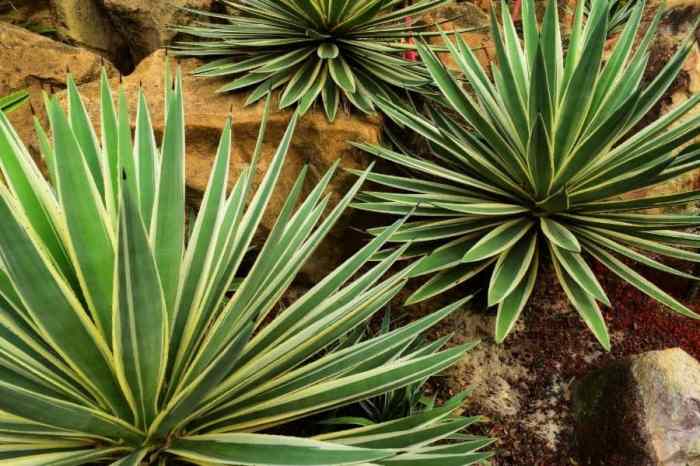
Agaves can be propagated through several methods, each with its own advantages and disadvantages.
- Seeds:Seed propagation is a slower method, but it allows for genetic diversity.
- Suckers (offsets):These are offshoots that grow from the base of the mother plant. This is a more common and efficient method of propagation.
- Tissue Culture:This advanced technique allows for rapid mass propagation of desirable genotypes.
Cultivation techniques vary depending on the species and the environment. Generally, agaves prefer well-drained soil, ample sunlight, and moderate watering.
Agave Plant Conservation Status
Many agave species face threats due to habitat loss, overharvesting, and climate change. Conservation efforts are crucial to preserving these valuable plants.
- Conservation Status:Some agave species are listed as endangered or vulnerable, while others are of least concern. The status varies greatly depending on the species and its geographic distribution.
- Threats:Habitat destruction for agriculture and development, unsustainable harvesting for tequila and other products, and climate change impacts (droughts, altered rainfall patterns) pose significant threats.
- Conservation Strategies:Sustainable harvesting practices, habitat protection and restoration, captive breeding programs, and public awareness campaigns are vital for conserving agave biodiversity.
Agave Plant Biology and Physiology
Agaves possess several unique biological features that contribute to their success in arid environments.
- CAM Photosynthesis:Agaves utilize crassulacean acid metabolism (CAM), a specialized photosynthetic pathway that minimizes water loss in hot, dry conditions.
- Life Cycle and Reproduction:Agaves are monocarpic, meaning they flower and produce seeds only once in their lifetime, often after several years of vegetative growth. After flowering and seed production, the mother plant typically dies.
- Root System:Agaves have a fibrous root system that is relatively shallow but extensive, allowing them to efficiently absorb water and nutrients from the soil surface.
Agave Plant Pests and Diseases
Agaves, like all plants, are susceptible to various pests and diseases.
| Pest/Disease | Symptoms | Management Strategies |
|---|---|---|
| Root rot | Wilting, leaf discoloration | Well-drained soil, avoid overwatering |
| Scale insects | White or brown patches on leaves | Manual removal, insecticidal soap |
| Agave weevil | Tunneling in the plant’s stem and leaves | Insecticides, removal of infested parts |
Illustrative Examples of Agave Species
Three distinct agave species exemplify the genus’s remarkable diversity.
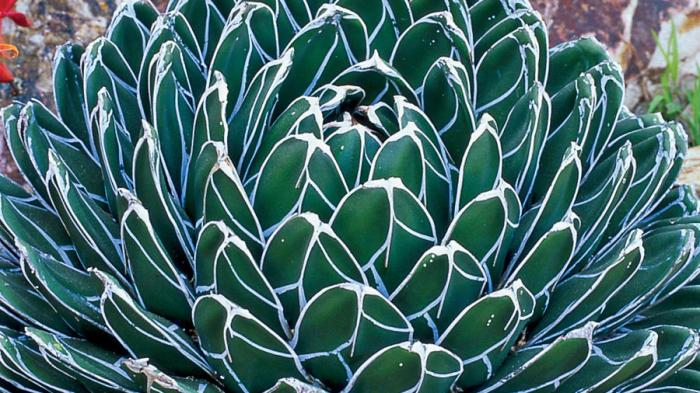
- Agave victoriae-reginae(Queen Victoria Agave): This compact species forms a striking rosette of sharply pointed, dark green leaves with distinctive white markings. Each leaf’s tip ends in a sharp, dark spine. Its relatively small size makes it popular in cultivation, and it is native to the arid regions of northeastern Mexico.
It’s primarily valued for its ornamental appeal.
- Agave attenuata(Foxtail Agave): Unlike many agaves with sharp spines, this species has smooth, gracefully curving leaves that end in a soft point. The leaves form a rounded rosette, and the inflorescence is unbranched and gracefully curved, resembling a fox’s tail. Native to central Mexico, it’s a popular ornamental plant due to its soft, non-threatening appearance.
- Agave deserti(Desert Agave): This species is characterized by its relatively small size and its leaves, which are pale green to blue-green, thick, and rigid, with prominent terminal spines and marginal teeth. It’s well-adapted to harsh desert conditions and is native to the Sonoran Desert of the southwestern United States and northwestern Mexico.
It is used traditionally by indigenous populations for fiber and food.
Closing Summary
The world of agave plant species is far richer and more complex than initially apparent. From their remarkable adaptations to thrive in arid environments to their crucial role in various human societies, these plants offer a compelling case study in the intricate relationship between plants and people.
Understanding their biology, conservation needs, and diverse applications is crucial for ensuring their continued survival and responsible utilization for future generations. The hope is that this guide has shed light on the captivating story of these unique and valuable plants.
FAQ: Agave Plant Species
How long does an agave plant live?
It varies greatly depending on the species, ranging from a few years to several decades, with some species taking many years to flower only once.
Are all agave plants used for tequila production?
No, only certain species of agave, primarily -Agave tequilana*, are used for tequila production. Other species are used for mezcal and other products.
Can I grow agave plants from cuttings?
Yes, many agave species can be propagated from pups (offshoots) or suckers that grow at the base of the mother plant.
What are some common pests and diseases that affect agaves?
Common problems include root rot (often from overwatering), scale insects, mealybugs, and fungal diseases. Proper drainage and pest control are crucial.