How to water orchid plants? It’s a question that plagues even seasoned plant enthusiasts. These exquisite blooms, with their diverse varieties and unique needs, require a delicate balance of hydration. Understanding the intricacies of orchid watering – from recognizing signs of underwatering and overwatering to mastering various watering techniques and choosing the right potting medium – is crucial for their thriving.
This guide will demystify the process, ensuring your orchids flourish.
We’ll explore the factors influencing watering frequency, such as plant type, pot size, and season, providing a clear understanding of how to adjust your watering schedule based on environmental conditions. Different orchid types have varying needs, and we’ll detail those differences, guiding you through effective watering methods, including soaking, top watering, bottom watering, and misting, while highlighting their advantages and disadvantages.
Finally, we’ll address common watering problems and offer solutions, empowering you to nurture healthy and vibrant orchids.
Understanding Orchid Watering Needs
Proper watering is crucial for orchid health and longevity. The frequency and method depend on several interacting factors, ensuring you provide the right amount of moisture without causing problems like root rot or dehydration.
Factors Influencing Watering Frequency
Several key factors determine how often your orchids need watering. These include the specific orchid type, the size and material of its pot, the current season, and the ambient environment.
- Plant Type:Different orchid species have varying water requirements. Phalaenopsis orchids, for instance, prefer consistently moist but not soggy conditions, while Cattleyas prefer to dry out slightly between waterings.
- Pot Size and Material:Larger pots and those made of porous materials like terracotta dry out faster than smaller, plastic pots. This influences how frequently you need to water.
- Season:Orchids generally need more frequent watering during warmer months when evaporation is higher and less during cooler, dormant periods.
- Environment:Humidity, light levels, and temperature all affect how quickly the potting medium dries. Higher temperatures and brighter light increase evaporation, requiring more frequent watering.
Signs of Underwatered and Overwatered Orchids
Recognizing the signs of underwatering and overwatering is essential for timely intervention. Early detection can prevent serious damage.
- Underwatering:Leaves will appear shriveled, wrinkled, or limp. The potting medium will be completely dry, and the plant may look generally dehydrated. The pseudobulbs (if present) might appear shrunken.
- Overwatering:Leaves may yellow, turn brown at the tips, or become soft and mushy. The potting medium will remain consistently wet, possibly with a foul odor. Roots may turn brown and mushy, indicating root rot.
Comparison of Watering Needs for Different Orchid Types
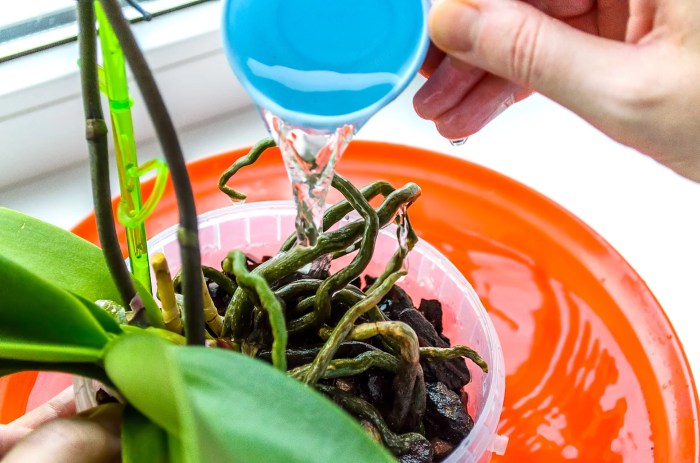
This table provides a general guideline. Always observe your individual plants and adjust accordingly.
| Orchid Type | Watering Frequency (Summer) | Watering Frequency (Winter) | Notes |
|---|---|---|---|
| Phalaenopsis | Once a week | Every 10-14 days | Allow the potting medium to dry slightly between waterings. |
| Cattleya | Once every 7-10 days | Every 2-3 weeks | Water thoroughly when the potting medium is almost dry. |
| Dendrobium | Once every 5-7 days | Every 10-14 days | Adjust frequency based on the specific Dendrobium species. |
| Oncidium | Twice a week | Once a week | These orchids generally prefer more frequent watering. |
Watering Methods
Several watering techniques exist, each with its own advantages and disadvantages. Choosing the best method depends on your orchid type, potting medium, and personal preference.
Soaking Method: A Step-by-Step Guide
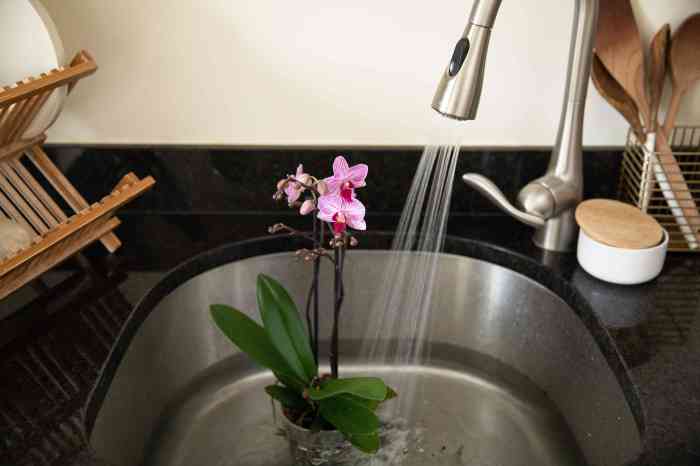
The soaking method is a popular and effective way to water orchids, ensuring even moisture distribution.
- Step 1: Preparation:Place the orchid pot in a sink or large container.
- Step 2: Soaking:Fill the container with lukewarm water, ensuring the water level reaches about halfway up the pot’s height. Allow the orchid to soak for 15-20 minutes. This allows the potting medium to absorb water thoroughly. A visual description: Imagine the water gently surrounding the pot, slowly being absorbed.
- Step 3: Drainage:Remove the pot from the water and let it drain completely. Ensure all excess water has drained away to prevent root rot.
- Step 4: Return to its place:Return the orchid to its original location, ensuring proper drainage.
Comparison of Watering Techniques
Each watering method has its pros and cons. Consider your orchid type and experience level when selecting a technique.
- Top Watering:Pouring water directly onto the potting medium. Advantages:Simple and quick. Disadvantages:Can lead to uneven watering and potential for leaf rot if water accumulates on leaves.
- Bottom Watering:Placing the pot in a tray of water. Advantages:Even moisture distribution. Disadvantages:Requires more time and monitoring to prevent overwatering.
- Misting:Spraying water onto the leaves and surrounding air. Advantages:Increases humidity. Disadvantages:Not a primary watering method; best used to supplement other techniques.
Comparison of Watering Methods for Different Orchid Types
The effectiveness of different watering methods can vary depending on the orchid type. This table provides a general comparison.
| Orchid Type | Soaking | Top Watering | Bottom Watering |
|---|---|---|---|
| Phalaenopsis | Excellent | Acceptable with careful monitoring | Good |
| Cattleya | Good | Acceptable | Good |
| Dendrobium | Good | Acceptable | Good |
| Oncidium | Good | Acceptable with careful monitoring | Good |
Watering Frequency and Schedule: How To Water Orchid Plants
A consistent watering schedule is essential, but it should be flexible enough to accommodate changes in environmental conditions.
Adjusting Watering Frequency Based on Environment, How to water orchid plants
Temperature, humidity, and light levels significantly impact how quickly the potting medium dries. Higher temperatures and brighter light lead to faster evaporation, necessitating more frequent watering. Conversely, cooler temperatures and lower light levels mean you can water less often.
Sample Watering Schedule
This is a general guideline; adjust based on your specific environment and orchid type.
| Season | Temperature | Light | Watering Frequency (Example
|
|---|---|---|---|
| Spring | Mild | Increasing | Every 7-10 days |
| Summer | Warm | High | Every 5-7 days |
| Autumn | Cooling | Decreasing | Every 10-14 days |
| Winter | Cool | Low | Every 14-21 days |
Determining When to Water
Inspect the potting medium and the plant itself. If the top inch of the medium feels dry, it’s likely time to water.
Wilting leaves also indicate a need for watering, but this is a later sign.
Water Quality and Potting Medium
The quality of your water and the type of potting medium significantly impact your orchid’s health and watering needs.
Ideal Water Characteristics
Use lukewarm, filtered water to avoid chlorine and other chemicals that can harm orchids. Ideally, the water should have a slightly acidic pH (around 5.5-6.5). Avoid using very hard water, which can build up salts in the potting medium.
Comparison of Potting Media
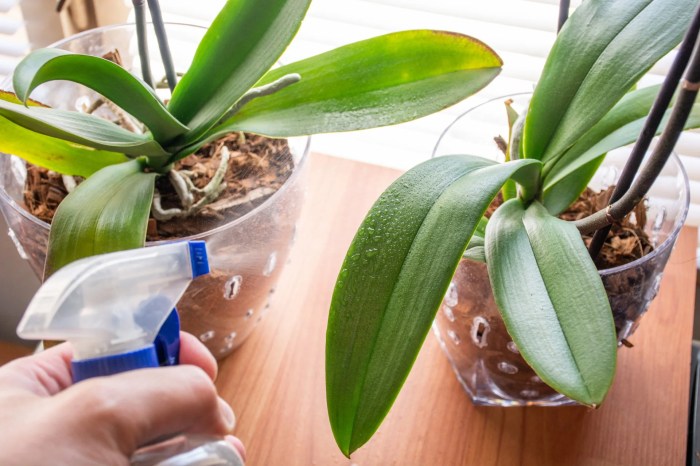
Different potting media offer various benefits and drawbacks. Choose a medium appropriate for your orchid type and watering habits.
- Bark: Pros:Excellent drainage, good aeration. Cons:Can decompose quickly, requiring frequent repotting.
- Moss: Pros:Retains moisture well. Cons:Can compact easily, reducing drainage and aeration.
- Perlite: Pros:Improves drainage and aeration. Cons:Doesn’t retain moisture well on its own; best used as a component of a potting mix.
Influence of Potting Medium on Watering
The type of potting medium directly affects watering frequency and technique. Well-draining media like bark require more frequent watering but allow for less risk of overwatering. Moisture-retentive media like moss require less frequent watering but increase the risk of root rot if overwatered.
Troubleshooting Watering Issues
Despite best efforts, watering problems can occur. Recognizing symptoms and implementing appropriate solutions is crucial for your orchid’s survival.
Solutions for Common Problems
- Root Rot:Caused by overwatering. Symptoms include mushy, brown roots. Solution: Repot the orchid in fresh, dry potting medium after removing affected roots.
- Leaf Yellowing:Can be caused by both overwatering and underwatering. Check the roots; yellowing leaves accompanied by mushy roots indicate overwatering, while yellowing leaves accompanied by dry roots indicate underwatering. Solutions: Adjust watering frequency accordingly.
- Wilting:Often indicates underwatering. Solution: Water thoroughly and monitor the plant’s response.
Repotting an Orchid with Root Rot
A step-by-step guide to repotting an orchid with root rot.
- Step 1: Removal:Gently remove the orchid from its pot.
- Step 2: Root Inspection:Carefully inspect the roots. Trim away any mushy, brown, or dead roots using sterilized scissors.
- Step 3: Drying:Allow the roots to air dry for a few hours.
- Step 4: Repotting:Plant the orchid in fresh, dry potting medium.
Troubleshooting Guide
This table summarizes common watering problems, their causes, and solutions.
| Symptom | Cause | Solution | Additional Notes |
|---|---|---|---|
| Root rot | Overwatering | Repot in fresh medium, remove affected roots | Ensure proper drainage |
| Leaf yellowing | Overwatering or underwatering | Adjust watering frequency | Observe root condition |
| Wilting | Underwatering | Water thoroughly | Monitor for improvement |
| Leaf browning | Overwatering or sunburn | Adjust watering and light exposure | Rule out other factors |
Final Thoughts
Mastering the art of orchid watering is a journey, not a destination. By understanding your orchid’s specific needs, adapting your techniques to environmental conditions, and proactively addressing any issues, you’ll cultivate a thriving collection of these beautiful plants. Remember to observe your orchids closely; they’ll tell you what they need.
With consistent care and attention, your orchids will reward you with their stunning blooms year after year. Happy growing!
FAQs
What type of water is best for orchids?
Filtered or rainwater is ideal. Avoid using tap water with high mineral content or chlorine.
How often should I fertilize my orchids?
Fertilize orchids every 2-4 weeks during the growing season (spring and summer) with a balanced orchid fertilizer diluted to half strength.
My orchid’s leaves are yellowing. What should I do?
Yellowing leaves can indicate overwatering or underwatering. Check the roots and adjust your watering schedule accordingly. Ensure proper drainage.
How do I know if my orchid needs repotting?
Repot when the potting medium breaks down or becomes compacted, or if the roots are circling the pot. Spring is usually the best time.
My orchid’s roots are mushy. Is it root rot?
Mushy roots are a sign of root rot, often caused by overwatering. Carefully remove the affected roots, treat with fungicide, and repot in fresh, well-draining medium.