How to care for orchids plant? It’s a question many aspiring plant parents ask. These elegant blooms, often perceived as fussy, are actually quite rewarding with the right care. This guide will walk you through understanding orchid types, light needs, watering techniques, potting, fertilization, pest control, and propagation, empowering you to nurture these beauties to their full potential.
From the delicate Phalaenopsis to the vibrant Dendrobium and the majestic Cattleya, each orchid variety has unique requirements. We’ll explore these differences, providing practical advice and visual aids to help you create a thriving orchid collection, regardless of your experience level.
We’ll cover everything from recognizing signs of stress to mastering repotting techniques and effective pest management.
Understanding Orchid Types
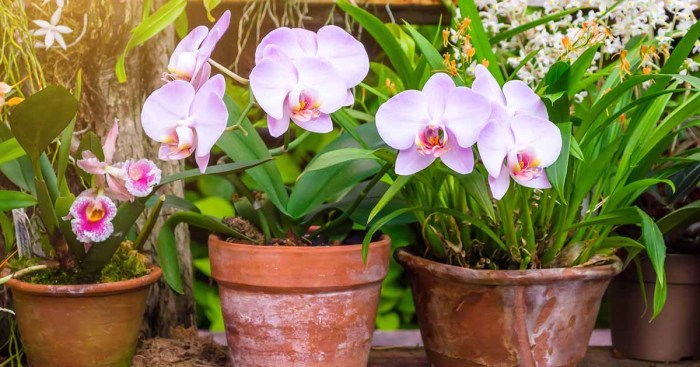
Orchids boast incredible diversity, but some are far more beginner-friendly than others. Focusing on a few popular varieties simplifies the learning curve and increases your chances of success. This section will highlight Phalaenopsis, Dendrobium, and Cattleya orchids, comparing their care requirements to guide you in choosing the right orchid for your experience level and home environment.
Common Orchid Varieties for Beginners
Phalaenopsis, Dendrobium, and Cattleya orchids are excellent choices for novice orchid growers due to their relative tolerance of less-than-perfect conditions. Each, however, has unique needs, making understanding these differences crucial for successful cultivation.
Comparing Phalaenopsis, Dendrobium, and Cattleya Orchids
While all three thrive in bright, indirect light, their specific needs vary. Phalaenopsis prefer consistently moist conditions, while Dendrobiums and Cattleyas appreciate slightly drier periods between waterings. Temperature preferences also differ, impacting your choice of placement within your home.
| Orchid Type | Light Needs | Watering Frequency | Temperature Preference |
|---|---|---|---|
| Phalaenopsis | Bright, indirect light; avoid direct sun | Water when the potting medium is almost dry; usually once a week | Average room temperatures (65-80°F or 18-27°C) |
| Dendrobium | Bright, indirect light; tolerate more direct light than Phalaenopsis | Allow the potting medium to dry out between waterings; frequency depends on the specific Dendrobium variety and environmental conditions | Slightly cooler temperatures than Phalaenopsis (55-75°F or 13-24°C) are generally preferred for many varieties. |
| Cattleya | Bright, indirect light; can tolerate more direct light than Phalaenopsis, but avoid intense midday sun | Water thoroughly when the potting medium is almost dry; allow it to dry out completely between waterings | Similar to Dendrobiums, they prefer slightly cooler night temperatures (55-65°F or 13-18°C) for optimal blooming. |
Light Requirements for Orchids: How To Care For Orchids Plant
Adequate light is paramount for healthy orchid growth and vibrant blooms. Insufficient light leads to weak growth and lack of flowering, while excessive light can scorch leaves and damage the plant. Understanding your orchid’s specific light requirements and adjusting accordingly is crucial for its overall well-being.
Importance of Proper Light Exposure
Orchids, like all plants, need light for photosynthesis, the process by which they convert light energy into chemical energy for growth. The right amount of light ensures vigorous growth, abundant blooms, and a healthy, robust plant.
Signs of Insufficient or Excessive Light
Insufficient light results in leggy growth, pale leaves, and a lack of blooms. Leaves may appear elongated and spaced far apart. Conversely, excessive light manifests as leaf burn, characterized by brown or yellow patches, especially on the leaf tips and edges.
Leaves may also appear crisped or shriveled.
Determining Appropriate Light Levels
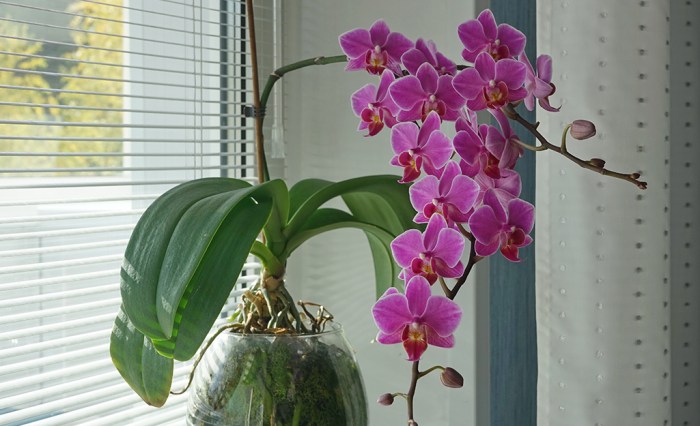
The ideal light level varies depending on the orchid species. Phalaenopsis generally tolerate lower light levels than Cattleyas or Dendrobiums. Observe your orchid’s response to its current light exposure. East- or west-facing windows often provide suitable indirect light, while south-facing windows may require filtering or shading to prevent scorching.
Artificial light sources, such as grow lights, can supplement natural light, particularly during winter months or in low-light environments.
Watering Orchids Effectively
Watering orchids is a delicate balance. Overwatering leads to root rot, while underwatering results in wilting and stunted growth. Mastering the art of watering is crucial for orchid health and longevity. This section details the optimal methods, frequencies, and signs to watch for.
Best Watering Methods and Frequency
The best method is to water thoroughly until water drains freely from the drainage holes. The frequency depends on the orchid type, potting medium, and environmental conditions. Generally, allow the potting medium to dry out somewhat between waterings.
Avoid letting the orchid sit in standing water, which can lead to root rot. Using lukewarm water is generally recommended.
Preventing Overwatering and Underwatering
To prevent overwatering, ensure your orchid is potted in a well-draining medium and avoid using saucers that retain water. Feel the potting medium; if it’s still moist, wait before watering. Signs of underwatering include shriveled leaves and pseudobulbs (thickened stems found in some orchid varieties).
If your orchid exhibits these symptoms, water it thoroughly and monitor its recovery.
Identifying Signs of Proper Hydration and Dehydration
Properly hydrated orchids have firm, plump leaves and pseudobulbs (if applicable). The potting medium should be slightly moist but not soggy. Dehydrated orchids exhibit shriveled leaves and pseudobulbs, and the potting medium will be completely dry.
Visual Guide to Proper Watering Techniques
- Soak and Drain:Submerge the pot in lukewarm water for 15-20 minutes, ensuring the medium is thoroughly saturated. Allow excess water to drain completely before returning the orchid to its usual location.
- Top Watering:Gently pour lukewarm water over the potting medium until it flows out of the drainage holes. Avoid getting water on the leaves or crown of the plant to prevent rot.
- Bottom Watering:Place the pot in a tray filled with a few inches of lukewarm water, allowing the medium to absorb water from the bottom. Remove the pot once the top inch of medium feels moist.
Orchid Potting and Medium
The right potting medium is essential for orchid health. Unlike most plants, orchids don’t thrive in regular soil. This section will explore ideal potting materials and the process of repotting.
Ideal Potting Medium for Orchids
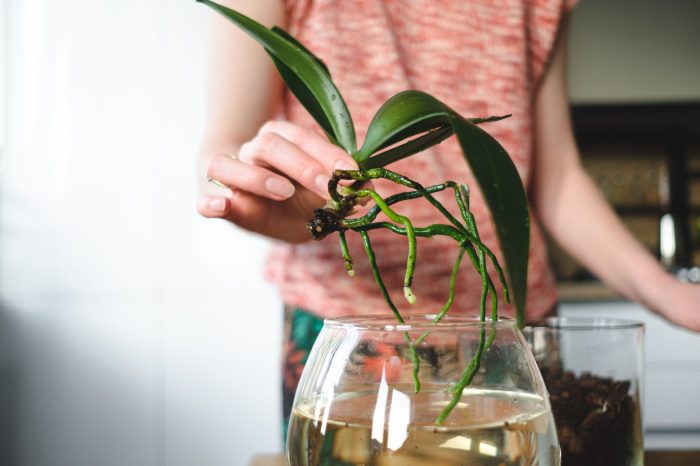
Bark-based mixes are preferred because they provide excellent drainage and aeration, mimicking the orchids’ natural epiphytic (air-dwelling) environment. These mixes allow air to circulate around the roots, preventing root rot, a common problem in orchids.
Comparing Potting Materials
Bark (fir or pine), sphagnum moss, and perlite are common components of orchid potting mixes. Bark provides excellent drainage and aeration. Sphagnum moss retains moisture, while perlite improves drainage and aeration. The optimal mix depends on the orchid species and your climate.
Repotting an Orchid: A Step-by-Step Guide
Repotting is typically necessary every 1-2 years, or when the potting medium breaks down or becomes compacted.
- Gather supplies:New pot (slightly larger than the old one), fresh orchid potting mix, sharp, clean scissors or knife.
- Remove the orchid:Gently remove the orchid from its old pot, loosening the roots carefully.
- Inspect the roots:Remove any dead or decaying roots using clean, sharp scissors or a knife.
- Prepare the new pot:Add a layer of fresh potting mix to the bottom of the new pot.
- Plant the orchid:Place the orchid in the new pot, ensuring the crown (where the leaves emerge) is above the potting mix.
- Fill with potting mix:Fill the pot with fresh potting mix, gently packing it around the roots.
- Water thoroughly:Water the repotted orchid thoroughly.
Orchid Nutrition and Fertilization
Proper fertilization provides essential nutrients for healthy growth and abundant blooms. Understanding the role of fertilizer and selecting the right type is crucial for thriving orchids.
Importance of Orchid Fertilizer
Orchid fertilizers supply essential nutrients that are often lacking in orchid potting mixes. These nutrients are vital for robust growth, vibrant foliage, and abundant flowering. Using a balanced orchid fertilizer helps ensure your orchids receive the nutrients they need to flourish.
Selecting and Using Orchid Fertilizers
Balanced orchid fertilizers are formulated with a lower nitrogen-to-phosphorus ratio (e.g., 20-10-20) than general-purpose fertilizers. Always dilute the fertilizer according to the manufacturer’s instructions. Fertilize orchids regularly during their active growing season (spring and summer), reducing or ceasing fertilization during dormancy (fall and winter).
Signs of Nutrient Deficiencies and Excesses
Nutrient deficiencies can manifest as yellowing leaves, stunted growth, and a lack of blooms. Nutrient excesses can lead to leaf burn and root damage. Monitor your orchids for any signs of nutrient imbalance and adjust your fertilization accordingly.
Common Orchid Pests and Diseases
Orchids, like all plants, are susceptible to pests and diseases. Early detection and prompt treatment are crucial for preventing serious problems. This section highlights common issues and effective management strategies.
Identifying Common Pests and Diseases, How to care for orchids plant
Aphids, mealybugs, and root rot are among the most common threats. Aphids and mealybugs are sucking insects that feed on plant sap, while root rot is a fungal disease caused by overwatering and poor drainage.
| Pest/Disease | Symptoms | Prevention | Treatment |
|---|---|---|---|
| Aphids | Small, soft-bodied insects; sticky honeydew on leaves; leaf distortion | Regular inspection; good air circulation | Insecticidal soap; neem oil |
| Mealybugs | White, cottony masses on leaves and stems | Regular inspection; good air circulation | Isopropyl alcohol; insecticidal soap |
| Root Rot | Soft, mushy roots; yellowing and wilting leaves | Well-draining potting mix; avoid overwatering | Remove affected roots; fungicide; improve drainage |
Orchid Propagation
Propagating orchids allows you to expand your collection and share these beautiful plants with others. This section Artikels common propagation methods, including division and keiki propagation.
Methods for Propagating Orchids
Division and keiki propagation are two common methods. Division involves separating a mature orchid into multiple plants, while keiki propagation involves growing new plants from baby orchids (keikis) that develop on the mother plant.
Steps Involved in Each Propagation Method
Division:Carefully divide the orchid’s root system, ensuring each division has healthy roots and shoots. Repot each division in fresh potting mix. Keiki Propagation:Allow the keiki to develop roots. Once it has sufficient roots, carefully separate it from the mother plant and pot it in fresh potting mix.
Factors Influencing Successful Orchid Propagation
Successful propagation depends on several factors, including the health of the mother plant, proper technique, and suitable environmental conditions. Maintaining appropriate humidity, temperature, and light levels is crucial for successful rooting and growth of the new plants.
Final Review
Mastering the art of orchid care is a journey, not a destination. By understanding the fundamentals of light, water, nutrition, and pest control, you’ll be well-equipped to cultivate healthy and vibrant orchids. Remember, observation is key – learn to recognize the subtle cues your orchids give you, and adjust your care accordingly.
With patience and attention, you’ll enjoy the exquisite beauty of these remarkable plants for years to come. Happy growing!
FAQ
How often should I fertilize my orchids?
Fertilize orchids every 2-4 weeks during the growing season (spring and summer) with a balanced orchid fertilizer diluted to half strength.
Why are my orchid leaves turning yellow?
Yellowing leaves can indicate overwatering, underwatering, insufficient light, or nutrient deficiencies. Check your watering habits, light exposure, and consider adjusting your fertilizer regimen.
My orchid isn’t blooming. What should I do?
Lack of blooms can be caused by insufficient light, improper watering, or temperature fluctuations. Ensure your orchid receives adequate light, water appropriately, and maintain a consistent temperature range.
What’s the best way to clean my orchid leaves?
Gently wipe the leaves with a damp cloth to remove dust. Avoid using harsh chemicals or abrasive materials.