How to prune an orchid plant? It’s a question many orchid enthusiasts grapple with. Proper pruning isn’t just about aesthetics; it’s crucial for the plant’s health and longevity. Understanding the nuances of pruning different orchid types, from the delicate Phalaenopsis to the robust Cattleya, is key to ensuring your orchids thrive.
This guide will equip you with the knowledge and techniques to confidently prune your orchids, promoting abundant blooms and vigorous growth.
We’ll cover identifying when pruning is needed, gathering the right tools, and mastering the specific techniques for various orchid varieties. We’ll also address common mistakes and provide solutions to help you avoid damaging your precious plants. By the end, you’ll be comfortable tackling any pruning task with confidence, ensuring your orchids flourish for years to come.
Identifying the Need for Pruning: How To Prune An Orchid Plant
Knowing when to prune your orchid is crucial for its health and blooming potential. Over-pruning can weaken the plant, while neglecting dead or diseased parts can lead to infection and hinder growth. This section details the signs indicating the need for pruning, differentiating between healthy and unhealthy orchids, and provides examples of when pruning is necessary and when it’s best avoided.
Signs of Orchids Needing Pruning
Several visual cues signal the need for orchid pruning. These include yellowing or browning leaves, indicating decay or disease; spent flower spikes, which no longer produce blooms; and dead or rotting roots, often appearing mushy or dark brown. Additionally, overcrowded or entangled roots might require thinning for improved air circulation and nutrient uptake.
Healthy orchids generally display vibrant green leaves, firm roots, and actively growing flower spikes.
Differentiating Healthy and Unhealthy Orchids
A healthy orchid boasts firm, plump leaves of a consistent, bright green color. Its roots are silvery-white or light green when hydrated, and firm to the touch. Conversely, an unhealthy orchid may exhibit yellowing, browning, or wilting leaves; soft, mushy, or dark brown roots; and a lack of new growth.
The presence of pests or diseases further indicates the need for immediate attention and potentially pruning.
Examples of Necessary and Unnecessary Pruning
Pruning is necessary when dealing with dead or diseased parts of the plant, spent flower spikes that have finished blooming, or overcrowded roots. It’s also beneficial to remove yellowing leaves which are drawing energy from the plant without contributing. However, pruning healthy green leaves or actively growing roots is generally discouraged, as this can weaken the orchid and hinder its ability to photosynthesize and absorb nutrients.
Tools and Preparation
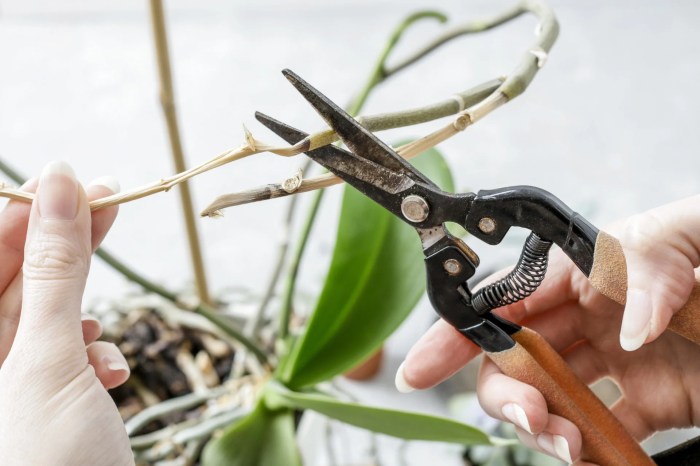
Proper tools and sanitation are essential for successful orchid pruning. Using clean, sharp tools minimizes the risk of infection and ensures a clean cut, promoting faster healing. Preparing the orchid plant beforehand simplifies the process and reduces stress on the plant.
Necessary Pruning Tools
- Sharp, clean pruning shears or scissors
- Optional: A small, sharp knife for delicate work
- Isopropyl alcohol (70%) for sanitizing tools
- Clean paper towels or cloths
- Gloves (optional, but recommended)
Sanitizing Pruning Tools
Before and after each pruning session, thoroughly clean your tools. Wipe them down with 70% isopropyl alcohol to kill any bacteria or fungi that might be present. This prevents the spread of diseases between plants.
Preparing the Orchid Plant
- Gently remove the orchid from its pot to inspect the roots if necessary.
- Carefully examine the plant for areas needing pruning, paying close attention to leaves, roots, and flower spikes.
- Prepare your sanitized tools.
- Have your cleaning materials readily available.
Pruning Techniques for Different Orchid Types
Different orchid types have varying pruning requirements. This section details the specific pruning needs for Phalaenopsis, Cattleya, and Dendrobium orchids, outlining the appropriate methods and timing.
Orchid Pruning Comparison
| Orchid Type | Pruning Needs | Tools | Timing |
|---|---|---|---|
| Phalaenopsis | Spent flower spikes; occasionally, yellowing leaves. Roots rarely need pruning. | Sharp pruning shears | After flowering; as needed for yellowing leaves. |
| Cattleya | Spent flower spikes; occasionally, yellowing leaves. Overgrown or damaged roots may require pruning. | Sharp pruning shears or knife | After flowering; as needed for yellowing leaves or roots. |
| Dendrobium | Spent flower spikes; older canes may be pruned back. Yellowing leaves should be removed. Roots may require pruning if overcrowded. | Sharp pruning shears or knife | After flowering; as needed for yellowing leaves or canes; periodically for root management. |
Pruning Flower Spikes
Pruning spent flower spikes encourages new blooms. The optimal time to prune is after the flowers have completely withered and dried. This section details different methods and the visual differences between correctly and incorrectly pruned spikes.
Optimal Time and Methods
The ideal time to prune a spent flower spike is after all the flowers have faded and the spike itself has begun to turn brown or yellow. Two common methods include cutting back to a node (a point where a new shoot or branch can emerge) or removing the entire spike.
Cutting to a node often stimulates the growth of new flower spikes from the same stem.
Correct vs. Incorrect Pruning
A correctly pruned flower spike will have a clean cut, just above a node, or a completely removed spike. An incorrectly pruned spike might be ragged, leaving stubs that can become infected, or might be cut too low, damaging the plant’s stem.
A correctly pruned spike promotes healthy regrowth, while an incorrectly pruned one risks infection and potential harm to the orchid.
Pruning Leaves and Roots
Leaf and root pruning are less frequent than flower spike pruning but are sometimes necessary to maintain orchid health. This section details situations requiring leaf or root pruning and the proper techniques to avoid harming the plant.
Situations Requiring Leaf or Root Pruning
Leaf pruning is primarily necessary for yellowing, browning, or otherwise damaged leaves. Root pruning is typically needed for overcrowded, damaged, or rotting roots. Overgrown roots can hinder proper air circulation and water drainage. Damaged or rotting roots can lead to disease.
Proper Pruning Techniques
When pruning yellowing leaves, use clean, sharp shears to make a clean cut at the base of the leaf, close to the stem. For overgrown or damaged roots, carefully remove the affected portions with clean, sharp scissors or a knife, ensuring not to damage healthy root tissue.
Avoid pulling or tearing roots, as this can injure the plant.
Post-Pruning Care
Providing proper post-pruning care is crucial for the orchid’s recovery and future growth. This includes preventing infections and promoting healing. This section Artikels the necessary steps and precautions.
Post-Pruning Care Requirements
After pruning, avoid overwatering, as this can increase the risk of infection. Ensure good air circulation around the plant. Monitor the orchid for any signs of disease or infection and take appropriate action if necessary. Apply a fungicide if needed, following the manufacturer’s instructions.
Preventing Diseases and Infections
Using sanitized tools is the first line of defense against infection. Avoid overwatering, which creates a moist environment conducive to fungal growth. Ensure good air circulation to prevent the buildup of humidity. Inspect your orchid regularly for any signs of disease or pests.
Post-Pruning Care Checklist
- Avoid overwatering for at least a week.
- Ensure good air circulation.
- Monitor for signs of infection (e.g., unusual discoloration, mushy spots).
- Apply a fungicide if necessary.
- Resume normal watering schedule after a week.
Troubleshooting Common Pruning Mistakes
Common pruning mistakes can lead to weakened plants or even plant death. Understanding these mistakes and their consequences allows for corrective action.
Common Pruning Mistakes and Consequences, How to prune an orchid plant
Cutting healthy leaves or roots can weaken the plant and hinder its ability to photosynthesize and absorb nutrients. Using dirty or dull tools can introduce infection. Cutting too close to the stem can damage the plant and increase the risk of infection.
Failing to remove all diseased tissue can allow the disease to spread.
Solutions for Rectifying Errors
If you’ve accidentally pruned healthy parts of your orchid, focus on providing optimal growing conditions to help it recover. If you suspect an infection, apply a fungicide and monitor the plant closely. If you notice further damage, carefully remove the affected areas using clean, sharp tools.
Always prioritize using clean and sharp tools to prevent infection.
Ending Remarks
Pruning your orchids may seem daunting, but with the right knowledge and approach, it becomes a straightforward process that significantly contributes to the health and beauty of your plants. Remember to always use clean, sharp tools and follow the specific pruning guidelines for each orchid type.
By carefully observing your plants and understanding their needs, you can confidently prune them, encouraging healthy growth and a profusion of stunning blooms. Happy pruning!
FAQ Section
Can I prune my orchid if it’s not blooming?
Yes, sometimes pruning is necessary to remove dead or diseased leaves or roots, regardless of whether the plant is currently blooming.
What should I do with the pruned parts of my orchid?
Dispose of pruned parts in the trash to prevent the spread of diseases. Do not compost them.
How often should I prune my orchid?
It depends on the type of orchid and its condition. Generally, pruning is done after flowering or when necessary to remove damaged parts.
My orchid has a lot of keikis (baby orchids). Should I prune them?
Keikis can be carefully removed and potted separately once they have developed several roots. This is not strictly pruning, but propagation.
What if I accidentally prune too much?
Try not to panic! Orchids are generally resilient. Provide proper post-pruning care, and the plant should recover. However, severe pruning can impact future blooms.