Orchid plant care indoors can seem daunting, but with the right knowledge, these beautiful blooms can thrive in your home. This guide dives into the essential aspects of indoor orchid cultivation, covering everything from light and watering to fertilization and pest control.
Whether you’re a seasoned plant enthusiast or a curious beginner, we’ll equip you with the tools to nurture your orchids and enjoy their stunning flowers for years to come. We’ll explore the specific needs of different orchid varieties, ensuring your success no matter which species you choose.
Light Requirements for Indoor Orchids
Providing the right amount of light is crucial for healthy orchid growth and vibrant blooms. Different orchid species have varying light needs, ranging from bright, indirect light to partial shade. Understanding these needs and adapting your lighting accordingly will significantly impact your orchid’s health and flowering.
Ideal Light Conditions for Various Orchid Types
Phalaenopsis orchids, for example, thrive in bright, indirect light, while Cattleya orchids prefer a bit more intensity. Dendrobiums can tolerate a wider range, from bright indirect to slightly more direct sunlight. Overexposure to direct sunlight can scorch leaves, while insufficient light leads to weak growth and a lack of blooms.
Signs of Insufficient or Excessive Light
Insufficient light often manifests as leggy growth, pale leaves, and a lack of flower buds. Conversely, excessive light causes leaf burn, appearing as brown or yellow patches on the leaves, especially on the tips and edges. These visual cues are critical for adjusting your orchid’s lighting situation.
Adjusting Light Levels Based on Orchid Species and Season
During winter months, orchids might need supplemental lighting to compensate for reduced sunlight. Conversely, in summer, you might need to provide more shade to prevent scorching. East or west-facing windows often provide ideal light conditions for many orchids, while south-facing windows may require some filtering.
Light Needs Comparison: Phalaenopsis, Cattleya, and Dendrobium
| Orchid Type | Ideal Light Condition | Signs of Insufficient Light | Signs of Excessive Light |
|---|---|---|---|
| Phalaenopsis | Bright, indirect light | Leggy growth, pale leaves | Leaf burn (brown or yellow patches) |
| Cattleya | Bright, indirect to moderate direct light (morning sun) | Weak growth, few blooms | Leaf scorching, wilting |
| Dendrobium | Bright, indirect to moderate direct light | Pale leaves, elongated stems | Yellowing and browning leaves |
Watering Techniques for Indoor Orchids
Proper watering is paramount for orchid health. Overwatering or underwatering can both lead to problems, so a balanced approach is key. The frequency and method depend on the orchid type, potting medium, and environmental conditions.
Watering Frequency for Different Orchid Types
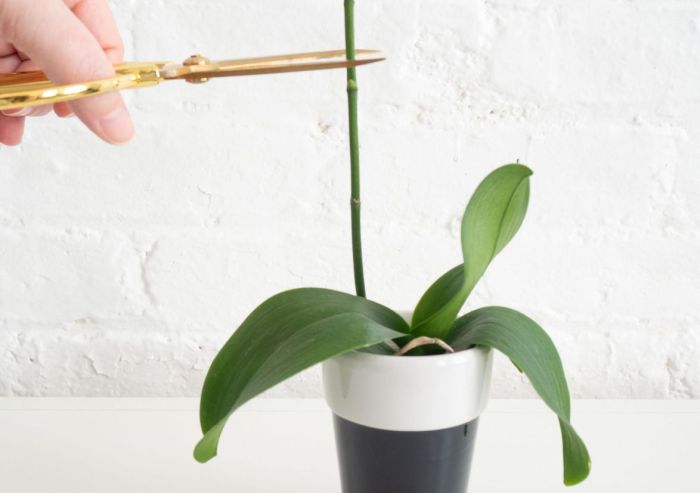
Phalaenopsis orchids, with their fleshy leaves, generally require less frequent watering than Cattleyas or Dendrobiums, which tend to dry out more quickly. Always check the potting mix before watering; allow it to dry out somewhat between waterings.
Signs of Underwatering and Overwatering
Underwatering results in shriveled leaves and pseudobulbs, while overwatering leads to root rot, yellowing leaves, and a musty smell from the potting medium. Regularly checking the moisture level of the potting mix helps prevent these issues.
Assessing Potting Medium Moisture Level
Insert your finger a couple of inches into the potting mix. If it feels dry, it’s time to water. If it’s still moist, wait a few more days. Another method is to weigh the pot; a lighter pot indicates a drier medium.
Step-by-Step Guide for Watering Orchids
- Top Watering:Gently pour water over the potting mix until it drains from the drainage holes. Avoid wetting the leaves excessively.
- Bottom Watering:Place the pot in a tray of water for 15-20 minutes, allowing the medium to absorb water from the bottom. This method helps prevent leaf rot.
- Soaking:Submerge the entire pot in a bucket of water for a short period, ensuring the medium is thoroughly saturated. Allow excess water to drain completely before returning the orchid to its usual location.
Suitable Potting Mediums and Repotting
Orchids require a well-draining potting medium to prevent root rot. The ideal mix promotes good aeration and allows for sufficient water retention. Repotting is necessary periodically to refresh the medium and accommodate the orchid’s growth.
Characteristics of an Ideal Potting Medium
An ideal orchid potting mix should be well-draining, airy, and retain some moisture without becoming soggy. It should also be free of pests and diseases. Common components include bark, moss, and perlite.
Comparison of Potting Mixes
Bark provides excellent drainage and aeration. Moss retains more moisture, beneficial for orchids that prefer a more consistently moist environment. Perlite enhances drainage and aeration, preventing compaction.
Signs Indicating the Need for Repotting
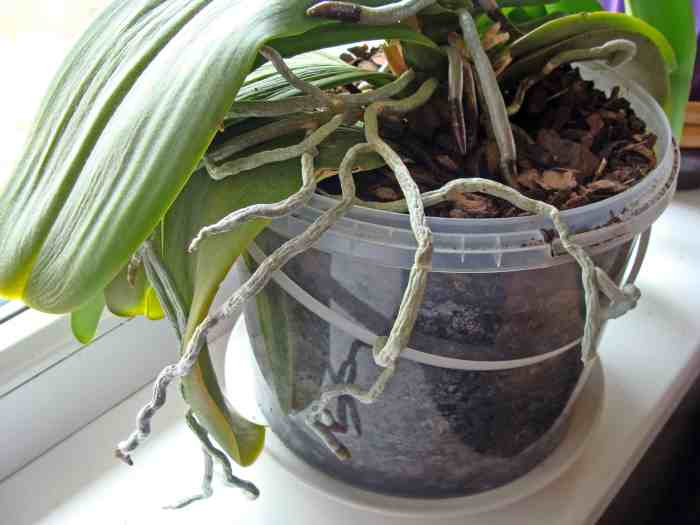
Signs that your orchid needs repotting include roots growing out of the drainage holes, a potting mix that has significantly broken down, or if the orchid is becoming root-bound. Additionally, poor drainage or a consistently soggy medium suggests the need for a fresh mix.
Repotting Procedure, Orchid plant care indoors
- Gently remove the orchid from its old pot.
- Carefully remove any old, decaying, or damaged roots.
- Select a pot slightly larger than the previous one, ensuring adequate drainage holes.
- Add a layer of fresh potting mix to the bottom of the new pot.
- Place the orchid in the pot, ensuring the crown is level with the rim.
- Fill the pot with fresh potting mix, leaving some space at the top.
- Water gently after repotting.
Temperature and Humidity Control
Maintaining the correct temperature and humidity levels is essential for optimal orchid growth. Most orchids prefer moderate temperatures and higher humidity than typical household environments.
Ideal Temperature Range for Indoor Orchid Cultivation
The ideal temperature range for most orchids is between 65-80°F (18-27°C) during the day and slightly cooler at night. Significant temperature fluctuations can stress the plants, impacting growth and flowering.
Methods for Increasing Humidity
Several methods can increase humidity around orchids. Humidity trays (placing the pot on a tray of pebbles and water) or pebble trays can improve humidity locally. Humidifiers provide a more consistent and controlled way to raise humidity in the surrounding area.
Effects of Temperature Fluctuations
Sudden temperature drops or excessive heat can cause stress, leading to leaf drop, bud drop, and reduced flowering. Protecting orchids from drafts and extreme temperature changes is crucial for their well-being.
Protecting Orchids from Drafts and Extreme Temperatures
Avoid placing orchids near air conditioning vents or heating registers. During cold spells, move them away from drafty windows. Consider using a humidity dome or cover during periods of extreme temperature changes.
Fertilizing and Nutrient Management
Orchids have specific nutrient requirements. Regular fertilization provides essential nutrients for healthy growth and abundant flowering. However, over-fertilization can be detrimental, so a balanced approach is essential.
Nutritional Requirements of Orchids
Orchids need a balanced supply of nitrogen (for foliage growth), phosphorus (for root and flower development), and potassium (for overall plant health). Micronutrients like iron, manganese, and magnesium are also important.
Suitable Orchid Fertilizers and Feeding Schedules
Use a balanced, water-soluble orchid fertilizer diluted to half or quarter strength. Feed your orchids every 2-4 weeks during their active growing season (spring and summer), reducing frequency during the dormant period (fall and winter).
Consequences of Over-fertilizing or Under-fertilizing
Over-fertilizing can lead to salt buildup in the potting mix, causing root damage and leaf burn. Under-fertilizing results in weak growth, pale leaves, and reduced flowering. Following a recommended feeding schedule helps maintain a balance.
Fertilizer Application Based on Growth Stage
| Growth Stage | Fertilizer Type | Frequency | Dilution |
|---|---|---|---|
| Active Growth (Spring/Summer) | Balanced orchid fertilizer (20-20-20) | Every 2 weeks | 1/4 to 1/2 strength |
| Dormancy (Fall/Winter) | Balanced orchid fertilizer (20-20-20) | Every 4-6 weeks | 1/4 strength or less |
Pest and Disease Management
Orchids, like other plants, are susceptible to various pests and diseases. Early detection and prompt treatment are crucial to prevent widespread damage. Preventive measures are also vital in maintaining healthy orchids.
Common Pests and Diseases
Common pests include aphids, mealybugs, spider mites, and scale insects. Common diseases include root rot, fungal leaf spots, and bacterial infections. These pests and diseases can weaken the plant, reduce flowering, and even lead to plant death if left untreated.
Preventing and Controlling Pests and Diseases
Preventive measures include ensuring good air circulation, avoiding overwatering, and using a sterile potting mix. Controlling pests and diseases can involve using insecticidal soap, neem oil, or fungicides. Cultural practices such as removing infected leaves can help prevent the spread.
Importance of Early Detection and Treatment
Early detection is key to successful treatment. Regularly inspect your orchids for any signs of pests or diseases. Prompt action prevents problems from escalating and damaging the entire plant.
Descriptions of Common Orchid Pests and Diseases
Aphids:Small, soft-bodied insects that cluster on leaves and stems, sucking plant sap. They appear as tiny green, black, or brown dots. Their feeding causes leaf distortion and yellowing.
Mealybugs:Small, white, cottony insects that often hide in leaf axils and crevices. Their feeding causes leaf yellowing and stunted growth. They secrete a honeydew substance that attracts sooty mold.
Spider Mites:Tiny, spider-like mites that spin fine webs on leaves. Their feeding causes stippling (small, light-colored spots) and yellowing of leaves.
Root Rot:A fungal or bacterial disease causing the roots to become mushy and brown. This often results from overwatering or poor drainage. The plant wilts and may have yellowing leaves.
Fungal Leaf Spots:Brown or black spots on leaves, often with a yellow halo. These are caused by various fungi and can spread rapidly under humid conditions.
Common Orchid Problems and Troubleshooting
Several common problems can affect indoor orchids. Understanding the causes and implementing appropriate solutions can help maintain healthy plants and encourage abundant blooms.
Common Problems, Causes, and Solutions
| Problem | Possible Causes | Solutions | Preventative Measures |
|---|---|---|---|
| Yellowing Leaves | Overwatering, underwatering, nutrient deficiency, pest infestation | Adjust watering, fertilize appropriately, treat pests | Maintain proper watering and fertilization, inspect regularly for pests |
| Leaf Drop | Sudden temperature changes, stress, root rot | Improve environmental conditions, treat root rot | Protect from drafts and temperature fluctuations |
| Lack of Flowering | Insufficient light, improper fertilization, incorrect temperature | Adjust light levels, fertilize appropriately, maintain optimal temperature | Provide adequate light, follow fertilization schedule, maintain consistent temperature |
| Root Rot | Overwatering, poor drainage | Repot with fresh, well-draining medium | Use well-draining potting mix, avoid overwatering |
Ultimate Conclusion: Orchid Plant Care Indoors
Mastering the art of indoor orchid care is a rewarding journey. By understanding the unique requirements of your orchid and consistently providing the right conditions, you’ll be rewarded with vibrant, healthy plants and breathtaking blooms. Remember, consistent attention to detail is key.
Don’t be afraid to experiment and adjust your approach based on your orchid’s individual needs. Happy growing!
General Inquiries
How often should I fertilize my orchids?
Fertilize orchids every 2-4 weeks during their active growing season (spring and summer) with a balanced, diluted orchid fertilizer. Reduce or stop fertilizing during dormancy (fall and winter).
Why are my orchid leaves turning yellow?
Yellowing leaves can indicate overwatering, underwatering, insufficient light, nutrient deficiencies, or pest infestations. Inspect your orchid carefully to determine the cause and adjust your care accordingly.
What’s the best way to increase humidity for my orchids?
Group your orchids together, place them on a pebble tray with water (ensure the pots aren’t sitting directly in the water), use a humidifier, or mist them regularly. Avoid over-misting, as this can lead to fungal diseases.
My orchid isn’t blooming. What should I do?
Lack of blooming can be due to insufficient light, improper watering, incorrect temperature, or nutrient deficiencies. Ensure your orchid is receiving adequate light, water, and fertilizer, and check the temperature and humidity levels.