How to plant orchids in pots isn’t as daunting as it sounds. This guide walks you through every step, from choosing the right pot and potting mix to ensuring your orchid thrives. We’ll cover selecting a healthy orchid, properly planting it, and providing the ideal aftercare, including watering, fertilizing, and light requirements.
Get ready to transform your home into an orchid paradise!
Successfully growing orchids at home requires understanding their specific needs. This involves careful selection of pots and potting media to ensure proper drainage and aeration. The health of the orchid itself is paramount; we’ll detail how to inspect and prepare your orchid before planting, minimizing stress and maximizing its chances of survival.
Finally, we’ll cover ongoing care, addressing common issues and ensuring your orchids flourish for years to come.
Choosing the Right Pot and Medium for Your Orchids: How To Plant Orchids In Pots
Selecting the appropriate pot and potting medium is crucial for the health and thriving of your orchids. The right pot provides adequate drainage and aeration, while the right medium mimics the orchids’ natural epiphytic environment. Let’s delve into the specifics.
Pot Material Comparison
Different pot materials offer varying benefits and drawbacks for orchid cultivation. The choice often depends on the specific orchid species and your growing conditions.
| Pot Material | Advantages | Disadvantages | Suitability for Orchids |
|---|---|---|---|
| Plastic | Lightweight, inexpensive, retains moisture well, less prone to breakage. | Can retain too much moisture if not well-draining, can become brittle over time with exposure to sunlight. | Suitable for many orchid types, especially beginners. |
| Clay | Porous, allows for excellent air circulation and drainage, helps regulate soil moisture. | Heavy, more expensive, can dry out quickly, prone to breakage. | Best for orchids that prefer drier conditions, experienced growers. |
| Ceramic | Aesthetically pleasing, durable, good moisture retention (glazed), excellent air circulation (unglazed). | Can be heavy, more expensive, glazed versions may retain too much moisture. | Suitable for various orchid types depending on glaze/unglazed choice. |
Ideal Potting Medium Characteristics
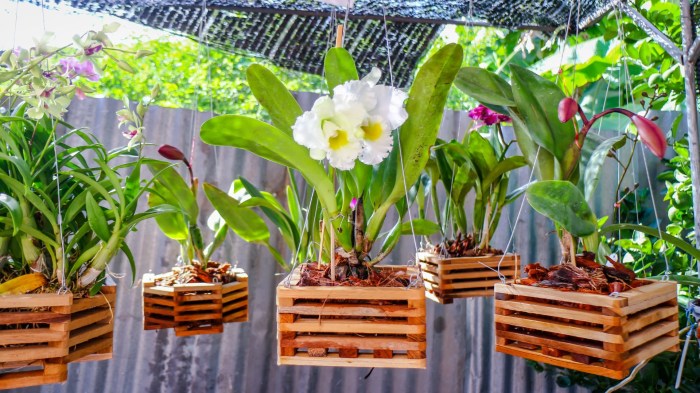
The ideal orchid potting medium is well-draining and airy, providing excellent aeration to the roots. It should retain some moisture but prevent waterlogging, mimicking the orchids’ natural environment where roots are exposed to air and moisture.
Preparing the Potting Mix
A good orchid potting mix typically includes a blend of materials to achieve the right balance of drainage and moisture retention. Here’s a step-by-step guide:
- Gather your ingredients: Bark chips (fir or pine), perlite, charcoal, sphagnum moss (optional).
- Proportioning: A common mix is 6 parts bark chips, 2 parts perlite, 1 part charcoal, and 1 part sphagnum moss (optional). Adjust based on your climate and orchid species.
- Mixing: Combine all ingredients thoroughly in a large container to ensure even distribution.
- Sterilization (optional): For disease prevention, you can bake the mix in the oven at a low temperature for 30 minutes to kill any pathogens.
Selecting and Preparing the Orchid for Repotting
Choosing a healthy orchid and properly preparing it for repotting is crucial for successful transplantation. Careful handling minimizes stress and ensures a smooth transition.
Identifying Healthy Orchids
Look for orchids with firm, plump pseudobulbs (if applicable), vibrant green leaves free from spots or blemishes, and healthy, silvery-white roots. Avoid orchids with yellowing or mushy leaves, or dark, brown, or rotten roots.
Removing the Orchid from its Existing Container
Gently loosen the root ball by tapping the sides of the old pot. Avoid pulling forcefully, which can damage the roots. If necessary, use a small, blunt tool to gently pry the orchid free. Support the plant to prevent breakage.
Inspecting and Trimming Roots
Once removed, carefully inspect the roots. Trim away any dead, brown, or mushy roots using clean, sharp pruning shears. Healthy roots should be firm and silvery-white.
Potting the Orchid
Proper potting technique ensures the orchid’s roots have ample space and support for healthy growth. Careful placement prevents root damage and promotes vigorous growth.
Placing the Orchid in the New Pot
Place a layer of potting mix in the bottom of the new pot. Position the orchid in the center, ensuring there’s enough space around the root ball. Gently fill the pot with the remaining potting mix, ensuring the crown (the point where the leaves emerge from the stem) is not buried.
This can lead to rot.
Correct Planting Depth and Root Positioning
The crown should remain above the potting medium. The roots should be evenly distributed within the pot, not tightly packed or bunched together. Imagine the roots nestled comfortably within the mix, with adequate space for air circulation.
Visual Description of Ideal Root Positioning
The ideal positioning resembles the orchid’s natural habitat; roots spread gently throughout the potting medium, not crammed together. The crown remains visible above the surface of the mix, allowing for healthy growth and preventing rot.
Aftercare and Watering
Proper watering and fertilization are essential for maintaining the health and vigor of your potted orchids. A consistent schedule, adapted to your environment, ensures optimal growth.
Watering Schedule
Watering frequency depends on pot material, ambient temperature, and humidity. Clay pots dry out faster than plastic. Water thoroughly when the potting mix is almost dry, allowing excess water to drain completely. Avoid letting the roots sit in standing water.
Signs of Overwatering and Underwatering
Overwatering leads to root rot (mushy, brown roots), yellowing leaves, and wilting. Underwatering results in shriveled pseudobulbs (if applicable), dry, brittle leaves, and stunted growth. Adjust watering based on these signs.
Fertilization Schedule
Fertilize orchids regularly during the growing season (spring and summer) using a balanced orchid fertilizer diluted to half strength. Reduce fertilization during the dormant period (fall and winter).
| Season | Fertilizer Type | Frequency |
|---|---|---|
| Spring/Summer | Balanced orchid fertilizer (20-20-20) | Every 2-3 waterings |
| Fall/Winter | Balanced orchid fertilizer (20-20-20) | Every 4-6 waterings or less |
Light and Environmental Considerations
Providing the right light, air circulation, and humidity is vital for successful orchid cultivation. These factors significantly impact their growth and flowering.
Light Requirements
Light requirements vary greatly among orchid species. High-light orchids need bright, indirect sunlight; medium-light orchids tolerate moderate sunlight; low-light orchids prefer shaded conditions. Observe your orchid’s leaves for signs of sunburning (brown spots) or insufficient light (pale, leggy growth).
Air Circulation and Humidity, How to plant orchids in pots
Good air circulation prevents fungal diseases and helps regulate moisture levels. Orchids generally thrive in humid environments (60-70% humidity). Increase humidity by grouping plants together, using a humidifier, or placing the pot on a tray of pebbles filled with water.
Creating an Optimal Growing Environment Indoors
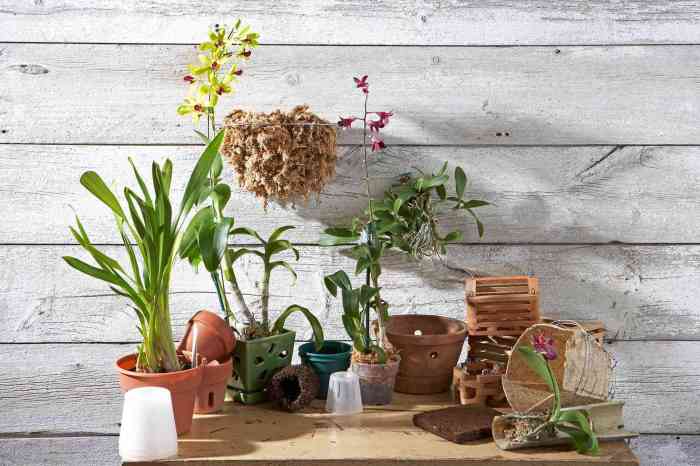
An east- or west-facing window provides good light for many orchids. Use sheer curtains to filter strong sunlight. Maintain adequate humidity using the methods mentioned above. Ensure good air circulation by avoiding overcrowding and providing adequate ventilation.
Common Problems and Solutions
Several issues can affect potted orchids. Early identification and appropriate measures are crucial for preventing significant damage.
- Root rot:Overwatering, poor drainage. Solution: Repot in fresh medium, improve drainage, adjust watering schedule.
- Pest infestations (mealybugs, aphids, scale):Introduce pests. Solution: Isolate affected plants, treat with insecticidal soap or neem oil.
- Fungal diseases (leaf spots, black rot):Poor air circulation, high humidity. Solution: Improve air circulation, remove affected parts, treat with fungicide.
- Leaf yellowing:Overwatering, underwatering, nutrient deficiency. Solution: Adjust watering, fertilize appropriately.
- Lack of flowering:Insufficient light, incorrect temperature, improper fertilization. Solution: Adjust light levels, temperature, and fertilization schedule.
End of Discussion
Planting orchids in pots is a rewarding experience, offering a beautiful and long-lasting addition to your home. By following the steps Artikeld above – from selecting the right pot and mix to providing consistent care – you can ensure your orchids thrive.
Remember, patience and attention to detail are key. With a little effort, you’ll enjoy the vibrant blooms and elegance these stunning plants offer for years to come. Happy growing!
General Inquiries
Can I use tap water to water my orchids?
It’s best to use filtered or rainwater. Tap water often contains minerals that can build up in the potting mix and harm your orchids.
How often should I repot my orchids?
Repotting is typically needed every 1-2 years, or when the potting mix breaks down or becomes compacted.
What should I do if I see pests on my orchid?
Isolate the affected plant and treat with an appropriate insecticide or neem oil. Regular inspection can help prevent infestations.
My orchid’s leaves are yellowing; what’s wrong?
Yellowing leaves can indicate overwatering, underwatering, or nutrient deficiencies. Check your watering schedule and consider fertilizing.