Agave plants in pots offer a surprisingly versatile and rewarding gardening experience. These striking succulents, with their architectural forms and dramatic foliage, add a touch of the desert southwest to any patio, balcony, or even indoor space. This guide delves into the specifics of cultivating these low-maintenance yet visually stunning plants, covering everything from selecting the right agave variety and pot to mastering watering techniques and winter protection.
From choosing the perfect potting mix and container to understanding their unique sunlight and watering needs, we’ll equip you with the knowledge to successfully grow and enjoy these captivating plants. We’ll explore various agave species suitable for container gardening, detailing their individual care requirements and highlighting their distinct aesthetic qualities.
We’ll also cover propagation techniques and pest management, ensuring your agave thrives for years to come.
Agave Plants in Pots: A Comprehensive Guide
Growing agave in pots offers a fantastic way to enjoy these striking succulents, even in spaces with limited gardening area. This guide covers everything from selecting the right agave variety and pot to providing optimal care and winter protection.
Let’s dive in!
Agave Varieties Suitable for Pots
Several agave varieties thrive in containers, offering a range of sizes, shapes, and aesthetic qualities. Choosing the right agave depends on your available space and personal preference. Smaller varieties like Agave attenuataand Agave victoriae-reginaeare ideal for smaller containers, while larger varieties like Agave americanamay require more substantial pots as they mature.
Comparing Popular Agave Varieties
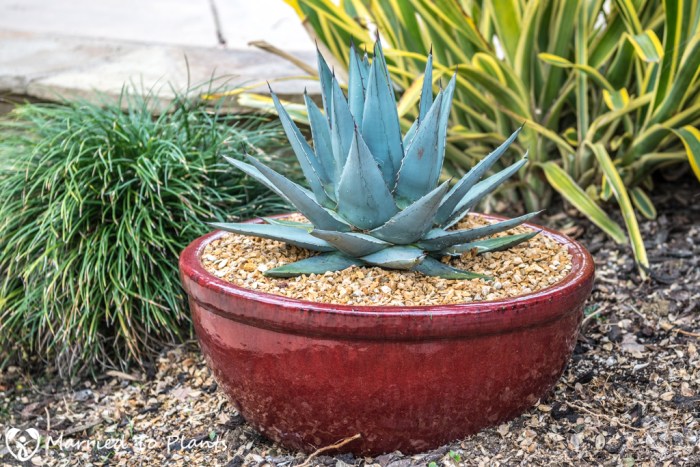
Three popular choices for container gardening are Agave attenuata(Foxtail Agave), Agave victoriae-reginae(Queen Victoria Agave), and Agave parryi. Agave attenuataboasts soft, arching leaves, while Agave victoriae-reginaedisplays striking, sharply defined leaves. Agave parryioffers a more rugged, architectural appeal. Care requirements vary slightly; all prefer well-draining soil and ample sunlight, but watering needs can differ depending on the climate and pot size.
| Agave Variety | Mature Size | Sun Exposure | Water Requirements | Hardiness Zones |
|---|---|---|---|---|
| Agave attenuata | 2-4 ft tall, 3-5 ft wide | Full sun to partial shade | Moderate, allow soil to dry between waterings | 8-11 |
| Agave victoriae-reginae | 1-2 ft tall, 1-2 ft wide | Full sun | Low, infrequent watering | 7-10 |
| Agave parryi | 2-3 ft tall, 3-4 ft wide | Full sun | Moderate to low, drought tolerant | 7-10 |
| Agave stricta | 1-2 ft tall, 1-2 ft wide | Full sun | Low to moderate | 8-11 |
| Agave desmettiana | 2-3 ft tall, 2-3 ft wide | Partial shade to full sun | Moderate | 9-11 |
Potting Mix and Container Selection for Agave, Agave plants in pots
Proper potting mix and container selection are crucial for agave’s health. A well-draining mix, such as a cactus and succulent blend, is essential to prevent root rot. Containers should have ample drainage holes to avoid waterlogging. Terracotta pots are excellent due to their porous nature, which aids in evaporation.
Choosing a pot that’s appropriately sized for the agave’s root system is vital to prevent overcrowding and ensure healthy growth. Too small a pot will restrict root development, while too large a pot can lead to overwatering and root rot.
A general guideline is to select a pot that’s about 1-2 inches larger in diameter than the root ball.
Planting and Repotting Procedures for Agave
Planting an agave involves carefully preparing the pot and potting mix. Ensure the pot has adequate drainage holes. Fill the pot with the well-draining mix, creating a small mound in the center. Gently place the agave in the pot, ensuring the crown (the base of the leaves) is level with the soil surface.
Backfill with the potting mix, gently firming it around the base.Repotting is necessary as the agave grows. This process involves carefully removing the plant from its current container, inspecting the root system for any rot or damage, and pruning any excessively long or damaged roots.
Then, plant it in a larger pot using the same steps as for initial planting.
Agave Care in Pots: Watering, Sunlight, and Fertilization
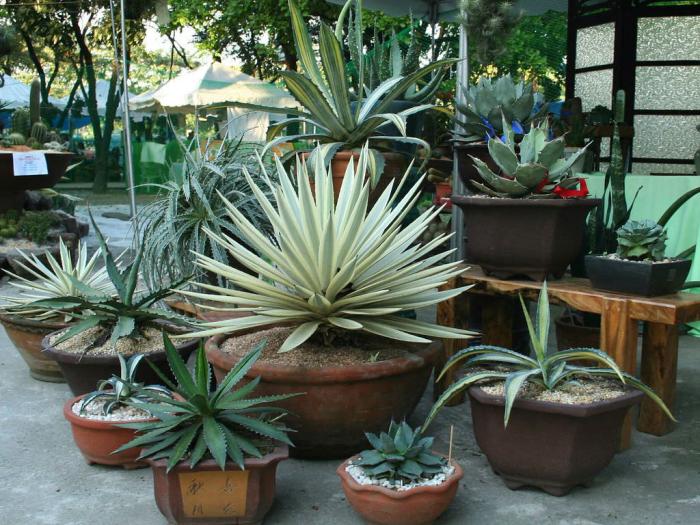
Agave care in pots involves careful watering, sunlight management, and fertilization. Water deeply but infrequently, allowing the soil to dry completely between waterings. Avoid overhead watering, which can lead to fungal diseases. Agave need at least 6 hours of direct sunlight daily.
Fertilize sparingly, using a balanced, slow-release fertilizer formulated for cacti and succulents during the growing season (spring and summer).
Pest and Disease Management for Agave
Common agave pests include mealybugs, aphids, and scale. Diseases are less common but can include root rot and fungal leaf spots. Regular inspection for pests and diseases is crucial. Treatment options range from organic methods such as insecticidal soap or neem oil to chemical treatments if necessary.
Winter Protection for Potted Agave
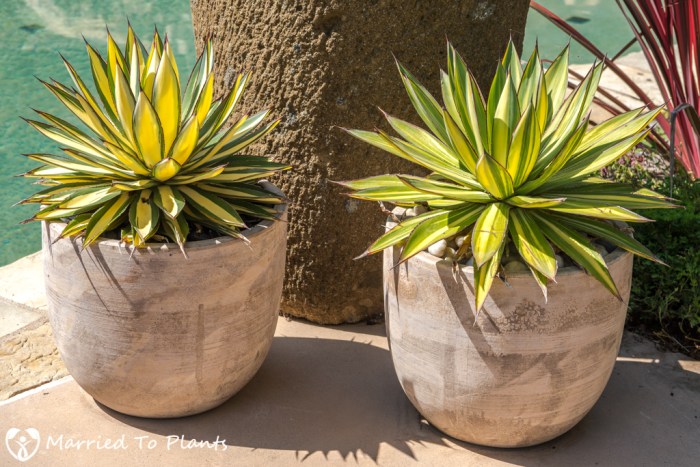
Protecting agave from frost is crucial in colder climates. Moving pots indoors to a bright, cool location is ideal. Alternatively, wrapping the pot in insulation or using a frost cloth can offer protection. Reducing watering frequency during winter is also essential.
Propagation of Agave in Pots
Agave can be propagated from offsets (pups) or seeds. Propagating from offsets involves carefully separating the pups from the mother plant, allowing them to callus over for a few days, and then planting them in a well-draining potting mix.
Seed propagation is less common but can be attempted by sowing seeds in a well-draining mix and keeping them moist but not waterlogged.
Final Wrap-Up: Agave Plants In Pots
Growing agave plants in pots successfully is within everyone’s reach with the right knowledge and a little patience. By carefully selecting the appropriate pot, potting mix, and location, and by understanding their specific watering and sunlight needs, you can enjoy the unique beauty and low-maintenance nature of these remarkable succulents.
Remember, regular observation is key to identifying potential problems early on, ensuring your agave remains healthy and vibrant. With a little care, these desert dwellers can become stunning focal points in your garden, adding a touch of southwestern charm to your space for years to come.
FAQ Section
How often should I water my potted agave?
Water deeply but infrequently, allowing the soil to dry out completely between waterings. Overwatering is a common problem.
Can I grow agave indoors?
Yes, but they need ample sunlight. A south-facing window is ideal. Smaller agave varieties are best suited for indoor growing.
What should I do if my agave shows signs of root rot?
Repot immediately using well-draining soil. Remove any affected roots and ensure adequate drainage in the pot.
How do I propagate agave from pups (offsets)?
Carefully separate the pups from the mother plant, ensuring each has some roots. Plant them in well-draining soil and keep them slightly moist until they establish roots.