Types of orchid plants boast an astonishing diversity, captivating plant enthusiasts worldwide. From the delicate Phalaenopsis to the flamboyant Cattleya, these fascinating flowers exhibit a remarkable range of colors, shapes, and growth habits. Their global distribution and evolutionary adaptations are equally impressive, making them a subject of continuous fascination for botanists and hobbyists alike.
This guide delves into the captivating world of orchids, exploring their diverse characteristics, cultivation requirements, and the beauty that makes them so sought after.
We’ll explore the fundamental differences in growth habits, highlighting the contrasting features of monopodial and sympodial orchids and examining popular genera representing each type. We’ll then dive into the specifics of several well-known orchid genera, comparing their unique traits, cultivation needs, and blooming periods.
The journey continues with a look at orchid flower structures, their incredible variations, and the diverse habitats these plants call home. Finally, we’ll touch on the world of hybrid orchids, their creation, and the benefits and challenges they present to cultivators.
Orchid Varieties: A Diverse and Enthralling Family
The orchid family, Orchidaceae, is renowned for its astonishing diversity, boasting over 28,000 currently accepted species spread across the globe. These plants exhibit remarkable adaptations to a wide range of environments, from tropical rainforests to frigid mountain slopes. Their evolutionary journey has resulted in an incredible array of flower shapes, sizes, and colors, captivating botanists and enthusiasts alike.
Orchid Growth Habits: Monopodial vs. Sympodial
Orchids are broadly categorized into two main growth habits: monopodial and sympodial. Understanding these differences is crucial for proper cultivation.
| Characteristic | Monopodial | Sympodial |
|---|---|---|
| Growth Pattern | Single stem growing upwards continuously | Multiple stems growing horizontally, with new growths emerging from the base of older stems |
| Stem Development | One main stem with leaves developing along its length | Each new growth produces its own stem and leaves, forming a branching pattern |
| Flowering | Flowers typically emerge from the stem’s top or along the sides | Flowers typically appear on new growths, often from pseudobulbs |
| Examples | Phalaenopsis, Vanda | Cattleya, Dendrobium, Oncidium |
Visual Representation:Imagine a monopodial orchid as a single, continuously growing vine, while a sympodial orchid resembles a branching shrub with new stems arising from the base.
Popular Orchid Genera and Their Characteristics
Several orchid genera stand out for their popularity and distinctive features. Here, we examine four prominent examples.
- Phalaenopsis(Moth Orchids): Known for their large, long-lasting flowers in a wide array of colors and patterns. They are relatively easy to grow, making them a popular choice for beginners.
- CattleyaOrchids: These orchids are prized for their large, showy flowers, often with a vibrant color palette. They are known for their strong fragrance and are considered by many to be among the most beautiful orchids.
- DendrobiumOrchids: This genus encompasses a vast diversity of species, ranging in size and flower form. Many Dendrobiumorchids are epiphytic, thriving in well-drained conditions with ample light.
- Oncidium(Dancing Lady Orchids): These orchids are characterized by their numerous small flowers that often have a distinctive “dancing lady” appearance. They are known for their cheerful colors and relatively easy cultivation.
Blooming Periods:The blooming periods of these genera vary considerably, depending on the specific species and growing conditions. Some may bloom once a year, while others may flower multiple times.
Orchid Flower Structure and Variations, Types of orchid plants
Orchid flowers exhibit a unique and complex structure. A key feature is the labellum, also known as the lip, which is a modified petal often dramatically different in shape and color from the other petals. This structure plays a crucial role in attracting pollinators.
Orchid flowers display an astonishing range of shapes and colors, from the delicate pastels of some Phalaenopsisto the vibrant hues of Cattleya. Some species even mimic insects to attract specific pollinators.
- Unique Flower Structures: Paphiopedilum(Lady Slipper Orchids) are renowned for their pouch-like lip, while Oncidiumflowers often exhibit a distinctive dancing-lady shape.
Orchid Habitats and Growing Conditions
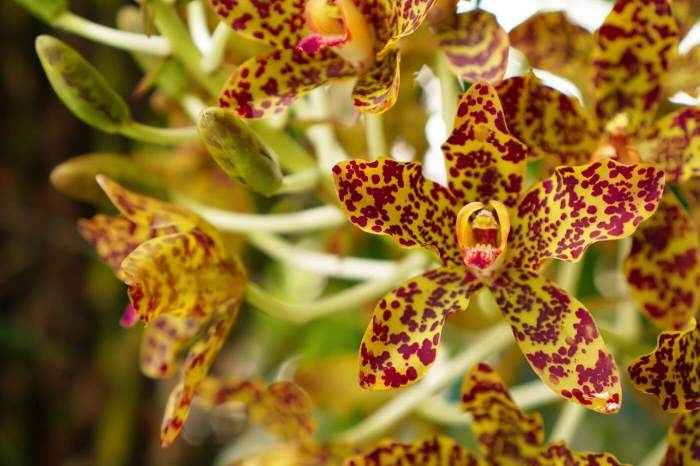
Orchids occupy diverse habitats, showcasing remarkable adaptations. Many are epiphytes, growing on other plants for support, while others are terrestrial, growing in soil, or lithophytes, growing on rocks.
Successful orchid cultivation depends on understanding their light, temperature, humidity, and watering requirements. These needs vary significantly depending on the specific species and its natural habitat.
- Phalaenopsis: Bright, indirect light; warm temperatures; moderate humidity; regular watering.
- Cattleya: Bright light; intermediate temperatures; moderate to high humidity; allow the potting medium to dry slightly between waterings.
- Dendrobium: Varies widely depending on species; generally requires good air circulation and well-drained potting mix.
- Oncidium: Bright light; intermediate to warm temperatures; moderate humidity; allow the potting medium to dry between waterings.
Orchid Hybridization and its Characteristics
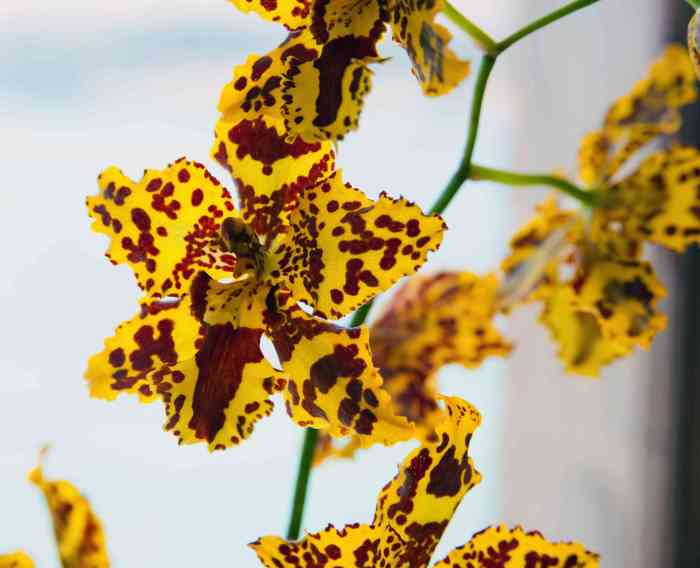
Orchid hybridization involves cross-pollinating different orchid species to create new varieties with desirable traits, such as improved flower color, size, and fragrance, or increased disease resistance. This process has led to a vast array of hybrid orchids available today.
- Popular Hybrids:Many popular orchids in cultivation are hybrids, often combining the best characteristics of their parent species. For example, many commercially available Phalaenopsisare hybrids.
- Advantages of Hybrids:Hybrids can offer greater disease resistance, longer blooming periods, and a wider range of colors and flower forms than their parent species.
- Disadvantages of Hybrids:Hybrids can sometimes be more demanding in terms of their growing conditions, and their genetic diversity may be less robust.
Illustrative Examples of Orchid Types
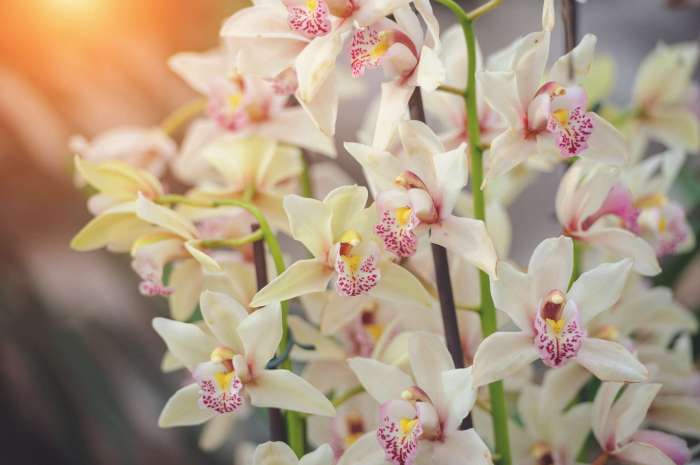
Several orchid genera exemplify the incredible diversity within the family.
- VandaOrchids: These orchids are known for their striking, brightly colored flowers and their monopodial growth habit. They often have long, pendulous stems with large, showy blooms.
- Paphiopedilum(Lady Slipper Orchids): These terrestrial orchids are characterized by their unique pouch-like petal, which is often brightly colored and patterned. This structure serves as a trap for pollinating insects.
- MiltoniaOrchids: These orchids are often called “pansy orchids” due to the resemblance of their flowers to pansies. They have relatively flat, broad petals in a variety of colors and patterns.
Final Thoughts: Types Of Orchid Plants
The world of orchids is a vast and endlessly fascinating one. From the delicate elegance of the Moth Orchid to the striking beauty of the Lady Slipper, each genus and species offers a unique charm. Understanding their growth habits, cultivation needs, and the remarkable diversity in their flower structures allows us to appreciate these plants on a deeper level.
Whether you’re a seasoned orchid grower or just beginning your journey, exploring the many types of orchids is a rewarding experience that unveils the captivating beauty and complexity of the plant kingdom. The information provided here serves as a springboard for further exploration and cultivates a deeper appreciation for these remarkable plants.
Query Resolution
What is the easiest orchid to grow for beginners?
Phalaenopsis orchids (Moth Orchids) are generally considered the easiest for beginners due to their tolerance of a wider range of conditions.
How often should I water my orchids?
Watering frequency depends on the type of orchid, pot type, and environment. Allow the potting medium to dry out slightly between waterings, avoiding soggy conditions.
Why are my orchid leaves turning yellow?
Yellowing leaves can indicate overwatering, underwatering, insufficient light, or nutrient deficiencies. Investigate the growing conditions to pinpoint the cause.
How do I repot an orchid?
Repotting is usually done every 1-2 years, using a well-draining orchid potting mix. Gently remove the orchid from its old pot and carefully place it in a new one with fresh medium.
What are the signs of a healthy orchid?
A healthy orchid displays firm, green leaves, healthy roots, and produces blooms regularly. Look for signs of pests or diseases promptly.