How to care for an orchid plant indoors? It sounds daunting, but these elegant blooms can thrive in your home with the right know-how. This guide dives into everything from selecting the perfect orchid and understanding its light needs to mastering watering techniques and troubleshooting common problems.
Get ready to transform your home into a vibrant orchid sanctuary!
We’ll cover the essential aspects of indoor orchid care, from choosing the right variety and providing optimal light and water to understanding fertilization and dealing with potential issues. Whether you’re a seasoned plant parent or a curious beginner, this comprehensive guide will equip you with the knowledge to successfully cultivate these beautiful flowers.
Choosing the Right Orchid
Selecting the right orchid for your indoor environment is crucial for its success. Different orchid varieties have unique light, water, and temperature needs. Understanding these needs and carefully examining the plant’s health before purchase will significantly increase your chances of cultivating a thriving orchid.
Orchid Varieties Suitable for Indoor Cultivation, How to care for an orchid plant indoors
Several orchid types thrive indoors, each with specific requirements. Phalaenopsis orchids, known for their long-lasting blooms, are beginner-friendly. Dendrobiums offer a wider variety of colors and bloom shapes but might need slightly more advanced care. Oncidiums, or dancing ladies, are known for their cheerful, prolific blooms and are relatively easy to care for.
However, even within these types, there’s a huge range of cultivars, so doing your research on a specific cultivar is essential.
Selecting a Healthy Orchid Plant
When buying an orchid, inspect the leaves for any signs of damage, disease, or pests. Healthy leaves are firm, plump, and free from spots or discoloration. Examine the roots; healthy roots are firm and silvery-green, while unhealthy roots are mushy and brown.
The overall appearance should be vibrant and vigorous, with no wilting or drooping.
Comparison of Orchid Care Requirements
| Orchid Type | Light | Water | Temperature |
|---|---|---|---|
| Phalaenopsis | Bright, indirect light | Water when the potting medium is almost dry | 65-80°F (18-27°C) |
| Dendrobium | Bright, indirect light; tolerates more direct light than Phalaenopsis | Water thoroughly when the potting medium is almost dry, allow to dry out more completely between waterings than Phalaenopsis | 60-80°F (15-27°C) |
| Oncidium | Bright, indirect light; can tolerate more direct light than Phalaenopsis | Water when the potting medium is almost dry, allow to dry out more completely between waterings than Phalaenopsis | 65-80°F (18-27°C) |
Light Requirements for Indoor Orchids
Providing the right amount and type of light is crucial for orchid health and flowering. Insufficient light leads to weak growth and fewer blooms, while excessive light can scorch leaves.
Ideal Light Conditions
Most orchids prefer bright, indirect light. A east- or west-facing window is usually ideal, providing ample light without the harsh intensity of direct sunlight. Avoid placing orchids in south-facing windows, especially during the hottest part of the day, unless you can provide shade or filter the light.
Signs of Light Issues and Adjustments
Pale green or yellow leaves indicate insufficient light, while dark green or brown leaves suggest too much light. Leaves that are scorched or have brown tips are clear signs of sun damage. Adjust the orchid’s position accordingly, moving it closer to a light source if needed or providing shade during peak sunlight hours.
Supplemental Lighting
In low-light conditions, supplemental lighting can be beneficial. Fluorescent or LED grow lights are effective. For a Phalaenopsis, a 10-20 watt LED grow light placed 12-18 inches above the plant can be sufficient. Adjust the wattage and distance based on the orchid’s light requirements and the intensity of the bulb.
Optimal Orchid Placement near a Window
Imagine a window. To the left and right, slightly away from the window, are two orchids. This provides ample bright, indirect light without the direct, harsh rays from the window itself. The orchids are not directly in front of the window but placed so the light is diffused and reaches them indirectly.
The distance from the window should be adjusted based on the intensity of the sunlight and the specific light needs of your orchid.
Watering and Humidity
Proper watering is essential for orchid health. Overwatering is a common cause of root rot, while underwatering can lead to wilting and stunted growth. Maintaining adequate humidity is also crucial.
Watering Techniques
Water thoroughly when the potting medium is almost dry. Check the weight of the pot; a lighter pot indicates dryness. You can also stick your finger about an inch into the potting mix; if it feels dry, it’s time to water.
Avoid letting water accumulate in the pot’s saucer.
Determining Watering Needs
Several methods help determine when an orchid needs watering. Weighing the pot is a simple technique; a significantly lighter pot suggests the medium is dry. Checking the moisture level of the potting medium by inserting a finger is also effective.
The potting medium should be almost dry before watering again.
Humidity and its Importance
Orchids thrive in humid environments. Low humidity can lead to dry leaf tips and stunted growth. To increase humidity, use a humidity tray (a tray filled with pebbles and water, placed under the orchid pot, ensuring the pot’s base doesn’t touch the water), a pebble tray (similar to a humidity tray but uses pebbles only), or a humidifier.
For a humidity tray, simply fill a shallow dish with pebbles and add water, ensuring the water level is below the top of the pebbles. Place the orchid pot on top of the pebbles.
Potting Medium and Repotting
The potting medium should provide excellent drainage and aeration to prevent root rot. Repotting is necessary to refresh the medium and provide more space for root growth.
Ideal Potting Medium Composition
An ideal orchid potting mix is well-draining and airy, often composed of bark chips, perlite, charcoal, and sphagnum moss. The specific ratio varies depending on the orchid type and the grower’s preference. The key is to avoid dense, water-retentive mixes.
Repotting Process
Repotting should be done every 1-2 years or when the potting medium decomposes. Choose a pot slightly larger than the previous one. Gently remove the orchid from its old pot, carefully loosen any tangled roots, and trim any dead or decaying roots.
Plant the orchid in the new pot with fresh potting mix, ensuring the crown (the base of the leaves) is slightly above the surface.
- Gently remove the orchid from its old pot.
- Carefully loosen any tangled roots.
- Trim any dead or decaying roots with sterilized scissors.
- Place fresh potting mix in the new pot.
- Position the orchid in the pot, ensuring the crown is slightly above the surface.
- Fill the pot with the remaining potting mix, gently firming it around the roots.
Suitable Potting Mixes
- Bark-based mixes:Offer excellent drainage and aeration, but can dry out quickly.
- Sphagnum moss-based mixes:Retain more moisture, but require careful watering to prevent root rot.
- Mixes containing perlite and charcoal:Improve drainage and aeration, preventing compaction.
Fertilizing and Nutrition
Regular fertilizing provides essential nutrients for healthy growth and abundant blooms. However, over-fertilizing can harm the orchid.
Importance of Fertilizing
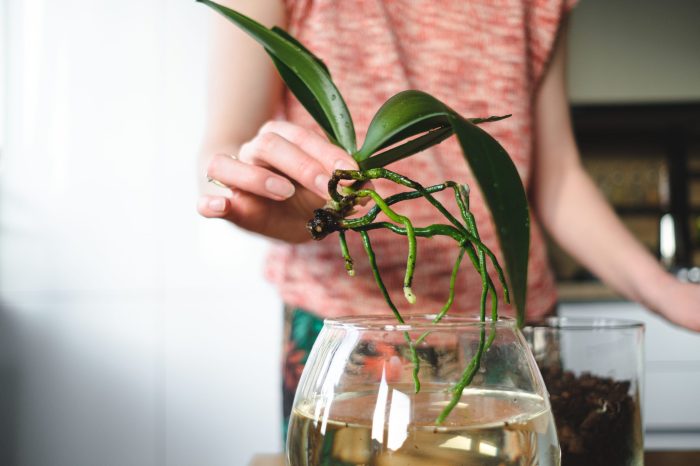
Orchids benefit from regular fertilization, especially during their active growth phase. A balanced orchid fertilizer, diluted to half or quarter strength, is recommended. Avoid using fertilizers high in nitrogen, as this can promote leaf growth at the expense of flowering.
Fertilizing Schedule
Fertilize orchids every 2-4 weeks during the active growth phase (spring and summer). Reduce or stop fertilizing during the dormant period (fall and winter).
Nutrient Deficiencies and Excesses
Nutrient deficiencies can manifest as pale leaves, stunted growth, or fewer blooms. Nutrient excesses can lead to leaf burn or root damage. Adjust the fertilizer concentration or frequency accordingly.
Common Problems and Solutions: How To Care For An Orchid Plant Indoors
Several common problems can affect indoor orchids. Early detection and appropriate treatment are crucial.
Common Orchid Problems
Root rot, leaf spot, and pest infestations are common issues. Root rot is caused by overwatering and poor drainage. Leaf spot is often a fungal or bacterial infection. Pest infestations can be caused by various insects such as mealybugs, aphids, or spider mites.
Causes and Solutions
Root rot is treated by repotting the orchid in fresh, well-draining medium and adjusting watering practices. Leaf spot can be managed by removing affected leaves and applying a fungicide or bactericide. Pest infestations can be controlled using insecticidal soap or neem oil.
Troubleshooting Guide
- Yellowing leaves:Overwatering, underwatering, insufficient light, or nutrient deficiency.
- Brown leaf tips:Low humidity, underwatering, or fluoride buildup.
- Soft, mushy roots:Root rot due to overwatering.
- Pest infestation:Check for insects on leaves and stems; treat with appropriate insecticide.
Orchid Propagation
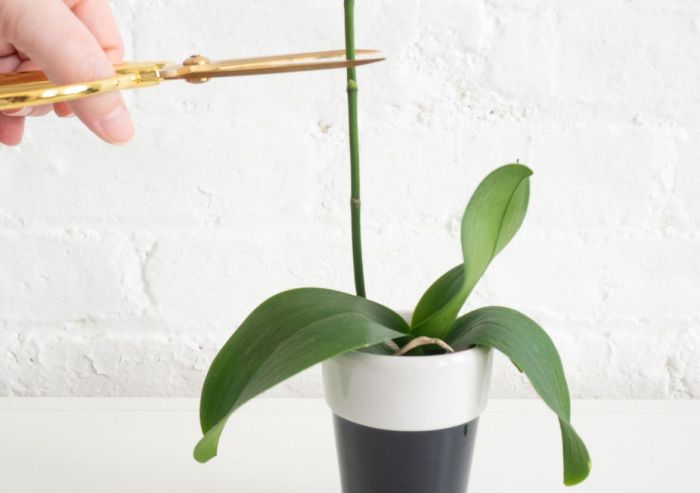
Propagating orchids allows you to increase your collection or share plants with others. Several methods exist, each with varying success rates.
Propagation Methods
Orchids can be propagated through division (separating the plant into multiple sections), keiki (baby plants that grow on the mother plant’s stem), or seeds (a more challenging method).
Detailed Instructions for Each Method
Division:Carefully separate the orchid’s pseudobulbs or rhizomes, ensuring each section has healthy roots and leaves. Plant each section in its own pot. Keiki:Once a keiki has developed several roots, carefully separate it from the mother plant and plant it in its own pot.
Seeds:Orchid seeds are extremely tiny and require sterile conditions and specialized media for germination.
Success Rates and Challenges
Division is generally the easiest and most successful method. Keiki propagation is also relatively straightforward. Seed propagation is the most challenging, with low success rates for home growers due to the need for sterile conditions and specialized media.
Last Word
Mastering the art of indoor orchid care is a rewarding journey. By understanding their unique needs – from light and water to proper potting and fertilization – you can unlock the stunning beauty these plants have to offer. Remember, patience and observation are key.
With consistent care, your orchids will flourish, rewarding you with vibrant blooms for years to come. Happy growing!
Clarifying Questions
How often should I fertilize my orchid?
Use a balanced orchid fertilizer diluted to half strength every 2-4 weeks during the growing season (spring and summer). Reduce or stop fertilizing during dormancy (fall and winter).
My orchid’s leaves are yellowing. What’s wrong?
Yellowing leaves can indicate overwatering, underwatering, or nutrient deficiencies. Check the roots for rot (overwatering), and adjust watering accordingly. Consider a balanced fertilizer if nutrient deficiency is suspected.
What kind of pot is best for orchids?
Orchids prefer pots with good drainage, often terracotta or plastic pots with drainage holes. The pot size should be appropriate for the root system; avoid pots that are too large.
How do I know if my orchid needs repotting?
Repot when the roots are growing out of the drainage holes or the potting mix is breaking down and becoming compacted. Spring is generally the best time to repot.